Wednesday, March 9, 2016

Turkey, Greece agree on multiple topics in İzmir meeting

Turkey's Prime Minister Ahmet Davutoglu (R) shakes hand with Greece's Prime Minister Alexis Tsipras (L) during a press conferrence on March 8, 2016 in Izmir. AFP Photo

İZMİR

Turkey's Prime Minister Ahmet Davutoglu (R) shakes hand with Greece's Prime Minister Alexis Tsipras (L) during a press conferrence on March 8, 2016 in Izmir. AFP Photo

The prime ministers of Turkey and Greece discussed and agreed on multiple topics during meetings held in Turkey’s Aegean coastal town of İzmir on March 8, hours after Turkey and the European Union agreed on a draft agreement to combat the refugee crisis and boost Turkey’s EU bid.

Turkey and Greece also vowed close cooperation on a plan to return migrants rejected by Europe, laying aside historic differences in an agreement they hope will end the illegal flow of people crossing the Aegean Sea.

Greek Prime Minister Alexis Tsipras said the two countries had common stances on many topics, adding that they had reached a consensus to launch flights, ferry services and trains between Greece and Turkey, and to realize the Trans-Anatolian Pipeline (TANAP) project.

Stating that Greece’s Thessaloniki was the port that opens to Eastern Europe, and İzmir was the hub for Asia and Anatolia, Davutoğlu said the link between these two cities was very important.

“Ferry services will start [between İzmir and Thessaloniki], God willing,” Doğan News Agency quoted Davutoğlu as saying, adding that Greek products coming to İzmir via this ferry line would reach Ankara and even the Caspian, as Turkey has already organized its hinterland.

“From the same route it can go to the depths of Asia [and products] coming from Asia can go to Europe,” he said during a joint press conference with his Greek counterpart on March 8.

Davutoğlu said a high-speed train between Istanbul and Thessaloniki was also being planned. “We promise to remove the obstacles,” he said.

The Turkish prime minister also said direct flights from Athens to Ankara were going to begin, while flights between Athens and İzmir would start if the parties agreed.

“There needs to be more links. Tourism is an extraordinary opportunity,” he said. “We are determined to bring the two sides of the Aegean [together] in order to not separate ever again.”

Tsipras said talks were ongoing over the dispute between the two countries regarding the continental shelf and the “casus belli” approach to the issue needed to be left behind, as it reflected the perspective of bygone times.

He added Greece supported Turkey’s EU membership, which would enhance regional peace and stability.

Tsipras said the readmission agreement reached as part of the EU-Turkey deal would help to reduce the “unbearable flow” of refugees into Europe.

“[It] sends a clear message to migrants coming from third countries, rather than countries at war... that there is neither the political will [to allow their passage] nor the ability to cross to Europe,” Reuters quoted Tsipras as saying.

“This is the reality we ought to sincerely convey to them in order to stop, to reduce, this unbearable flow for our countries,” he added.

The neighboring prime ministers met a day after Ankara offered the EU to take back all irregular migrants who cross into Europe from Turkish soil in return for an agreement in principle on its demands for more money, faster EU membership talks and earlier visa-free travel.

More than a million people fleeing war and poverty in the Middle East and beyond have flooded into the EU since early 2015, most making the perilous sea crossing from Turkey to Greece, then heading north through the Balkans to Germany.

“The aim here is to discourage irregular migration and... to recognize those Syrians in our camps who the EU will accept - though we will not force any one to go against their will - via legal routes,” Davutoğlu said, adding there would be no extra financial burden on Turkey.

“Europe will cover all costs of readmitting migrants from the Aegean, the readmission costs [including] returning to Turkey and to a third country, or their own country,” he said.

Schulz expels Golden Dawn MEP Synadinos for calling Turks “dirty and polluted” in racist rant


MEP Eleftherios Synadinos (left) asks for the floor as his exclusion from Plenary is announced by President Martin Schultz. MEP Lampros Fountoulis (right) accompanied by Synadinos caused problems on a Parliament event last week.


The other two Golden Dawn MEPs asked for the floor, calling President Schulz a “fascist”.
By Irene Kostaki

Journalist, New Europe


Just a week after the first serious Golden Dawn incident in the European Parliament, President Martin Schulz took action, expelling Greek Golden Dawn MEP Eleftherios Synadinos from Plenary in Strasbourg.


“As it has been expressed in scientific literature, the Turks are dirty and polluted. Turks are like wild dogs when they play but when they have to fight against their enemies they run away. The only effective way to deal with the Turks is with decisive and resolute attitudes”, said Synadinos earlier today during the debate on the EU-Turkey Summit, pushing Martin Schulz to MEP’s expulsion. His extremist Party, Golden Dawn, has regularly voiced such political positions in there rhetoric at the national level.

“This morning there was an incident in the Chamber and I believe that the European Parliament should not fail to react to it. We absolutely must react to the incident. I’d like to quote the sentence, which, firstly, I don’t think [is] acceptable and secondly I think … must be sanctioned”, explained President Schulz, which quoted Syndino’s sentence above, for the record.
In accordance to article 165 of the rules of procedure, this sentence “represents a breach of the values of the EU”, Schulz added, underlining that this was an immediate measure. “I believe that we have to establish a procedure here where if red lines are crossed, then we have to declare them unactable, particularly with regards to racism”, underlined the President, after a big applaude in Plenary. “For that reason, in accordance with rule 165 of the rules of procedure, in accordance with rule 11, I immediately exclude Mr Synadinos from the Chamber”, he concluded.

MEP Synadinos took his briefcase and left the Plenary, while the other two fellow Golden Dawn MEPs shouted at the President, calling him a “fascist”. Nearby Non-attached MEPs recorded the scene with their mobile phones. Referring to the Golden Dawn MEPs, Schulz said that “if they wanted to leave the Chamber with him they are free to do so”, refusing to go on a debate: “Mr. Synadinos will be heard on this incident; no debates on the rules of procedure” Schulz said to close with the issue and put a stop Georgios Epitideios and Lampros Fountoulis, the other two Golden Dawn MEPs that kept asking for the floor.

Last week, Fountoulis accompanied by Synadinos entered a European Parliament conference organized by Csaba Sógor, a Romanian center-right MEP, on minority rights in Greece. The MEPs took exception to the debate. “There is no Turkish minority. Go to the problems of your country, not my country”, shouted Fountoulis to the EPP MEP.

Tuesday, March 8, 2016

Refugees may start to cross over Albania


Just as, twenty-five years ago, Albanians left the country in droves

THE ITALIANS could scarcely believe their eyes. Twenty-five years ago thousands of Albanians, crammed onto leaky boats, began arriving in the southern port of Brindisi, on the south-east coast of Italy (pictured). Communism was collapsing in Albania and rumours had spread that the Italians were handing out visas. In August alone 20,000 packed onto a single ship. Then the Italians promised to pay the Albanian government $9m ($16m today) to keep their people at home and the flow of people came to an end.
Today’s migrant crisis gives many Albanians mixed feelings. As a country of emigrants Albanians are sympathetic to others who flee war or who just want better lives. Just under 3m people live there; at least 1m Albanians, the largest part of the diaspora, live in Greece and Italy. Last year just under 55,000 tried their luck at escaping poverty by joining the flow from the Middle East and applying for political asylum in Germany (nearly all will fail).
The Albanian authorities have started to worry that Albania is going to have to deal with people arriving rather than leaving. Some now predict that refugees from Syria, Afghanistan and Iraq—many of whom are blocked in Greece from entering Europe through Macedonia—may now try their luck through Albania. Small numbers have been detected on the routes across Kosovo, Montenegro and Bosnia. Rumours are circulating that Albanian mafiosi are looking in Italy for rubber dinghies known as gommoni to speed migrants to Italy as they did with thousands of Kurds and others in the 1990s. So far nothing, bar the odd drug-smuggling speedboat, appears to be crossing the Adriatic. Many migrants in Greece have heard that Albania is risky and that if you are not robbed and killed by the mafia you risk spending a year in jail. In the last few months only a few hundred have had a go.
Although the country has experienced a sudden influx of migration before—during the Kosovo war of 1998-99 around 500,000 Kosovo Albanians went there and stayed until the war was over—in many respects it is ill-prepared. Albania is now deploying extra police to guard its borders. On March 4th Italy promised to send men and equipment to help on both land and sea. But Edi Rama, Albania’s prime minister, says that his country is not open to migrants. So one more country along the Balkan migrant trail may yet become overwhelmed by, and then deeply hostile to, thousands of refugees fleeing war. The fact that so many Albanians have found welcome abroad may count for little.

Big Tech Bosses Meet in Secret on Private Island to Stop Donald Trump

US Republican presidential candidate Donald Trump looks down as he leaves a campaign event in Concord, North Carolina March 7, 2016.

© REUTERS/ Chris Keane
US

How do you stop a man like Donald Trump from entering the White House? Hold a secret meeting on a far-away island between billionaires, Republicans and big tech CEOs in the hope he'll go away.

According to the Huffington Post, the tech elite in attendance includes Apple CEO Tim Cook, Google co-founder Larry Page, the creator of Napster and Facebook investor Sean Parker, as well as billionaire entrepreneur Elon Musk of Tesla Motors. A New York Times spokeswoman also confirmed its editor recently attended the American Enterprise Institute's annual World Forum conference. However, the conference is fiercely off the record, so it's not really known what was talked about or by whom. However, the speculation that the tech giants joined discussions on how to stop US presidential front runner Donald Trump from reaching the White House will get tongues wagging.
The annual meeting is held on a private island resort off the coast of Georgia and closed to the press. An email written about the event and sent by Weekly Standard editor Bill Kristol reportedly said:
"A specter was haunting the World Forum — the specter of Donald Trump. There was much unhappiness about his emergence, a good deal of talk, some of it insightful and thoughtful, about why he's done so well, and many expressions of hope that he would be defeated… The key task not, to once again paraphrase Karl Marx, is less to understand Trump than to stop him."
Trump has nearly one-third of the delegates he needs to secure the Republican Party nomination but faces big tests in the forthcoming Florida and Ohio primaries.
Meanwhile, a much smaller event in Britain, held on the record for politicians, religious figures and members of the Muslim community, made it no secret naming Donald Trump "UK Islamophobe of the year, 2016."
The spoof ceremony hosted by the Islamic Human Rights Commission announced Trump as the winner, mainly because of his campaign to stop Muslims from entering the US.

Turkey’s $6.6bn EU Bribe

Turkish Prime Minister Ahmet Davutoglu speaks at a news conference at the end of a EU-Turkey summit in Brussels March 8, 2016.

© REUTERS/ Yves Herman
Europe

Erdogan’s Turkey this week diversified its rogue-state conduct from terror sponsorship to international bribery. The proceeds? Not bad earning, with $6.6 billion in “aid” extracted from the European Union.

It’s supposed to be part of a groundbreaking deal to end the refugee crisis in Europe. But while EU politicians and bureaucrats throw billions of dollars to their Turkish “partner”, the simple question remains unanswered: who created this crisis in the first place? It’s also bitterly hilarious that while EU governments order their citizens to endure economic austerity and cuts to workers’ rights, the same authorities can suddenly find, with ease, endless cash to pander Turkey’s authoritarian regime with.
Four months ago, the Ankara regime of President Recep Tayyip Erdogan squeezed the EU for a promise of $3.3 billion in financial aid, allegedly to slow down the flow of refugees from Turkey to Europe. Over that period, the influx of refugees has only become much worse, with numbers for the first three months of this year set to overwhelm last year’s record high of one million migrants reaching European shores.
Yet in spite of Ankara’s abysmal failure to curb the human trafficking from its territory, Erdogan’s regime is now to get double the money paid out by Brussels – courtesy of hard-pressed EU taxpayers. The $6.6 billion that Ankara is to receive over the next two years is purportedly for helping to accommodate refugees on the Anatolian mainland.
As part of the “deal” hatched this week in Brussels between EU leaders and Ankara, all “irregular migrants” currently languishing in Greece – some 30,000 – are to be forcibly returned to Turkey.
NATO warships have been called in to facilitate the “processing”. Britain this week announced that it is sending a large amphibious landing ship for the unspoken but obvious purpose of relocating people en masse.
Ostensibly, the EU is committed to eventually take back an equal number of Syrian refugees for asylum. But don’t count on that. Out of 160,000 refugees that the EU vowed to domicile last year, so far only 700 individuals have been distributed among the 28-nation bloc. Don’t be surprised if the camps in Turkey become permanent features like refugee centers in Lebanon and Jordan.
What we have here is a sordid bargain. The EU establishment gets to “ship back” migrants to Turkey, and to stop the flow of refugees. That influx was straining the very fabric of the EU, not because of the absolute numbers of migrants involved, but because of the bickering between the various member states.
So to the immense relief of the Eurocrats, the problem is solved, at least on the short term. Violating its own lofty “principles”, the EU is to dump the migrants into camps in Turkey. And the Ankara authorities not only stand to collect $6.6 billion from the EU, this week Erdogan’s sidekick prime minister Ahmet Davutoglu also extracted other concessions: visa-free travel for 75 million Turks to Europe to take effect within four months, and a promise from Brussels to speed up Turkey’s accession to the EU.
The strong-arming of the EU by Erdogan was no doubt emboldened by Brussels’ weak-kneed response to his brutal crackdown last weekend on independent news media. The violent seizure by riot police of Turkey’s biggest opposition newspaper, Zaman, was met with cowardly silence from the EU.
Pusillanimous platitudes of “concern” for “free speech” and European “core values” issued by the likes of French President Francois Hollande and the EU’s foreign affairs chief Federica Morgherini would have only caused Erdogan and Davutoglu to snigger with derision at the “protestations”. Erdogan knows that the EU is a paper tiger. European governments and its parliament have known for months about his creeping despotism, and they have done noting about it. Journalists have been locked up, media outlets forced to close, and Brussels just mouths a few trite cautions.
Erdogan’s regime has stepped up bloody repression of ethnic Kurds in the country’s southeast, and again Brussels hardly squeaks.
The Turkish military has been bombarding northern Syria for weeks, in what is plainly an act of aggression towards a sovereign state, and Brussels says nothing. Erdogan’s rogue regime is documented to be supplying weapons across Syria’s border to illegally armed groups trying to topple the government in Damascus, and again Brussels goes mute.
So Ankara knows full well that the EU establishment has no principles despite its lofty proclamations on human rights and avowed respect for international law. He knows that his roguery will be given a blind eye because when it comes to Syria the EU itself has been one giant rogue entity. Its governments, Britain and France in particular, have been part of the covert war on Syria for regime change, along with Washington of course.
The EU maintains economic sanctions on Syria while complaining about the humanitarian conditions in the country. How’s that for criminal double-think?
From the outset of the war in March 2011, Turkey and Saudi Arabia financed the sectarian mobilization of Syrian communities who were readily recruited to the project of regime change against President Assad. An important element in this mobilization was the creation of refugee camps in Turkey, from where “jihadists” could be trained, weaponized and filed back into Syria. Turkey provided the terrain and logistics, while Saudi Arabia furnished the money, and the US and other NATO powers orchestrated the whole project.
By way of substantiating the nefarious role of Turkey, a senior source in the UN’s refugee agency (UNHCR) told this author that Ankara has always insisted on controlling the refugee camps in its territory. Normally in an international refugee crisis, the UNHCR is the lead body for registering and administrating relief facilities. Why Turkey has refused this international input is no doubt because Ankara has been using refugee camps for its own political and covert military ends.
Ironically, Turkey and other NATO powers have accused Russia of “weaponizing the refugee problem” with the alleged intention of undermining the EU. It is a contemptible, baseless contention.
Nonetheless, the concept and practice of weaponizing refugees finds reality when the role of Turkey in the war on Syria is examined.
Erdogan’s regime has not only played a prominent part in fomenting the displacement of nearly 12 million Syrians for the state-sponsored terror war on Syria, Ankara has also evidently orchestrated the refugee crisis for extortion of the EU.
But the EU mis-leaders are so compromised in the whole sordid affair they cannot deal effectively with the problem. Because that would mean admitting that the war on Syria has been a criminal enterprise from the get-go, which they have willingly colluded in.
What the EU plutocrats then do is this: shunt the refugees off to camps outsourced to Turkey regardless of international law; pay off Erdogan and his autocratic cronies with $6.6 billion and other concessions; and, in the best bumbling Eurocrat-style, hope that the problem will just go away.
The EU establishment will find, however, that the crimes of Erdogan, as with their own, cannot be buried in this way. Brussels may think it has found a quick-fix for now. But the corruption that it is entertaining with Ankara is a fatal, terminal disease.

'EU Ready to Betray Greece as it Did Czechoslovakia in 1938'

A stranded migrant reacts in front of a Macedonian police cordon as they clash after a migrant was injured when he climbed on top of a train wagon, near the village of Idomeni, Greece, November 28, 2015.

© REUTERS/ Yannis Behrakis
Europe

Brussels' scheme to close the 'Balkan route' for illegal immigration through Greece puts the country in a difficult and humiliating situation, comparable to the betrayal of Czechoslovakia by Western powers in 1938, says French lawyer and academic Alexis Teas.

In an op-ed for France's Le Figaro, Teas suggested that the current migrant crisis is one of the worst tragedies Europe has faced since the end of Second World War.
"More than a million arrivals in 2015 –an influx which has continued to grow since the start of this year; the consequences are disastrous, leading to continental-wide social breakdown, the return of nationalist tensions, and popular anger exacerbated by the proliferation of slums and refugee camps."
Europe's leaders, the academic noted, are themselves responsible for the present situation, after the continent's main leaders, German Chancellor Angela Merkel and European Commission President Jean-Claude Juncker 'opened their arms' in September, which triggered the flood. "The extraordinary March 7 summit on migration issues in Brussels suggests that [the continent's leaders] have realized, belatedly, what's going on. Convened on the initiative of the German chancellor, who has become the de facto leader of the continent, the summit focused on two priorities: an agreement with Turkey urging Ankara to hold back some of the refugees, and the closure of the migration's Balkan route."
As far as the first question is concerned, Teas argues that it is completely legitimate for Europe to demand that Turkey keep a portion of the refugees it accepts, since "one of the overriding principles of asylum law is that the victims of persecution do not have the right to choose the place where they are held," and must settle in the first place where are made safe.
"As for economic migrants, in other words – illegal immigrants, Turkey should not push them into Europe. Ankara's role, under international law and readmission agreements, is to return them to the country from which they came."
In essence, Teas suggests, "Mr. Erdogan's Turkey seems to be engaged in a showdown with Europe, using a form of blackmail by conditioning its aid to migrants to accession to the EU, which would open it unlimited access to the European labor market and billions in structural funds. Yielding to these conditions would make Europe into Turkey's hostage."
Turkish Prime Minister Ahmet Davutoglu speaks at a news conference at the end of a EU-Turkey summit in Brussels March 8, 2016.
© REUTERS/ Yves Herman
As far as the summit's second question – on the closing of the Balkan route of European migration, the lawyer suggests that "it's enough to take a glance at a map to understand the essence of the formula: it factually means abandoning Greece, with its hundreds of thousands of migrants scattered across makeshift camps."
"This sinister choice has the aftertaste of the Munich Agreement of September 1938, under which the democracies gave Czechoslovakia to Hitler. The cowardly abandonment of this country, the cradle of European civilization, is emblematic of a Europe that is disoriented, rootless and drifting…"
Ultimately, Teas notes, one should not count on Turkey fulfilling its obligations in good faith, in this case, to save Europe, "nor on Greece playing the role of a scapegoat, sacrificing itself on behalf of our continent's collective errors."
"There is only one solution to this drama: Europe, through the governments of its five or six largest states, should, on an equal footing, take its destiny into its own hands." They have a "historical responsibility" to struggle against the smugglers, "those who accumulate fortunes by throwing millions of poor into the sea."
Europe has a duty to get them to comply with international law and with borders, to control the shores from which criminals send the boats laden with refugees to their countries.  "But is Europe in the face of its current leadership capable of getting out of its suicidal stupor and regaining its political will and respect the rule of law?", Teas asks.
At the moment, he warns, "it doesn't seem to have found the way." And, as far as France is concerned, "given the gravity and severity of the events, May/June 2017 [when France is set to hold its next presidential elections] seems light years away…"

Monday, March 7, 2016

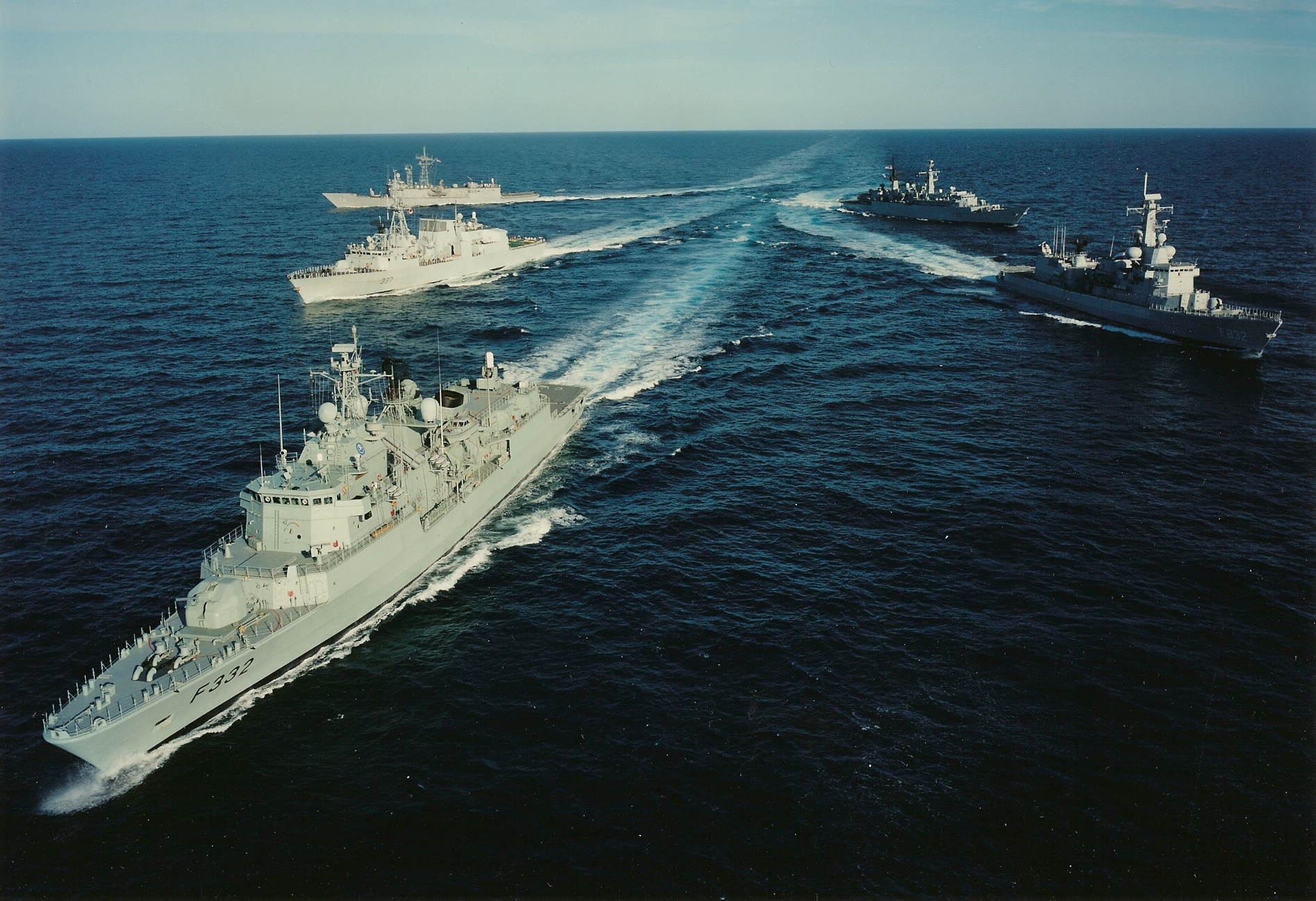
NATO expands migrant mission in Aegean Sea


Kathimerini

JOHN-THOR DAHLBURG

TAGS: Migration, Defense, Diplomacy, Interview

NATO announced Sunday that it was expanding its mission to help choke off the smuggling of migrants into Europe by deploying warships in Greek and Turkish waters, reinforcing its flotilla and deepening cooperation with the European Union's Frontex border agency.

Early Monday, Britain said it is contributing an amphibious landing ship backed by a Wildcat helicopter, as well as two border force cutters to the NATO force.

"We've got to break the business model of the criminal smugglers and stop the desperate flow of people crammed into makeshift vessels from embarking on a fruitless and perilous journey," British Prime Minister David Cameron said in a statement. "'

'That's why this NATO mission is so important. It's an opportunity to stop the smugglers and send out a clear message to migrants contemplating journeys to Europe that they will be turned back."

The widened mission comes after defense ministers of the 28-nation alliance on Feb. 11 ordered the immediate deployment of the three vessels in NATO's Standing Maritime Group 2 to the Aegean Sea.

In a telephone interview with the Associated Press, NATO secretary-general Jens Stoltenberg said, "We will do reconnaissance, we will do surveillance, we will collect information, and share this information in real time with the Turkish coast guard, the Greek coast guard and with Frontex, helping them with managing the migrant and refugee crisis, and also to cut the lines of the illegal trafficking and smugglers,"

The waters between Greece and Turkey, two NATO allies, are a key area where smugglers have been bringing tens of thousands of migrants into Europe, sparking what some have called the gravest crisis in the EU's history. EU and Turkish leaders will meet Monday in Brussels to discuss the emergency.
"Now we are going further by actually doing two new things," NATO's secretary-general told the AP. "We are going into Greek and Turkish territorial waters. We have agreed on arrangements for doing that."

"In addition, we have agreed with Frontex on how to work with them, how to share information so what we will do will be more efficient," Stoltenberg said.

NATO officials said the alliance's Allied Maritime Command and Frontex exchanged letters Sunday on specifics of their tactical and operational cooperation.

Now "NATO and Frontex will be able to exchange liaison officers and share information in real time, to enable Frontex, as well as Greece and Turkey, to take action in real time," NATO said in a statement.

Stoltenberg said additional NATO assets will also be sent to the Eastern Mediterranean. The German, Canadian and Turkish naval vessels deployed Feb. 11 have already been joined by a Greek unit, and Stoltenberg said France has announced it is sending a ship and that other allies are expected to follow suit.

The British announcement said the amphibious landing ship RFA Mounts Bay is expected to begin operations in the coming days-"identifying smugglers taking migrants to Greece and passing the information to the Turkish coast guard so they can intercept these boats." It said one British border force boat, VOS Grace, is already in the Aegean, that one cutter, the Protector, is on the way and another is expected to start operations later this month.

Stoltenberg stressed that NATO ships and crews "will not turn back the boats" carrying migrants, many of whom are fleeing war or poverty in their Middle Eastern or African homelands.

"What we will do is to support, assist, help the Turkish and the Greek authorities and the European Union," Stoltenberg said. He called the agreement reached for joint NATO-EU efforts in the field unprecedented.

In a statement, EU foreign policy chief Federica Mogherini and Home Affairs Commissioner Dimitris Avramopoulos hailed the "common understanding with NATO" formalized Sunday as "an important contribution to international efforts to tackle smuggling and irregular migration in the Aegean Sea."

The International Office of Migration estimated Friday that 125,819 migrants had reached the Greek islands since Jan. 1, and that 321 others drowned in the Eastern Mediterranean while attempting to make the journey across the cold, often dangerous waters.

On Monday, Stoltenberg is scheduled to meet in Brussels with Turkish Prime Minister Ahmet Davutoglu.

The Observer: Underwater and Underhanded: Russian Submarines Come to the Mideast


A new Russian nuclear submarine. Photo: ALEXANDER ZEMLIANICHENKO/AFP/Getty Images)

A new Russian submarine. Photo: ALEXANDER ZEMLIANICHENKO/AFP/Getty Images) 

ALEXANDER ZEMLIANICHENKO/AFP/Getty Images

Once again, Russia is upping the ante in the power game they are playing in the Middle East.
Russians have deployed a fleet of submarines off the coast of Syria. And not just any subs. These are the quietest subs in the world. NATO has termed these Russian subs “Black Hole.” They are diesel electric powered and fire Tomahawk-style rockets from the sea.
The subs are also known as Rostov -on- Don and the Russians have already used them against ISIS and al Qaeda. Russian Defense Minister Sergei Shoigu with Russia President Vladimir Putin recently held a televised meeting and broadcast footage of the submarines striking at ISIS targets.
One of the secret weapons of great powers is their submarine fleet. Very little time is spent analyzing the power and strength of these underwater vessels, but conventional wisdom has it that the greater the submarines fleet the more powerful the navy. This explains why the actual size of almost every nation’s submarine fleets is a top secret, and the best analysts can do is speculate as to the numbers involved. An advanced sub fleet can and will be much more powerful than any aircraft carrier.
In other words—the greater the sub fleet, the more powerful the military. And if a set of subs can go undetected for weeks at a time, the weapon becomes enormously effective both as a defensive and offensive weapon.
This Russian sub can remain submerged for 45 days. Weighing in at 4,000 tons, it is very small and very fast and can cruise at an underwater speed of 20 knots. Because of its small size, it is able to get into shallow water. Because it is so quiet, it leaves no sound signature. It becomes invisible.
“Black Hole” is one of Russia’s secret weapons, and it is now taking up residence just off the coast of Syria, Lebanon, Turkey and Israel.
How many are there? Best intel guesses say that Russia has 20 “Black Holes.” There are probably six of seven of these subs now submerged in the Mediterranean Sea.
They are not alone. Other subs in the area are there courtesy of the United States, England, Germany and France. Israel has submarines in the Mediterranean too. The others come and go at will. But for Israel this area is home.
Last year Iran brought one of its subs through the Suez Canal and up the Mediterranean Coastline to Syria. The sub was escorted by a naval vessel, and they cruised right by Israel to Syria. Once it reached its destination, the ship spun around and returned to Iran. To this day analysts have been searching for that Iranian sub. It is assumed that the Iranian sub returned to port, but no one knows for sure. We do know that it was the first time in decades that Iran had a naval presence in the Mediterranean Sea.
They are not as highly developed as the “Black Hole,” but Israel does have five or six (again, it’s top secret and classified and no one knows for sure) dolphin class, diesel-powered, subs that have been specially redesigned and outfitted with the ability to fire Tomahawks as well as “other weapons.”
Each of those subs, it is believed, is equipped with a 200 kilo nuclear missile containing six kilos of plutonium. This is known as a second strike weapon. In the event that Iran or some other country was to strike Israel, the nukes would be unleashed against the attacker.
It is safe to assume that, because of the threats facing Israel from her many enemies, all of her subs are not onshore, but rather, they are moving in and around the waters of potential attackers. Given the new tensions in the region and the presence of Russian subs in the region, Israel has probably relocated several subs closer to home. The Israeli subs are likely tracking the Russian subs in a dangerous game of underwater cat and mouse.
The airspace above Syria is also very crowded. There are air forces from 14 countries bumping shoulders in the sky. Russia has exercised control over the airspace with its anti-air missile program, and it controls the sky patrols thru an AWACS type plane. At this point, any country that wants to fly above Syria—and they all do—must get clearance from Russia.
Russia wants to do in the sea what they are doing in the air. And they want to do it through intimidation.
With their submarine presence now powerfully established off the coast of Syria, Russia has created what has been termed an Arc of Steel. The arc goes from the Arctic Circle through the Baltic Sea to Crimea to the Mediterranean Sea. The game plan is to challenge and confront NATO and the West. In this game, the Middle East is just one connecting link in a chain of naval influence, power and intimidation.

Tirana is preparing 4 camps for Syrian refugees


Sources from the Albanian Interior Ministers' speak about 4 camps in Vlora, Gjirokastra, Librazhdi and Lezha.

Voices from the Ministry of Interior of Albania, provide data for 4 camps to be set up in Albanian territory, which consists of a large influx of Syrian refugees to come from the border with Greece.

Albania faces some pressure to European countries, among which the Austria and Italy on the one hand seeking control of the border with Greece, and Greece on the other hand, which requires opening the border with Albania.

Albanian politicians, their position might prefer Greece, for the reasons why financial assistance can be allocated and the second to change although domestic climate policy, giving primary object question of accommodation of refugees.

Albania offers collectors its Communist-era airborne glory: Military’s rusting fighter jets up for auction


In this photo taken on Monday, Feb. 15, 2016 Vasil Jangari, a former jet engineer, climbs over an old Mig-19 fighter jet at the Rinasi air base, near Tirana.  If you want to buy a secondhand fighter jet, Albania is the place to go right now.
AP Photo/Gent ShkullakuIn this photo taken on Monday, Feb. 15, 2016 Vasil Jangari, a former jet engineer, climbs over an old Mig-19 fighter jet at the Rinasi air base, near Tirana. If you want to buy a secondhand fighter jet, Albania is the place to go right now.
  • RINASI AIR BASE, Albania — If you want to buy a secondhand fighter jet, Albania’s the place to go right now.
The 40 obsolete Soviet and Chinese-made aircraft up for sale once roared over what was Europe’s most exclusive airspace. The Albanian pilots were members of an exalted military elite that had its own food-tasters and was tasked by Communist Albania’s paranoid regime with deterring countless enemies who never did come to this country on the Adriatic Sea.
Now a NATO member, Albania is auctioning off the rusting jets to pay for modernizing its military and to save space in its air bases. The Socialist government says it has received strong interest from aviation collectors and museums abroad — so much that it pushed back the initial auction date and is considering raising the starting bids, first set at 1.1 million to 1.9 million leks (Cdn $11,700-$20,000).
AP Photo/Gent Shkullaku
AP Photo/Gent ShkullakuIn this photo taken on Monday, Feb. 15, 2016 an old Mig-19 fighter jet is photographed at the Rinasi air base, near Tirana.
“It was a surprise for us,” Defence Minister Mimi Kodheli said, noting “a rush” of interest from prospective bidders in the United States, Germany, France, Italy and other countries.
In a corner of the Rinasi air base outside the capital of Tirana, 11 decrepit MiG-17 and MiG-19 jets are parked in neat rows, guarded by two military officers. Their silver-grey paint with the distinctive red, black and red roundels is fading, their tires are flat, the guns are rust-flecked and some of their glass canopies are broken.
Former jet mechanic Vasil Jongari, 55, seemed almost ashamed to show the planes to visiting journalists.
“There is nostalgia always,” he said, running his fingers over the 32 millimeter gun on a MiG-19. “But they cannot be kept only based on desire. They need money, and money we don’t have.”
Ilirjan Kola, 61, who flew Albanian air force MiG-15 to MiG-19 jets from 1976 until 1991, said the planes were always so expensive to operate.
“MiGs were so costly,” he said. “A twin-engine MiG-19 consumed 52 litres of fuel a minute. With a normal flight of 30-40 minutes, imagine the expense … Better that they had sold them before.”
AP Photo/Gent Shkullaku
AP Photo/Gent ShkullakuIn this photo taken on Monday, Feb. 15, 2016, a Mig-17 and Mig-19 fighter jets stand at the Rinasi air base, near Tirana.
Albania’s air force was founded in 1951 and received MiGs from the Soviet Union until 1962. After Communist leader Enver Hoxha broke with the Russians, the country continued to be supplied with planes and spares from Communist China — until 1977, when Albania also severed ties with the Chinese.
About 160 Albanian pilots graduated from a military academy in southwestern Vlora, and used to clock up about 80 flying hours a year. Only five still serve — and now they all fly helicopters.
“We were privileged at the time, with specially chosen food, shelter, health care and vacations,” Kola said. He said the food came from a dedicated farm near the air base, which a doctor tasted for them on a daily basis.
AP Photo/Gent Shkullaku
AP Photo/Gent Shkullaku  In this photo taken on Monday, Feb. 15, 2016 old Migs fighter jets are stand at the Rinasi air base, near Tirana.


Albania Aims to Open EU Talks this Year


Officials in Tirana hope that if judicial reforms are duly adopted by June, the country may be able to start membership talks with the EU by year's end


Fatjona Mejdini
BIRN
Albania

Prime Minister Edi Rama and High Representative of the Union for Foreign Affairs, Federica Mogherini in Tirana | Photo: LSA/Gent Shkullaku

Albanian officials hope the country can open accession talks with the European Union by the end of this year, once parliament has adopted a package of EU-mandated judicial reforms.

Albanian officials have asked the European Commission to issue an intermediate progress report once the package of changes has passed through parliament.

Officials in Tirana believe a good report from the Commission will prompt the Council of the European Union to back accessions talks on full membership.

Gledis Gjipali, director of the European Movement in Albania, EMA, said Albania stands a good chance of opening accession talks by December, although he warns that simply passing the judicial reform package might not be enough.

"Approval of the package is just the beginning of the work on reforming justice," he said.

"It also has to be seen and assessed - the impact that it has on cleaning up corruption in the administration and getting politics out of the justice system."

Gjipali also warns that Albania must convince every EU member state of its seriousness in implementing justice reforms because every one of these states will have to approve the opening of accession talks.

EU foreign affairs chief Federica Mogherini said on Thursday in a speech to Albanian MPs that justice reform was the most important reform that the EU required of the country at this point.

"This reform is going to open the path for a European Commission recommendation to open accession talks and for EU member countries to give Albania a positive decision on this issue," Mogherini said.

A commission of ruling and opposition party MPs and experts is still reflecting on the last set of recommendations that the Venice Commission issued on Albanian judicial reform.

Meanwhile, pressure is growing from US and EU representatives in Albania to get on with the passage of reform legislation.

Although it is a key condition, judicial reform is not the only reform that Albania has to undertake in order to move forward on the EU path.

The creation of an impartial and professional public administration, curbing corruption at every level, repressing organized crime and protecting human rights are other priorities that the country has to show improvement on before it can open accession talks.

In the Western Balkan region, Slovenia and Croatia are already EU members while Serbia and Montenegro have both opened accession talks.

Bosnia and Herzegovina recently filed a formal application to join. Macedonia's EU talks are on hold until it has resolved its dispute with Greece over its name.

Για τη δημιουργία της "Μεγάλης Αλβανίας", καθώς και την "ευθύνη" της Ελλάδας

SManalysis

Πού θα πάμε: προς αφομοίωση από την «Μεγάλη Αλβανία», ή μια ισχυρή αντίσταση με την Ελλάδα?

Σήμερα, 25 χρόνια μετά την κατάρρευση του κομμουνισμού, θα υπάρξει μια ισχυρή Αυτόνομη Δημοκρατία στη Βόρεια Ήπειρο και, μέσα σε αυτό μια Χειμάρρα, με ειδικό καθεστώς.

Ελλάδα θα είχε, ένας εταίρος για την ανάπτυξη της Αυτόνομης Δημοκρατίας της Βορείου Ηπείρου, θα έχουν κάνει τις μεγαλύτερες επενδύσεις, όχι στα Τίρανα και την Αλβανία, αλλά και στη Βόρειο Ήπειρο, και ο πληθυσμός, θα αισθάνονται ασφαλείς στη χώρα τους .

Αυτόνομη Δημοκρατία, θα έχουν τη δική της καθεστώς, την κυβέρνηση και το κοινοβούλιο της, μια δεύτερη Ελλάδα στο αλβανικό έδαφος, με Χιμάρα, με καθεστώς "Montekarlo" .Η Ελλάδα και η Αυτόνομη Δημοκρατία της Ηπείρου Βόρεια, τουλάχιστον, σύμφωνα με το Πρωτόκολλο της Κέρκυρας το 1914, θα είταναι μια παράλληλη όπως η Σερβία έχει Republika Srpska στη Βοσνία ή σε Μητροβίτσα Κοσσυφοπέδιο, Ουγγαρία Βοϊβοντίνα στη Σερβία, οι Αλβανοί στην ΠΓΔΜ έχουν την Αλβανία, για να μην προχωρήσει περαιτέρω, Κοσσυφοπέδιο, την απόσχιση από τη Σερβία από το ΝΑΤΟ, 1999.

Το 2008 κήρυξε ανεξαρτησία του Κοσσυφοπεδίου, ενώ η Ελλάδα το 2009, το ελληνικό κοινοβούλιο ψήφισε την ένταξη στο ΝΑΤΟ της Αλβανίας. Υπήρχε καμία εγγύηση, η Ελλάδα από τις ΗΠΑ, σε αντάλλαγμα για την ένταξη της Αλβανίας, για να δημιουργήσουν την Αυτόνομη Δημοκρατία της Βορείου Ηπείρου?

Στη συνέχεια, υπάρχουν δύο μεγάλες πλήγμες: απογραφή στην Αλβανία, οι Έλληνες κατέστρεψαν, και, δεύτερον, την εδαφική διαίρεση, δημοτικές εθνοκάθαρση στη ελληνική παρουσία στη Βόρεια Ήπειρο.

Σήμερα, είμαστε στην αντίθετη θέση. Ξεκινώντας από Σημίτης, Καραμανλής, Παπανδρέου, Παπούλιας, κλπ ,,, θα πρέπει να εξηγηθεί γιατί, η ελληνική εθνική αιτία να εξαφανισαν, την Αυτόνομη Δημοκρατία της Βορείου Ηπείρου, ενώ το αντίθετο συμβαίνει, Τίρανα, κάνει εθνοκάθαρση στη Βόρεια Ήπειρο και δημιουργεί Μεγάλη Αλβανία.

Ενώ στη Χιμάρα Περιφέρεια, ακίνητα λεηλατήθηκαν δίνοντας ολιγάρχες με € 1, και φέρνοντας ανθρώπους που έχουν εκτοπιστεί από άλλες αλβανικές πλευρές ...

Χειμάρρα, είναι το τέλος της εθνοκάθαρσης που συμβαίνει στη Βόρεια Ήπειρο. Πανηπειρωτική Ομοσπονδία Αμερικής και η διασπορά της Χιμάρας, έχουν μεγάλη ευθύνη, να μην αμφισβητήσουν την κατάσταση των ελευθεριών και των δικαιωμάτων της αυτοδιάθεσης της Βορείου Ηπείρου ,, στις ΗΠΑ έχει μια πολύ ερασιτεχνικό ενδιαφέρον, δεν συνειδητοποιούν ότι η κατάσταση στη Χειμάρρα, Βόρεια Ήπειρο, είναι καταστροφική, δράσεις που διεξάγονται από το αλβανικό κράτος, με στενό σύμμαχο της Ουάσιγκτον.

Η Αλβανία, η χώρα προς τα πίσω, με έναν εμφύλιο πόλεμο το 1997 (για την οποία η Ελλάδα και οι ΗΠΑ, δεν είναι επίσημο ακόμα γνωστό, αν και δεν είχε ληφθεί για την υπεράσπιση της Βορείου Ηπείρου, από Ελληνικού Στρατού) ήρθε στο ΝΑΤΟ, από Ελλάδα και συνεχίζεται να ανοίξει το δρόμο για την ΕΕ, ενώ διαπράττει εθνοκάθαρση εναντίον του ελληνικού πληθυσμού στη Βόρειο Ήπειρο, απειλεί με τη βοήθεια του Big Brothers, στη βόρεια Ελλάδας, ιδιαίτερα από Τσάμηδες.

Και ρωτάμε: ποιος είναι υπεύθυνος στην Αθήνα, για την κατάσταση αυτή που έπληξε την οικονομική κατάσταση, πολιτικά και γεωπολιτικά στρατηγικά συμφέροντα της Ελλάδας?

Sunday, March 6, 2016

Turkey Disputes Greece’s Sovereignty Over Aegean Islands

NATOships
By Philip Chrysopoulos
Mar 6, 2016
Greek Reporter

NATOshipsTurkey is making territorial claims over a group of islets in the Aegean Sea, according to a document submitted to NATO, says a Kathimerini report.

The document was submitted to NATO’s Military Committee last month, after the agreement that NATO ships would be patrolling Aegean waters between Greece and Turkey in order to monitor the activity of refugee smugglers leaving from the Turkish coasts for the nearby Greek islands.

According to a confidential document obtained by Kathimerini and cited in the newspaper’s Sunday edition, Turkey is claiming the sovereignty of a string of islets in the Aegean and part of its air space.

The 17-point document was submitted, February 15, during negotiations between Greece and Turkey over the terms of deployment of a German-led NATO patrol in the Aegean to stem the flow of refugees.

This is the first time Turkey disputes Greek sovereignty via an official NATO document. According to the document, Turkey’s demands from the Alliance included replacing the term “Aegean air space” with “NATO air space” and refraining from using the Greek names of several islets “that may have been seen as the promotion of national interest” – an apparent reference to 16 small Greek islands that are repeatedly disputed by Ankara.

Turkey also disputes Greece’s 10-mile national air space and demands permission to enter the Athens Flight Information Region (FIR) without submitting flight plans, as Turkish war planes often do. It further requests that NATO ships do not dock at ports of the Dodecanese islands in the southeast Aegean and claimed supervision of almost half the Aegean Sea for search and rescue operations.

The terms of the NATO patrol in the Aegean were agreed on by both countries, February 25. The agreement stipulated that Greece and Turkey would not operate in each other’s territorial waters and air space.

AP Interview: NATO expands migrant mission in Aegean Sea


By The Canadian Press
March 6, 2016
BRUSSELS — NATO announced Sunday that it was expanding its mission to help choke off the smuggling of migrants into Europe by deploying warships in Greek and Turkish waters, using more vessels and deepening co-operation with the European Union's Frontex border agency.

NATO Secretary-General Jens Stoltenberg made the remarks in a phone interview with The Associated Press a day before a summit of EU and Turkish leaders in Brussels about the migration crisis.

"We will do reconnaissance, we will do surveillance, we will collect information, and share this information in real time with the Turkish coast guard, the Greek coast guard and with Frontex, helping them with managing the migrant and refugee crisis, and also to cut the lines of the illegal trafficking and smugglers," Stoltenberg said.

The widened mission comes after defence ministers of the 28-nation alliance on Feb. 11 ordered the immediate deployment of three NATO vessels to the Aegean Sea. The waters between Greece and Turkey, two NATO allies, are a key area where smugglers have been bringing tens of thousands of migrants into Europe, sparking what some have called the gravest crisis in the EU's history.

"Now we are going further by actually doing two new things," Stoltenberg told the AP. "We are going into Greek and Turkish territorial waters. We have agreed on arrangements for doing that."

"In addition, we have agreed with Frontex on how to work with them, how to share information so what we will do will be more efficient," the NATO chief said.

NATO officials said the alliance's Allied Maritime Command and Frontex exchanged letters Sunday on specifics of their tactical and operational co-operation.

Now "NATO and Frontex will be able to exchange liaison officers and share information in real time, to enable Frontex, as well as Greece and Turkey, to take action in real time," NATO said in a statement.

Stoltenberg said more NATO ships will also be sent to the Eastern Mediterranean. The German, Canadian and Turkish naval vessels deployed Feb. 11 have been joined by a Greek unit, France has announced it is sending a ship and other allies are expected to follow suit, Stoltenberg said.

Full Speed Ahead! Russian Warship Sets Sail for Mediterranean Mission

The Russian guided missile destroyer Smetlivy

The Russian guided missile destroyer Smetlivy has left the country's southwestern port of Sevastopol for the Mediterranean Sea, according to the Russian Defense Ministry.


The Russian Defense Ministry stated that the Smetlivy destroyer of the Russian Navy's Black Sea Fleet has departed from the country's southwestern port city of Sevastopol and is headed for the Mediterranean, where the warship will be on a mission.
According to the statement, the Smetlivy is due to join Russia's naval force in the region on March 7.


Currently, more than 15 Russian warships and other vessels are carrying out security-related missions in the Mediterranean, including those pertaining to providing logistical support to a Russian Aerospace Forces unit in Syria as well as to the Syrian Army.
In this file photo from 2004, the Russian Navy's Admiral Kuznetsov aircraft carrier is seen in the Barents Sea, Russia
In this file photo from 2004, the Russian Navy's Admiral Kuznetsov aircraft carrier is seen in the Barents

Earlier this week, it was reported that the Russian Navy's Mediterranean task force, which includes warships from the Black Sea, the Baltic Sea, and the Northern and the Pacific Fleets, may be joined by the aircraft carrier Admiral Kuznetsov in the summer of 2016.

Surge of 100,000 migrants building in Greece

Surge of 100,000 migrants building in Greece

Link

As EU members continued to bicker, Dimitris Avramopoulos, in charge of migration at the powerful Brussels executive, pointed to upcoming measures, including an overhaul of asylum rules, to help ease tensions.
"Hundreds are arriving on a daily basis and Greece is expected to receive another 100,000 by the end of the month," Avramopoulos told a conference in Athens.
Greece lies at the heart of Europe's greatest migration crisis in six decades after a series of border restrictions on the migrant trail from Austria to Macedonia caused a bottleneck on its soil.
Over 30,000 refugees and migrants are now trapped in the country, desperate to head northwards, especially to Germany and Scandinavia.
"In a few weeks," the EU will announce a revision of its asylum regulations to ensure a "fairer distribution of the burden and the responsibility," Avramopoulous told the conference.

Summit hopes
The huge influx of refugees and migrants has caused major divisions within the EU, although European President Donald Tusk on Friday struck an upbeat note about Monday's summit in Brussels, which will include Turkey.
European leaders are expected to use the summit to press Ankara to take back more economic migrants from Greece and reduce the flow of people across the Aegean Sea.
Finger-pointing continued within the 28-nation EU bloc on Saturday.
German Chancellor Angela Merkel -- a key player in the drama -- said Greece should have been quicker in preparing to host 50,000 people under an agreement with the European Union in October.
"Greece should have created 50,000 accommodation places for refugees by the end of 2015," Merkel told Bild newspaper in an interview to appear Sunday.
"This delay must be addressed as soon as possible as the Greek government must provide decent lodgings to asylum claimants", she said.
Germany's neighbour, Austria, meanwhile, reiterated its call for Berlin to establish an annual quota of refugees.
Last year, 1.1 million migrants arrived in Germany under Merkel's liberal asylum policy -- a flood that other countries have said is just not sustainable.
"Germany, for its part, has to determine a figure for the number of refugees which can be accepted, which it is willing to go and pick up in the Syria and Turkey region," Austrian Chancellor Werner Faymann said in an interview in the daily Kurier.
The quota could be "400,000 refugees" per year, Faymann said, using Austria's intake -- 37,500 in a country of 8.5 million for 2016 -- as a benchmark.
"At the end of the day, Germany has to be clear about things, otherwise refugees will continue to head there", Faymann said.

Border problems

Around a third of migrant buildup in Greece is at the Idomeni crossing, on the country's norther border with non-EU member Macedonia.
Aid groups have sounded the alarm, reporting food and tent shortages and deteriorating hygiene.
"There are 13,000 people here and nearly 20,000 in this prefecture, over 60 percent of the country's entire refugee and migrant flow," Apostolos Tzitzikostas, regional governor of Greece's central Macedonia prefecture, told Skai television on Saturday.
"We can no longer shoulder this burden by ourselves."
Greece sent in the army in February to speed up the creation of open camps for migrants and refugees but has occasionally run into opposition from local authorities.
The charity Doctors Without Borders (MSF) on Saturday began erecting additional tents at Idomeni to shelter over 1,000 people who could not fit in the camp and have been sleeping in muddy fields and ditches, an AFP reporter said.
In past days, the mainly Syrian and Iraqi refugees have regularly held protests in front of the barbed-wire fence guarded by Macedonian riot police, demanding to be allowed through.
"I don't know what will happen"
Story continues below…

Republicans Cruz, Trump on Tie, Democrat Clinton Lead on Super Saturday


Republican presidential candidates, businessman Donald Trump and Republican presidential candidate, Sen. Ted Cruz, R-Texas, argue a point during a Republican presidential primary debate at Fox Theatre, Thursday, March 3, 2016, in Detroit


Super Saturday revealed Democratic presidential candidate Hillary Clinton stregthned her lead against her rival Bernie Sanders, however Republican hopefuls Donald Trump and Ted Cruz claimed two victories each.

WASHINGTON (Sputnik) — US Republican presidential hopefuls Donald Trump and Ted Cruz claimed two victories each, while Hillary Clinton further cemented her lead in the Democratic race over her rival Bernie Sanders at Saturday caucuses and primaries in five US states.
Saturday’s Republican races included Kansas, Maine, Kentucky and Louisiana, while the Democrats competed in Nebraska, Kansas and Louisiana.
In Kansas, US Republican Presidential hopeful Senator Ted Cruz has scored 48.2 percent of the votes, while his main rival Donald Trump, who successfully performed at the Super Tuesday, secured 23.3 percent. Sen. Marco Rubio received the support of 16.7 of voters, and John Kasich, the governor of Ohio, got 10.7 percent. Despite his victory in Louisiana and Kentucky, Trump failed to secure more delegates' votes in total than Cruz, who also won in Maine.
Former US State Secretary Hillary Clinton won only one but the largest state out of three, Louisiana, which allowed her to beat Sen. Bernie Sanders in total delegates' votes.
Cruz and Sanders still have good chances to continue the presidential race, while Rubio, who failed to win or secure the second place in all states, has now less chances to become Trump's main rival.
TRUMP VS CRUZ
Cruz's victory in the Kansas caucuses became the fifth for him as he previously dominated in Iowa, Oklahoma, Alaska and his native state of Texas.
In Maine, Cruz secured 45.9 percent versus Trump's 32.6 percent. Kasich and Rubio won 12.2 and 8 percent, respectively. Kentucky's voting saw 35.9 and 31.6 percent for Trump and Cruz, respectively. In Louisiana, Trump won 41.4 percent versus Cruz' 37.8. Rubio came third in both states with 16.4 and 11.2 percent, respectively.
A presidential hopeful has to secure at least 1237 delegates' votes to become a candidate from the Republican party. According to the New York Times' estimates, Trump has 373 votes, while Cruz, Rubio and Kasich have 291, 122 and 33 votes, respectively.
1:2 FOR CLINTON
Clinton has counted on a large state, Louisiana, with 59 delegates at stake, and subsequently won it, gaining more than 70 percent of votes.
Sanders in turn won in Nebraska with 56.4 percent versus Clinton's 43.6, and in Kansas with 67.7 percent compared to 32.3 percent secured by Clinton. In Super Saturday's total, preliminary estimates show that Clinton has 65 delegates' votes, while Sanders has 42.
After Saturday's voting, Clinton has 1,117 delegates versus Sanders' 477. The presidential hopeful has to win 2,383 votes out of 4,764 to become a candidate from the Democrats.

Έκθεση της CIA: Απόσχιση της Βόρειας Ηπείρου εάν συνεχιστεί ή ίδια αμερικανική πολιτική στα Βαλκάνια!

Αν οι Ηνωμένες Πολιτείες συνεχίσουν να υποστηρίζουν σθεναρά τους Αλβανούς, στις  εθνικιστικού τύπου ονειρώξεις τους για την δημιουργία της αποκαλούμενης...

Link 


ellada-balkania

Δημοσίευση

Αν οι Ηνωμένες Πολιτείες συνεχίσουν να υποστηρίζουν σθεναρά τους Αλβανούς, στις  εθνικιστικού τύπου ονειρώξεις τους για την δημιουργία της αποκαλούμενης «Μεγάλης Αλβανίας», τότε   θα σχηματισθεί ταχύτατα το  «Ορθόδοξο  μέτωπο » από  Σερβία,  Ελλάδα,  Βουλγαρία και  ΠΓΔΜ, σύμφωνα με την τελευταία έκθεση της αμερικανικής υπηρεσίας πληροφοριών CIA, αναφέρει ο σερβικός τύπος.

Ακριβώς όπως είχαμε αναφέρει με άρθρο στο pentapostagma.gr, με τίτλο (CIA: Αναβίωση της Βαλκανικής συμμαχίας λόγω της εμφάνισης της «Μεγάλης Αλβανίας» και τρίτος βαλκανικός πόλεμος!).

Οι ΗΠΑ μετά τις τρομοκρατικές επιθέσεις στο Κουμάνοβο συνέχισαν  την πολιτική της άνευ όρων υποστήριξης των Αλβανών, ενώ και η ΕΕ συνεχίζει «σιωπηλά» να υποστηρίζει την αναβίωση της «Μεγάλης Αλβανίας», τονίζει το δημοσίευμα.  


Αυτή η πολιτική από ΗΠΑ και ΕΕ ,  θα  οδηγήσει με μαθηματική ακρίβεια στο σχηματισμό του  «ορθόδοξου μετώπου » και στο Τρίτο Βαλκανικό Πόλεμο , τονίζει και η νέα έκθεση της υπηρεσίας πληροφοριών των ΗΠΑ.
Το  συμπέρασμα της τελευταίας έκθεσης της CIA για την κατάσταση στην περιοχή των Βαλκανίων, είναι πολύ άσχημη για τις ΗΠΑ και την ΕΕ , ενώ Αμερικανοί αξιωματούχοι  στην Ουάσιγκτον προειδοποιούν  ότι περαιτέρω ισχυρή υποστήριξη των Αλβανών και με δεδομένη της άσχημη οικονομική κρίση στην περιοχή, θα ωθήσει  ακόμη και τους ορθόδοξους Αλβανούς  στην «αγκαλιά» της Ρωσίας.
Όταν λένε οι Αμερικανοί για «Ορθόδοξους Αλβανούς» ,μιλούν για τους Έλληνες της Βόρειας Ηπείρου και ενδεχομένως θεωρούν  πολύ πιθανό την ενσωμάτωση της στο εθνικό κορμό της Ελλάδος, με ρωσική βοήθεια .
Πρόκειται για ένα πάγιο αίτημα το οποίο έμεινε ανεκπλήρωτο σε δύο παγκόσμιους πολέμους και τρεις διεθνείς διασκέψεις και κάποια στιγμή πρέπει να γίνει πραγματικότητα .
Ως εκ τούτου, οι αναλυτές της CIA προειδοποιούν τις αρχές των ΗΠΑ  για τα Βαλκάνια, τονίζοντας ότι αναγκαιεί  μια  ισορροπημένη προσέγγιση,  προειδοποιώντας ότι είναι πολύ πιθανό,   Σερβία, Ελλάδα, Βουλγαρία και ΠΓΔΜ να δημιουργήσουν τελικά την  ορθόδοξη συμμαχία με επικεφαλής την Μόσχα.
Οι ίδιοι αναλυτές τονίζουν ότι οι βαλκανικές χώρες των οποίων τα εδάφη επηρεάζονται από το σχέδιο της «Μεγάλης Αλβανίας» δεν θα μείνουν σιωπηλές και «ήσυχες» παρακολουθώντας την απόσπαση  εθνικού τους εδάφους από τους Αλβανούς.
Επιπλέον, είναι πεπεισμένοι ότι σε περίπτωση  έκτακτης ανάγκης, Σέρβοι,  Έλληνες, Βούλγαροι και Σκοπιανοί θα ενωθούν σε χρόνο μηδέν.
Στην περίπτωση αυτή, τα Βαλκάνια θα μετατραπούν σε  Μέση Ανατολή, και ακόμη και οι  Ηνωμένες Πολιτείες δεν είναι σε θέση να σταματήσουν την σφαγή που θα γίνει, αναφέρει καλά  ενημερωμένη διπλωματική πηγή.
Κανείς στην σερβική  κυβέρνηση δεν αρνήθηκε να σχολιάσει αυτά τα ευρήματα των Αμερικανών ειδικών. Από την άλλη πλευρά, και οι Σέρβοι εκτιμούν την υλοποίηση του σεναρίου της «Ορθόδοξης συμμαχίας».
 Ο Σέρβος ειδικός Αναλυτής Ντιόρντιε Βουκαντίνοβιτς τονίζει ότι  η ένωση των χωρών των Βαλκανικών πολέμων του 1912-123,   είναι μια λογική αντίδραση σήμερα στην  προσπάθεια  δημιουργίας της  αποκαλούμενης «Μεγάλης Αλβανίας».
«Εάν η συμμαχία υλοποιηθεί , δεν πιστεύω ότι οι Ηνωμένες Πολιτείες  να μπορέσουν να σώσουν τους «αγαπημένους τους  Αλβανούς. Η Σερβία συμμετείχε σε  παρόμοια συμμαχία εναντίον της Οθωμανικής αυτοκρατορίας», θυμίζει ο  Βουκαντίνοβιτς.
Ο Τσέντομιρ Άντις , πολιτικός στο Προοδευτικό κλαμπ , επισημαίνει ότι περισσότερο από μια δεκαετία, υπάρχει η ιδέα της συγχώνευσης των Βαλκανίων.

Albania Opposition "de facto" Boycotts the Parliament, calls for anticipated elections


Sali Berisha the historic leader of Albanian opposition, declared that "the boycott from the Parliament means new anticipated elections.


Albania's parliament is again in deadlock, this is the decision of the Opposition coalition,  after the judicial reforms approved last session.

During an interview of Former Prime Minister Sali Berisha to the Klan TV "Free Zone" he called the Albanian Government to be prepare for the mostly revolts of the opposition, after the boycott by the Parliament. 

Opposition MPs tried to stop the parliamentary session on Thursday by throwing eggs towards Prime Minister and Socialist Party leader Edi Rama.


The head of the Democratic Party Lulezim Basha, hold a press conference declaring "Officialy Decision for Boycott of the parliament..

Protests started when Armando Prenga, a government MP, was returned to parliament despite his involvement in a brawl in September 2015 with a 66-year-old fisherman in which he used a handgun.

Arben Prenga was later expelled from Rama's Socialist Party but voted in line with other Socialist MPs during a parliamentary commission on Tuesday after the Supreme Court released him on bail.

His return to parliament angered the centre-right opposition MPs who demanded the prompt amendment of a newly approved law that bans people with convictions from public office.

They want the law to demand "the immediate removal of every individual from politics who was involved in injuring or threatening of another individual".

"Otherwise, this parlament is not going to function any longer. It will close right here, right now," Paloka said.


Προχωράει το σχέδιο της Αλβανικής κυβέρνησης για την αρπαγή περιουσιών στην Χιμάρα

Στις 2 Μαρτίου η Κυβέρνηση της Αλβανίας ενέκρινε την απόφαση "Για τους κανονισμούς, την διαδικασία και τον τρόπο παραχώρησης της κρατικής ακίνητης περιουσίας στις τουριστικές περιοχές με προτεραιότητα για την ανάπτυξη του τουρισμού."
 
Η απόφαση αποτελεί συνέχεια του νόμου "Περί ανάπτυξης του τουρισμού" που προβλέπει την παραχώρηση κρατικής, δημοτικής και ιδιωτικής ακίνητης περιουσίας σε ιδιώτες για επενδύσεις στον τομέα του τουρισμού. Η συγκεκριμένη απόφαση περιγράφει και καθορίζει την διαδικασία παραχώρησης κρατικής περιουσίας δωρεάν για 99 χρόνια στους υποψήφιους επενδυτές.
Η απόφαση ρυθμίζει την παραχώρηση κρατικής και δημοτικής περιουσίας δωρεάν για 99 χρόνια στους υποψήφιους επενδυτές, με μια περίπλοκη αλλά σύντομη διαδικασία που συμπεριλαμβάνει και την παραχώρησης της περιουσίας που δεν έχει καταγράφει ως ιδιωτική, οπότε με βάση τον αλβανικό νόμο είναι κρατική, όπως η περίπτωση της Χιμάρας.

Στην Χιμάρα, εξαιτίας της μη καταγραφής στο κτηματολόγιο Αυλώνας της ακίνητης περιουσίας που ανήκει στο Δήμο, στους ιδιώτες και στην εκκλησία, προκύπτουν πολλές τεράστιες "ελεύθερες εκτάσεις" οι οποίες κινδυνεύουν να παραχωρηθούν δωρεάν σε επενδυτές πριν προλάβουν να καταγράφουν απ' τους νόμιμους δικαιούχους.

Στην σχετική απόφαση υπάρχει πρόβλεψη που μόνο επενδυτές που είναι πρόθυμη να επενδύσουν 5 εκατομμύρια ευρώ και άνω μπορούν να επωφεληθούν από το νόμο αυτό αποκλείοντας έτσι τα μέλη της τοπικής κοινότητας να επωφεληθούν από το νόμο αυτό, ανοίγοντας το δρόμο στους ολιγάρχες της Αλβανίας να αρπάξουν τεράστιες εκτάσεις ακίνητης περιουσίας στην Χιμάρα.

Πρόκειται για την πρόταση ανάπτυξης τουρισμού στην Χιμάρα που παρουσίασε και ο Δήμαρχος της περιοχής, Γιώργο Γκόρο, κατά την διάρκεια των εκλογών τον Ιούνιο 2015: "Τα δημοτικά κτήματα της Χιμάρας θα τα παραχωρήσουμε στους επενδυτές με 1 ευρώ."

Δεν είναι τυχαίο που το οικονομικό περιοδικό MONITOR, όταν παρουσίασε την είδηση της απόφασης είχε ως ενδεικτική φωτογραφία τον κόλπο του Πάνορμου στην Χιμάρα.