Wednesday, February 10, 2016

Jailing of ex French Foreign Legion chief over anti-migrant rally ‘could stir revolt’

© Philippe Huguen
The French government made a mistake detaining General Christian Piquemal during anti-migrant protests in Calais, as many people are aware there are a lot of illegal migrants who have broken French law by arriving in the country, experts say.
An anti-migrant rally banned by the French government took place in the town of Calais on Saturday. The rally was organized by the PEGIDA movement. Several protesters were arrested. A former commander of the French Foreign Legion General Christian Piquemal, 75 - who spoke at the rally - was among those taken into custody. All could face up to a year in prison and should have appeared in court on Monday in Boulogne-sur-mer. However the appearance of Piquemal has been postponed after the retired general was taken to the hospital.
Yvan Blot, former member of the National Front and European Parliament, and a friend of the General told RT he was surprised by the arrests in Calais. In his view, many of the migrants broke the law to getting into France, but remain free, whilst those who came to rally against the situation get arrested.
“General Piquemal is a friend of mine, and I am a former member of parliament for the constituency of Calais. So I know the situation in Calais.  It is [a big] scandal in fact. I am very shocked,” he said. In Blot’s opinion “the government made a real mistake.” 
Many people are now speaking out in defense of Christian Piquemal; that’s “because two thirds of the citizens in France” are against the number of the immigrants allowed into the country, said Blot. 
“They are not against foreigners,” he said. “But they think there are too many immigrants and the majority of them come here in [violation] of French law.”
“A lot of people who are from the right, or from the left, who think there are too many immigrants; a lot of them – not all naturally – [commit] crimes. If you go to French prisons, you will see the majority of the people are very often foreigners who are illegally in our country,” he added.
Former MEP Blot suggests it’s unlikely the retired four-star general would get a prison term.
“If it was the case, there could be a big revolt within the French population, perhaps within the army, because General Piquemal … is the glory of the French army,” he said. “It would be a big mistake for the government after the arrest to put him into the jail for a long time.”
Nicolas Dhuicq, a member of the National Assembly of France, says the case got a lot of public support because people “know that reality is difficult,” but they also “know the General needs to be respected.”
“You need to respect the function of the retired four-star general who commanded the most brilliant of all French units,” he added.
“What surprises me is the way he was arrested, because the Foreign Legion is not a regular unit, as you know, it’s the pride of all the French Army... The government would have been wiser to do things in a much more honorable manner than this way on the streets,” the MP said.
READ MORE: Ex-French Foreign Legion commander arrested at anti-Islam rally, due in court on Monday
In Dhuicq’s view, the government applies double standards in dealing with pro- and anti-refugee demonstrations.
“The second thing which is infuriating people is that you have the feeling that, when you demonstrate against Calais and immigration, you’re brutally arrested; and when you demonstrate for it, everything is open and tolerated,” he told RT.
According to Dhuicq, the growing anti-refugee sentiment spreading among all sections of society is not a question of the right and left, but rather the way people in France feel.
“We are paying the fact that we are following the Americans in their totally disgraceful politics in the Middle East,” he said. “The best thing to do will be to lift the embargo on Syria, because the embargo is destroying businesses in Syria and forcing people to migrate. So the right answer is, again, for France to have true French sovereign foreign policy.”

Founding Members Say European Union Could Split Over 'Challenging Times'

Embedded image permalink

© Flickr/ William Murphy
Europe

The six founding members of the EU have said they are "concerned" about the state of the European project which is facing "very challenging times" and have hinted at a division in the union, with some splitting off into a more integrated EU than others.

The Ministers of Foreign Affairs of Belgium, Germany, France, Italy, Luxembourg and the Netherlands met on February 9 to discuss the three major issues facing the EU: terrorism, refugees and the Eurozone. In a communique following the meeting, they said:
"As Europe is approaching the 60th anniversary of the Treaty establishing the European Economic Community on 25 March 2017, we are concerned about the State of the European project. Indeed, it appears to be facing very challenging times."
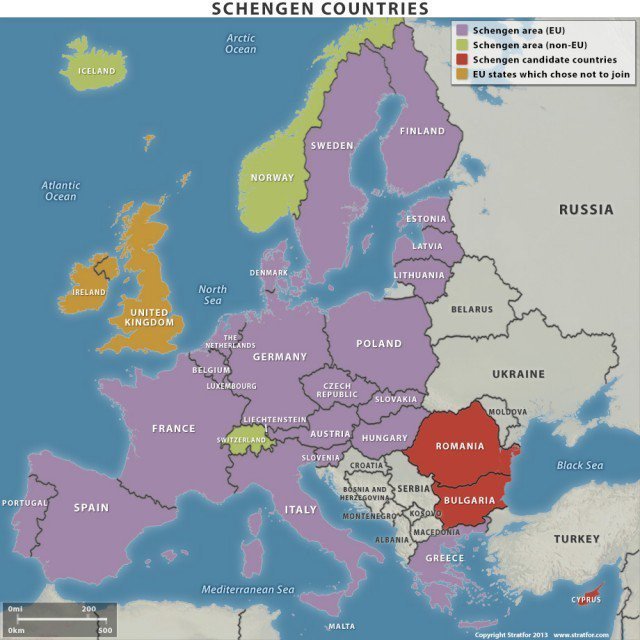
As Europe struggles to reach any agreement on a collective response to the refugee crisis, the Schengen agreement is looking shaky, with concerns that it could be suspended for up to two years, after many member states closed their borders in response to the biggest influx of migrants since the Second World War.
There have been disagreements over the wisdom of German Chancellor Angela Merkel declaring her country’s doors – and therefore Europe’s – open to refugees, which exacerbated the situation. Many in the EU feel that aid is better given to refugees in the vicinity of their country of origin, in preparation for their return after the war torn countries – such as Syria and Iraq – have stabilized.
The founder members stated that "a better management of the Union's external borders is essential in order to make them more secure without hampering the fluidity of movement and the Schengen acquis."
Ever Closer Union?
There is also concern that the Schengen borderless zone has caused a rising threat from terrorism because of lack of border checks. It has led to Islamic terrorists sympathetic to Daesh, also known as ISIL, traveling freely around Europe and capable of carrying out attacks such as those in Paris on November 13, 2015.
Portugal, Ireland, Spain, Cyprus and – three times – Greece needed financial bailouts because they could not pay off their government debt, which has led to calls for Eurozone members to form a club-within-a-club in the EU. UK's Prime Minister – himself attempting to convince a deeply Euroskeptic country not to leave the EU in an In/Out referendum due, possibly as early as June 2016 – has warned that non-Eurozone countries must not be discriminated against, if they decide to draw further together. Cameron is now negotiating an opt out from the principle of 'ever closer union'.
However, the communique from the founding states warns of exactly that — a split between those who want further integration and those that do not.
"We firmly believe that the European Union remains the best answer we have for today's challenges and allows for different paths of integration. We remain resolved to continue the process of creating an ever closer union among the people of Europe," the statement said.

Γιατί… βάλλουν εναντίον του Έλληνα Πρέσβη στα Τίρανα?

Proinos-logos-logo

  .
Την προηγούμενη βδομάδα ο επικεφαλής του Διπλωματικού σώματος της Ελλάδας στην Αλβανία, Πρέσβης κ. Λεωνίδας Ροκανάς, έγινε στόχος επίθεσης μερίδας των σόσιαλ μίντια και του έντυπου Τύπου στην Ελλάδα. Όμως και ένας απλός αναγνώστης καταλαβαίνει ότι οι κατηγορίες εναντίον του δεν ευσταθούν. Τέτοιες δημοσιεύσεις απαιτούν μεγαλύτερη ευθύνη, όταν πρόκειται να επιπλήξεις τη διπλωματική υπηρεσία της χώρας σου σε μια τρίτη χώρα, ειδικά στην Αλβανία που τρέφει μονίμως την εθνική της υπόσταση με ανθελληνισμό.
Τα στοιχεία και επιχειρήματα βεβαιώνουν ότι εκείνοι που
υποκίνησαν τα δημοσιεύματα κατά του Έλληνα Πρέσβη στα Τίρανα, έχουν άλλους λόγους, οι οποίοι δυστυχώς στρέφονται κατά των κοινών εθνικών συμφερόντων.
Οι κατηγορίες κατά του πρέσβη
Όπως λοιπόν αναφέρουν, ο Πρέσβης της Ελλάδας στα Τίρανα ενοικίασε την νέα πρεσβευτική κατοικία από ιδιοκτήτη ο οποίος είναι «ο μεγαλύτερος καταπατητής ακίνητης περιουσίας που ανήκει σε ομογενείς της Χιμάρας» (!).  Πρόκειται για τον Σαϊμιρ Μάνε, ο οποίος, κατά τα δημοσιεύματα, «οικειοποίησε παράνομα 278.000 τ.μ. στην παραλία του χωριού Παλάσα, της Χιμάρας».
Η δεύτερη κατηγορία αναφέρει ότι η ενοικίαση της νέας πρεσβευτικής κατοικίας έγινε με ιδιαίτερα υψηλό μίσθωμα, γεγονός, που, κατά τους αρθρογράφους, αποτελεί πρόκληση «σε μια εποχή ιδιαίτερα δύσκολη οικονομικά για την Ελλάδα».
Η τρίτη κατηγορία αφορά στο γεγονός ότι η κατοικία του πρέσβη της Ελλάδας έγινε αντικείμενο ρεπορτάζ σε τηλεοπτική εκπομπή μεγάλου τηλεοπτικού καναλιού  στα Τίρανα.
Συκοφάντηση υστερόβουλων…
Ας ξεκινήσουμε από τον τρίτο ισχυρισμό - «κατηγορία». Πρόκειται για ένα πετυχημένο ημίωρο στην εκπομπή με μεγάλη ακροαματικότητα, «Δεν πρόκειται απλώς για μόδα», στο τηλεοπτικό κανάλι παναλβανικής εμβέλειας KLAN.
Ο Πρέσβης της Ελλάδας κατάφερε να μεταφέρει στο αλβανικό κοινό την ελληνική αξιοπρέπεια σε όλο της το μεγαλείο. Να διαμηνύσει ότι ο ελληνικός πολιτισμός αποτελεί το ισχυρό διαχρονικό όπλο του Έλληνα που υπερβαίνει κάθε είδους κρίσης. Κατάφερε να προβάλλει το μορφωτικό και διανοητικό επίπεδο του Έλληνα Διπλωμάτη, τον τρόπο σκέψης του για τον πολιτισμό, την τέχνη και τα γράμματα και το ρόλο τους στην καθημερινή ζωή ενός λαού σε μια εξελιγμένη και ευρωπαϊκή κοινωνία, διαμηνύοντας ακόμα ότι μέσα από αυτές τις συντεταγμένες βλέπει η Ελλάδα τις σχέσεις με την Αλβανία και τον αλβανικό λαό. Όλο το ρεπορτάζ αποτελούσε μέρος της κινητικότητας του Έλληνα πρέσβη στα Τίρανα για να είναι συνεχώς παρών στα δρώμενα της ζωής στην Αλβανία (διπλωματικά, πολιτικά και κοινωνικά).
Όσον αφορά στη δεύτερη κατηγορία, το υψηλό μίσθωμα στην ενοικίαση της πρεσβευτικής κατοικίας, η έρευνα αποδεικνύει ότι το ενοίκιο της νέας κατοικίας, σε σύγκριση με την προηγούμενη, είναι 50% πιο χαμηλό. Είναι αληθές ότι η νέα πρεσβευτική κατοικία, βρίσκεται στο νεότευκτο πολυτελές συγκρότημα των Τιράνων, όπου διαμένει η αφρόκρεμα της πολιτικής και οικονομικής ζωής της Αλβανίας.
Ακριβώς αυτή η πραγματικότητα όμως αναιρεί τη μιζερολογία των δημοσιευμάτων που θέλουν να ταυτίσουν την πρεσβευτική κατοικία, η οποία αφορά την αξιοπρέπεια της ελληνικής εξωτερικής πολιτικής, με μια κοινή κατοικία στην αλβανική πρωτεύουσα.
Αναφορικά με την πρώτη κατηγορία, είναι αληθές ότι ο ιδιοκτήτης των διαμερισμάτων είναι από τους ισχυρότερους ανθρώπους στη χώρα. Ως τέτοιος όμως, είναι από τους λίγους που πουλάει και ενοικιάζει κατοχυρωμένες με το νόμο κατοικίες!
Για την «κατηγορία», τέλος, ότι ο ιδιοκτήτης του συγκροτήματος Σ. Μάνε αποτελεί τον «μεγαλύτερο καταπατητή της ακίνητης περιουσίας ομογενών στη Χιμάρα», η έρευνα αποδεικνύει ότι ο κ. Μάνε αγόρασε την διαφαινόμενη έκταση των 278.000 τ.μ. από δύο ομογενείς στην Παλάσα.
Εκείνοι αναγνωρίστηκαν ως ιδιοκτήτες της έκτασης αυτής με πλαστογραφημένα έγγραφα, αφαιρώντας έτσι περιουσίες άλλων ομογενών.
Οι υπογραφές που νομιμοποιούν την πλαστογράφηση (από τρία στρέμματα σε 130 και 80 στρέμματα), ανήκουν σ’ αυτούς που στα δημοσιεύματα κατά του Πρέσβη, παρουσιάζονται ως υποστηρικτές των περιουσιών των ομογενών στη Χιμάρα.
Η έρευνα αποκαλύπτει επίσης το διοικητικό και νομικό μηχανισμό, που είχαν στήσει τα ίδια πρόσωπα και από τη λειτουργία του οποίου δεκάδες ομογενείς έχασαν τις περιουσίες τους.
Οι λόγοι της επίθεσης
Ακριβώς εδώ θα πρέπει να αναζητηθούν και οι λόγοι επίθεσης κατά του Πρέσβη της Ελλάδας. Ο κ. Λεωνίδας Ροκανάς από τότε που ανέλαβε καθήκοντα στην πρεσβεία στα Τίρανα, διαπίστωσε ότι η ακίνητη περιουσία των ομογενών, κυρίως σε κοινοτικά βοσκοτόπια, δάση, οικόπεδα, αλλά και σε καλλιεργήσιμη γη κινδυνεύει από τις υφαρπαγές με πλαστά χαρτιά των Αλβανών δήθεν πρώην ιδιοκτητών. Για την αποτροπή του κινδύνου ζήτησε αποδεικτικά με τις παραβάσεις αυτές, κυρίως από τη Χιμάρα.
Όμως, αυτοί που στα δημοσιεύματα κατά του Πρέσβη παρουσιάζονται ως υπερασπιστές των περιουσιών των ομογενών, δεν κατέθεσαν ποτέ κανένα φάκελο με καταπατήσεις τέτοιου είδους.
Η έρευνα διαπιστώνει ότι το Διπλωματικό μας Σώμα στην Αλβανία βρήκε τον τρόπο να ενημερωθεί και για τους Έλληνες μειονοτικούς υπεύθυνους αυτής της εθνικής καταστροφής και αυτή η εξέλιξη ανησυχεί τώρα αυτούς που αντιδρούν.
Ο Πρέσβης της Ελλάδας στα Τίρανα έδωσε εντολή ώστε το Γενικό Προξενείο της Ελλάδας στο Αργυρόκαστρο να παρακολουθεί όλες τις δίκες με αντικείμενο εκδίκασης τα ακίνητα που ανήκουν στις κοινότητες της εθνικής Ελληνικής Μειονότητας και υφαρπάζονται από τους δήθεν Αλβανούς πρώην ιδιοκτήτες. Στις δίκες αυτές διαπιστώνεται ότι εμπλέκονται και ιθύνοντες της Μειονότητας που ανήκουν στη κατηγορία των αρθρογράφων.
Ο κ. Ροκανάς έκοψε κυριολεκτικά τα πόδια σε όλους τους ιθύνοντες της Ελληνικής Μειονότητας που πολιτογραφούσαν αλβανικές οικογένειες στις περιοχές με αμιγή ελληνικό πληθυσμό και στη συνέχεια φρόντιζαν, ασφαλώς με το αζημίωτο, να τους εξασφαλίσουν ελληνικές εθνικές βίζες για να γίνουν και Έλληνες πολίτες.
Απέκλεισε όλο εκείνο το δίκτυο Ελλήνων μειονοτικών πολιτικών που ήθελαν να εξασφαλίσουν την πολιτική τους επιβίωση συντηρώντας ένα κλίμα τεχνητής αντιπαράθεσης μεταξύ Ελλάδας και Αλβανίας.
Τα στοιχεία αυτά και άλλα, λοιπόν, αποκαλύπτουν πλήρως τους πραγματικούς λόγους γιατί με ύπουλο τρόπο κάποιοι Έλληνες ομογενείς στην Αλβανία πλήττουν (δημοσιογραφικά) κάτω από τη μέση τον Έλληνα πρέσβη…
Proinos-logos-logo

We'll send in the warships, says Nato: Vessels set to patrol the Aegean Sea in attempt to stop migrants crossing

  • German chancellor called allies to send vessels to patrol the Turkish coast
  • Defence ministers are considering military action to stop people smugglers
  • Decision could be seen as admission that EU has failed to tackle the influx
  • Downing Street refused to comment on whether British vessels are sent
  • For more on the EU refugee crisis visit www.dailymail.co.uk/refugeecrisis
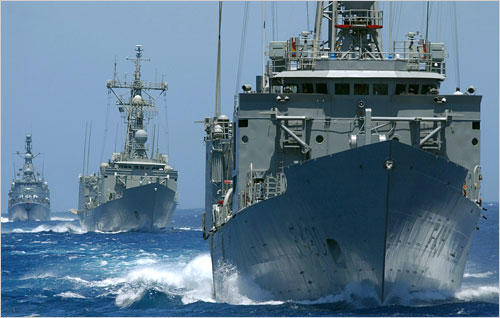
Warships will be deployed to stop migrants crossing the Aegean Sea to Europe, under a plan to be discussed by Nato defence chiefs today.
German chancellor Angela Merkel last night called on allies to send vessels to patrol the Turkish coast in a dramatic escalation of the response to the crisis.
Today at a meeting in Brussels, defence ministers will consider the request – supported by Turkey – for military action aimed at preventing people-smuggling gangs sending boatloads to Greek islands.
German chancellor Angela Merkel last night called on allies to send vessels to patrol the Turkish coast (pictured, migrants arrive on Greek island of Lesbos) in a dramatic escalation of the response to the crisis
A decision to intervene by the 28 Nato members, including Britain, will be seen as an admission that the EU has failed to tackle the problem.
Nato secretary general Jens Stoltenberg last night said its members 'see the need to manage and to tackle the human tragedy' caused by the migrant crisis.
'I think we will take very seriously the request from Turkey and other allies to look into what Nato can do to help them cope and deal with the crisis and all the challenges they face, not least in Turkey,' he added.
Germany and Turkey put forward the appeal for military intervention after Mrs Merkel flew to Ankara to meet with Turkish prime minister Ahmet Davutoglu. 
She said they had agreed the Nato defence ministers' meeting should discuss how the alliance 'can be helpful with the surveillance situation' in the Mediterranean and assist the Turkish coast guard and EU border agency.
German chancellor Angela Merkel last night called on allies to send vessels to patrol the Turkish coast (pictured, migrants arrive on Greek island of Lesbos after crossing Aegean)

PUT ASYLUM IN BETTER-OFF PARTS OF THE UK 

More asylum seekers could be housed in prosperous parts of the country to ease the burden on poorer areas.
Immigration minister James Brokenshire said the Home Office was looking at ‘expanding’ a programme which ensures refugees are evenly dispersed.
The move follows criticism from council chiefs in deprived areas that the housing scheme in place since 1999 is ‘dumping the poor on the poor’.
Officials are in talks with more councils to accept asylum seekers after it emerged some three-quarters had refused.
Under the scheme, councils sign up voluntarily to ensure the housing of refugees is shared around the nation. But it has fuelled anger after it emerged wealthier communities appeared not to be taking their fair share.
In June last year, Middlesbrough had 746 refugees – one in 43 of all those in Britain. Meanwhile West Oxfordshire, which covers Prime Minister David Cameron’s Witney constituency, failed to take a single one.
Yesterday Mr Brokenshire told the home affairs select committee: ‘We are looking to expand the number of local authorities involved in these dispersal areas.’
The Nato defence ministers will also review their response to a more assertive Russia. Mr Stoltenberg, Norway's former prime minister, said Russian involvement in Syria was 'undermining' peace efforts and 'making a desperate situation worse', adding: 'Calm and easing tensions is more important than ever.'
Downing Street last night struck a cautious note and refused to comment on whether British vessels could be sent. 
The Prime Minister's official spokesman said the Government was 'supportive of looking at ways to help Turkey deal with the huge burden it has from refugees'.
She pointed out that the Royal Navy is already involved in efforts to stem the flow of migrants across the Mediterranean. But she stressed that talks were at a very early stage with 'no proposals' yet on the table.
Douglas Lute, US ambassador to Nato, appeared to voice frustration that the EU had not been able to manage the crisis, but said the German-Turkish request would not be unusual as member states regularly ask for help.
A decision to intervene by the 28 Nato members will be seen as an admission that the EU has failed to tackle the migrant problem (pictured, migrants arrive on Greek island of Lesbos after crossing Aegean)
He said the EU had 'primary responsibility' for tackling the problem, adding: 'This is fundamentally an issue which should be addressed a couple of miles from here, in the EU [headquarters].'
European Commission spokesman Margaritis Schinas said: 'We welcome all discussions on potential measures which could contribute to addressing the refugee crisis, save lives at sea and improve the management of migratory flows and borders.'
The Royal Navy has been part of an EU operation in the Mediterranean since May last year, tackling people-smuggers between Libya and Italy.

Russia will shoot down Turkish jets in Syria, Deputy Defense Minister says


05.02.2016 |
Source
pravda.ru

Russia will shoot down Turkish jets in Syria, Deputy Defense minister says. Russia-Turkey conflict
Source: Fotodom.ru

Deputy Defense Minister Anatoly Antonov said that Turkey had refused to confirm its agreement with the memorandum of flight safety in Syria and blocked a telephone hot line prior to the attack on the Russian Su-24.

Speaking about the possible use of Turkish aviation in Syria, Antonov said that the Russian air defense group in Syria makes it possible to use appropriate measures to ensure the safety of flights of Russian aircraft.

"Our air defense group allows to early detect a threat to Russian aircraft on combat missions in Syria and, if necessary, take adequate measures to ensure the security of their flights," RIA Novosti quoted Antonov as saying.

He also added that Turkey should fully adhere to the provisions of the Russian-US memorandum of flight safety in the Syrian Arab Republic, should Turkey use its aviation in Syria.

The Ministry of Foreign Affairs the conference “Albania today: Foreign policy pursuits towards Greece”.

Το Υπουργείο Εξωτερικών και το Ίδρυμα Διεθνών Νομικών Μελετών Καθηγητού Ηλία Κρίσπη, έχουν την τιμή να σας προσκαλέσουν στην Ημερίδα με θέμα:
«Η Αλβανία σήμερα: Επιδιώξεις εξωτερικής πολιτικής και σχέσεις με την Ελλάδα».
Η Ημερίδα είναι υπό την Αιγίδα του Εθνικού και Καποδιστριακού Πανεπιστημίου Αθηνών και θα πραγματοποιηθεί στις 15 Φεβρουαρίου 2015 (ώρα 5.00 μ.μ.), στο Υπουργείο Εξωτερικών (Αίθουσα «Γιάννος Κρανιδιώτης», Ακαδημίας 1).
ΠΡΟΓΡΑΜΜΑ ΗΜΕΡΙΔΑΣ
ΧΑΙΡΕΤΙΣΜΟΙ ΔΙΟΡΓΑΝΩΤΩΝ
Χαιρετισμός ΥΠΕΞ
Χαιρετισμός Ιδρύματος Διεθνών Νομικών Μελετών Καθ. Ηλία Κρίσπη
Α’ ΣΥΝΕΔΡΙΑ: ΣΤΟΧΟΙ ΤΗΣ ΕΞΩΤΕΡΙΚΗΣ ΠΟΛΙΤΙΚΗΣ
Συντονιστής: Αθανάσιος Κοτσίρης, Πολιτειολόγος – Διεθνολόγος,
Εμπειρογνώμων Πρεσβευτής-Σύμβουλος Α’, Γ2 Δ/νσεως Υπ.Εξ.
  • Το ζήτημα του αλβανικού αλυτρωτισμού, Λένα Διβάνη, Καθηγήτρια ΕΚΠΑ.
  • Μερικές Απόψεις των Τσάμηδων, Βασίλειος Πατρώνας, Επίτιμος Νομικός Σύμβουλος, Υπ. Εξωτερικών.
  • Η προοπτική ένταξης στο ΝΑΤΟ, Χάρης Δημητρίου, Πρέσβης ε.τ.
  • Η προοπτική ένταξης στην Ευρωπαϊκή Ένωση, Πρέσβης Φραγκίσκος Βέρρος, Διευθυντής της Διπλωματικής Ακαδημίας, ΥΠΕΞ.
Β’ ΣΥΝΕΔΡΙΑ: ΟΙ ΣΧΕΣΕΙΣ ΜΕ ΤΗΝ ΕΛΛΑΔΑ
Συντονίστρια: Αναστασία Σαμαρά-Κρίσπη, Πρόεδρος του Ιδρύματος Διεθνών Νομικών Μελετών Καθηγητού Ηλία Κρίσπη, Διδάκτωρ Πανεπιστημίου Μονάχου, Επιτ. Δικηγόρος (τ. Δικηγόρος Μονάχου)
  • Η οριοθέτηση των θαλασσίων συνόρων, Δρ. Εμμανουήλ Γούναρης, Εμπειρογνώμων ΥΠΕΞ, τ. Πρέσβης.
  • Οι οικονομικές σχέσεις Ελλάδος–Αλβανίας, Δημήτρης Κυρκιλής, Καθηγητής, Πρόεδρος του Τμήματος Βαλκανικών, Σλαβικών και Ανατολικών Σπουδών, Σχολή Οικονομικών και Περιφερειακών Σπουδών Πανεπιστημίου Μακεδονίας.
  • Η ελληνική μειονότητα στην Αλβανία, Άγγελος Συρίγος, Επίκ. Καθηγητής Διεθνούς Δικαίου στο Πάντειο Πανεπιστήμιο, Δικηγόρος, πρ. γ.γ. Πληθυσμού στο Υπουργείο Εσωτερικών.
  • Η διασυνοριακή συνεργασία, Αντώνης Μπρεδήμας, Ομοτ. Καθηγητής ΕΚΠΑ.
  • Από τα προβλήματα στη λύση: Μια διαδικασία συνολικής αντιμετώπισης των σχέσεων Ελλάδος-Αλβανίας και συνεργασίας με τον Αλβανικό παράγοντα, Αλέξανδρος Μαλλιάς, Πρέσβης ε.τ.
ΣΥΜΠΕΡΑΣΜΑΤΑ – ΣΥΖΗΤΗΣΗ
Υποσημείωση: Στο πλαίσιο της Ημερίδας αυτής, θα παρουσιασθεί εκ νέου το βιβλίο του Δρ. Εμμανουήλ Γούναρη, Εμπειρογνώμονος ΥΠΕΞ, τ. Πρέσβη, αφιερωμένο στη Μνήμη του αειμνήστου Καθηγητού Ηλία Κρίσπη: «Το Βορειοηπειρωτικό Ζήτημα στα πλαίσια της Διπλωματικής Ιστορίας και του Διεθνούς Δικαίου, 1912-2015» (Εκδ. Αντ. Σάκκουλα, 2015).
Η Ημερίδα θα πραγματοποιηθεί στις 15 Φεβρουαρίου 2015 (ώρα 5.00 μ.μ.), στο Υπουργείο Εξωτερικών (Αίθουσα «Γιάννος Κρανιδιώτης», Ακαδημίας 1).
Παράκληση για δηλώσεις συμμετοχής σας στις ακόλουθες ηλεκτρονικές διευθύνσεις:
drsamara@otenet.gr
celia.liagoura@gmail.com
Τηλ.: 210-3610-752
Fax: 210-3624632
ΣΥΜΜΕΤΟΧΗ- ΔΩΡΕΑΝ- ΚΑΤΟΠΙΝ ΔΗΛΩΣΕΩΣ
Πηγή: http://www.himara.gr

Turkish Aircraft Violate Greek Airspace - Reports

Turkish Air Force F-16 fighter jet

© AP Photo/ Anatolia, Kenan Gurbuz
Europe

At least six Turkish fighter jets, flying in a single formation, violated Greek airspace, local media reported, citing military officials.

MOSCOW (Sputnik) — Turkish aircraft entered Greek airspace in the northeastern part of the Aegean Sea without Athens' permission, the Ekathimerini newspaper reported Tuesday, citing country's military authorities. At least two of the six fighter jets were armed, the newspaper added.
Turkey does not recognize a 10-mile zone of Greek airspace surrounding islands in the Aegean Sea that are the cause of numerous similar incidents in the sky over the sea.

Montenegro's Joining NATO Not to Bring Extra Security to Alliance - Lavrov

NATO Secretary General Jens Stoltenberg listens to questions from journalists during a media conference at NATO headquarters in Brussels on Tuesday, Oct. 6, 2015.

© AP Photo/ Virginia Mayo
Europe

Montenegro’s joining NATO is 'an artificial decision', Russian Foreign Minister Sergei Lavrov said.

MOSCOW (Sputnik) – Montenegro’s joining NATO is an artificial decision and will not provide the alliance with any extra security, Russian Foreign Minister Sergei Lavrov said.
“We were convinced, just as everyone else who thought that this artificial decision would not add any kind of extra security for NATO. The explanations that the Montenegrin people want this is countered by the argument that if this is so, then why not hold a referendum,” Lavrov said in an interview with Russia’s Moskovsky Komsolmolets daily. 
Montenegro's accession to NATO was approved by the alliance's foreign ministers as they convened in Brussels on December 2. On January 28, NATO Secretary General Jens Stoltenberg stated that Montenegro would begin talks on joining NATO in mid-February. Montenegro's bid will then have to be ratified by the national parliaments of the alliance's members before the Balkan territory can become NATO's 29th member. Montenegro's opposition has protested the accession.
Russia's Foreign Ministry has warned that the start of the talks over Montenegro's NATO membership will harm Eurasian and Atlantic security systems, as well as relations between Russia and the alliance.

NATO Chief Urges Montenegro to Tackle Corruption

Link
Ahead of accession talks with Montenegro, due to start next week, NATO chief says alliance seeks more results in establishing rule of law and pursuing fight against corruption.

Dusica Tomovic
BIRN
Podgorica
NATO Secretary General Jens Stoltenberg | Photo: BIRN.

NATO Secretary General Jens Stoltenberg on Tuesday said Montenegro has to continue to implement reforms in order to become a member, but the Western alliance will not interfere in the internal affairs of the country concerning how such decisions are made.

Speaking to journalists in Brussels on Tuesday, Stoltenberg said that Montenegro had already conducted a lot of reforms, which is why it earned its invitation to join the alliance last December - but it now has to deliver further results.

"We have a special focus on the importance the rule of law, on fighting corruption and that the Special Prosecution Office works effectively - and also that the Anti-Corruption Agency, which was established in January, is doing its job," Stoltenberg said answering a question from BIRN.

"We want as much track records as possible, we need to see that those insititutions dealing with the fight against corruption are delivering results," he explained.

Stoltenberg declined to comment on the debate in Montenegro on whether the decision to join NATO should be adopted following a referendum or by parliament, nor did he comment on the fact that a significant number of Montenegrins still oppose membership.

"NATO will not to interfere in the internal matters of Montenegro. We will respect any decisions made by a sovereign country and its democratic institutions," he said.

Montenegro is due to begin accession talks with NATO next week and the Protocol of Accession will be signed afterwards, which has to be ratified by all 28 members of the alliance.

"I hope the talks will not take so much time and end in a few weeks or months, so we can start the ratification process. It is not possible for me to say how long this will take," the NATO chief said.

Montenegrins remain sharply divided over NATO membership and a recent poll suggested only about 40 per cent support accession.

Pro-Russian opposition parties have demanded that the government organize a referendum on the issue on the same day as general elections planned for the autumn.

However, the government maintains that a referendum is not a constitutional obligation, and that is enough to take a decision by a majority vote in parliament.

Meanwhile, national NATO coordinator Vesko Garcevic said a referendum can only be discussed once accession talks finish. Garcevic said he expects the negotiations to be shorter than in some other countries because "a lot of work is already done".

Commenting on opposition demands for a referendum, Garcevic on Tuesday noted that of 28 NATO member states, only Hungary and Slovenia had opted for referenda, in the final stage of the accession process.

Several thousands of protesters have taken to the streets in past months to tell the government to stay out of NATO, and to call on veteran prime minister Milo Djukanovic to resign over corruption allegations.

Djukanovic has dismissed the protests as Russian-backed and inspired, saying: “Russian policy is on the side of the protest organisers”.
- See more at: http://www.balkaninsight.com/en/article/nato-chief-urges-montenegro-to-fight-corruption-02-09-2016#sthash.gKaBM4yz.dpuf

Russia’s Kurdish Gambit: US Ally in Syria Takes Moscow’s Side

Members of the Kurdish People's Protection Units (YPG) monitor the positions of Islamic State (IS) group in the Syrian town of Ras al-Ain, close to the Turkish border on March 13, 2015

© AFP 2016/ DELIL SOULEIMAN
Middle East

The announcement of the leadership of the Syrian Kurds that they would open their first foreign office in Moscow is telling: their choice of Russia over Washington or Western Europe signals that Russia is allying with the Kurds in the Middle East, which will certainly undermine US and Turkish policy in the region, according to the Israeli media.

Wednesday is set to see an inauguration ceremony of the first European office of the Syrian Kurds, which will be located in Moscow. The ceremony is to be attended by Russian foreign ministry officials as well as representatives from several other countries, according to Abdulsalam Ali, the Syrian Kurdish envoy in Moscow. “The choice of Moscow and not Washington or Western Europe is telling,” says The Jerusalem Post.
“Putin appears to be making another shrewd play for power in the Middle East by allying with the Kurds, in a step that undermines United States and Turkish policy in the region,” states the Israeli newspaper.
The US has established its cooperation with Syrian Kurdish fighters against Daesh (ISIL/ISIS). It has developed working relations with the Syrian Kurdish YPG (People's Protection Units) – the military wing of the Syrian Democratic Unity Party  (PYD) – the most dominant force among the Syrian Kurds and an affiliate organization of the Kurdistan Workers' Party (PKK), a Kurdish group located in Turkey which remains listed as a terrorist organization by the US, Turkey, and the EU.
Meanwhile, Turkey has denounced the move. Recep Tayyip Erdogan issued what can be considered as an ultimatum to the US this week, saying that its, that it’s “either us or the PYD”, Gallia Lindenstrauss, a Turkey expert and research fellow at the Institute for National Security Studies at Tel Aviv University told the newspaper.
“Russia’s Kurd gambit”, the outlet says, takes advantage of US hesitancy in fully supporting the Kurds because of worries about angering Turkey.
This “makes Ankara’s life much more difficult as it continues fighting a Kurdish insurgency at home.”
“It is highly likely that Russia will take advantage of the trend and support the Kurds, effectively turning an American ally into a Russian one,” the newspaper quotes Shmuel Bar, a senior research fellow at the Samuel Neaman Institute for National Policy Studies at the Technion-Israel Institute of Technology in Haifa, as saying.
This opinion is also echoed by The Guardian, which says that the possible alliance between Russia and the Syrian Kurds “puts Erdogan in a corner”.
“A big, new military operation against Kurdish strongholds, in defiance of both Russia and the US, would be a sign of Erdogan’s desperation, marking a potentially catastrophic spreading of the Syrian conflict,” the outlet states.

Tuesday, February 9, 2016

Gen. Zdravko Tolimir dies in Hague Tribunal jail


Former Army of the Serb Republic (VRS) in Bosnia-Herzegovina Gen. Zdravko Tolimir passed away in the night between Monday and Tuesday.
Source: Vecernje novosti, Tanjug
(Tanjug, file)
(Tanjug, file)
</div> <div id='passback-wbdefca4437'></div>
Tolimir died in a prison cell of the Hague Tribunal, the RS Veteran Organization told Belgrade-based daily Vecernje Novosti.
The cause of death has not been stated.

On Tuesday, the Tribunal (ICTY) confirmed that Tolimir had passed away and said in a statement that a prison doctor had been called to his cell immediately and that Dutch authorities launched standard mandatory investigations.

In addition, President of the Mechanism for International Criminal Tribunals in The Hague Theodor Meron ordered "a comprehensive investigation into the death of Zdravko Tolimir."

During the 1990s war in Bosnia, Tolimir was the intelligence and security affairs assistant to then VRS commander Gen. Ratko Mladic, who is also on trial at the Hague Tribunal.

A trial chamber in 2012 sentenced Tolimir to life in prison after finding him guilty of being a member of a joint criminal enterprise aimed at killing Muslim prisoners from Srebrenica and expelling civilians from this region.

The tribunal also found that Tolimir - who was arrested and extradited in 2007 - was present in Zepa in 1995 "and not only knew what was happening in that town by also shared genocidal intent and personally suggested the killing of refugees, and then helped cover up the crime."

In 2015, an appeals chamber found that Tolimir took part in two joint criminal enterprises - the killing of men in Srebrenica, and the forcible deportation of Bosnian Muslims from Srebrenica and Zepa, and confirmed the verdict finding him guilty of conspiracy to commit genocide, extermination, murder, persecution, and inhumane treatment.

Austrian FM: Our decision to have consequences for Balkans


Austrian Foreign Sebastian Kurz said in Belgrade on Tuesday that his country "will have to limit the number of refugees it will accept this year."
Source: Beta
(Tanjug)
(Tanjug)
</div> <div id='passback-wbe8d0bc435'></div>
He also said that Austria will continue to cooperate with the countries of the Western Balkans "in order to reduce the influx of migrants."
Kurz told a the press conference after his meeting with Serbian Prime Minister Aleksandar Vucic that Austria can receive a maximum of 37,500 people this year - and that this decision "will have consequences also for the countries that are on the West Balkan refugee route."

Reminding that Austria so far received 90,000 refugees, Kurz said it "cannot accept the same number this year" and that the government in Vienna "must set the upper limit of 37,500 people that can be received."

"We have informed the governments in Bosnia-Herzegovina, and in Serbia today, that a change of the situation may arise, but we are ready to assist the countries in the region in reducing the influx of refugees," said Kurz, adding that "this must be a common goal, and is to the benefit of all."

Austria is "ready to provide personnel support to countries in the Western Balkans," said Kurz, and "thanked all the countries that are in the same boat as Austria" - for which, he added, the refugee crisis is "a much bigger challenge because it is both a transit and a destination country."

"Countries must take national measures, but cooperation on a broader level is also necessary. We need to act in coordination with each other and help each other," said he.

Aleksandar Vucic addressed the same news conference to say that Serbia is "ready to help, but to the extent that will not jeopardize its economic future."

He said he "understands the difficulties that Austria faces" and that its plan to limit the number of new refugees this year "could mean that Slovenia and Croatia will at some point close their borders" - but that Serbia "will not be raising walls."

"We will make the best possible decision, guided by European principles and national interests. We will not raise a fence and walls, but we will know how to protect our border," said Vucic.

He "expressed doubt that a comprehensive European solution will be made," adding that "walls are not a solution."

Serbia, said Vucic, "is ready to help in solving the refugee crisis, but there are limits to which it can go, and it cannot exceed the limits which would jeopardize the economic future of the country."

Albania bans logging


EPA/ARMANDO BABANI

Link
A deer is seen in a touristic village in the National park of Llogara, some 250 km south west from Tirana, Albania on 27 January 2008. This mountain is situated on the border between Adriatic and Jon seas. Its altitude ranges from 470 to 2018m. The park of Llogara has a significant importance both as a tourist destination and as a transit bridge to the Ionian coast. I


Without serious estimates, it is believed the country has lost 50% to 75% of its woodland; will the ban make a difference?

Albania has seen massive deforestation by up to 50% since 1990. These are in fact outdated statistics. Albania is one of the world’s worst hit countries by deforestation. Woodlands covered 51% of its territory in 1990, reduced to 25% by 2010.  NGOs estimate that less than 10% of Albania is covered by forest today, Balkan Insight reports.
By an overwhelming majority law makers imposed a ten year moratorium on logging for industrial purposes or export, but not for heating. The law against logging will carry a penalty of 10 years in jail.

It is known that much of Albanians deforestation is caused by poor villagers using wood for heating and cooking, while the construction boom has also played its own part. This in turn has accentuated floods. A year ago, Albania experienced it second worst floods on record since 1971, leaving thousands homeless and millions in damages.

Albanian MPs Face Criminal Records Quizzing


Link
MPs and many state officials will soon have to fill in a detailed questionnaire detailing whether they have criminal records or have had any brushes with the law in the past. 

Fatjona Mejdini
BIRN
Tirana
The cross-party parliamentary commission tasked wth cleaning up politics | Photo: LSA

Albanian officials and members of parliament will soon have to fill and sign the questionnaire as part of efforts to implement the law that bans people with past convictions from holding public office.

The law came into force on January 6, and members of the cross-party parliamentary commission in charge of developing the questionnaire say they will have the mandatory form ready this month.

On Friday, they had a meeting with experts from the United States who advised on how the questions intended to reveal any past wrongdoing by MPs and officials should be formulated.

The chairman of the parliamentary commission, opposition MP Oerd Bylykbashi, told BIRN that everyone who fills in the questionnaire should be honest or they will be charged with perjury.

"The form will be detailed, focused on taking information about any possible official’s encounter with justice in the past. They also cannot lie otherwise they will be charged with perjury in line with the Albanian criminal code," Bylykbashi said.

The General Prosecutor's Office will report to parliament each year about the progress made in implementing the law that aims to remove people with criminal records from Albanian politics and state institutions.

"Parliament will have the role of a watchdog as well. We are going to ask the prosecutor to do the necessary checks for those people about whose pasts we have suspicions," Bylykbashi said.

One of the new aspects of the law is that if 500 Albanian citizens ask for background checks on an official or lawmaker, they will be carried out.

Bylykbashi believes that the law will oust criminals from public life.

But many remain sseptical about the real effect that the law will have on politics and the state administration.

All MPs, local politicians, government officials, civil servants and members of the military and police forces are subject to the law that will permanently ban people who have been convicted of serious offenses, including murder, rape, and genocide.

Albania’s international allies have been a major force behind the law and European MPs Knut Fleckenstein and Eduard Kukan are currently visiting the country to discuss the need to get criminal elements out of politics, among other issues.
- See more at: http://www.balkaninsight.com/en/article/albania-to-urge-officials-in-giving-past-records-02-08-2016#sthash.ShK78y6P.dpuf

Monday, February 8, 2016

THIS is what could push Greece out of the euro

Migrants and refugees gather around a bonfire as they wait to enter the refugee camp after crossing the Greek-Macedonian border, near Gevgelija, on December 6, 2015.


6
COMMENTSJoin the Discussion
The pressure of thousands of migrants is piling on the pressure on a Greece struggling with a stagnant economy, rising social tensions and political pressure and could push the country back towards an exit from the euro zone, analysts Eurasia Group have warned.
Europe has been left reeling from the influx of migrants heading to the region, most of whom are fleeing civil war in Syria in the Middle East. However, Greece is struggling more than others as it and Turkey have become the first port of call for the migrants.
While European leaders have struck a 3 billion euro ($3.35 billion) deal with Turkey to reduce the number of refugee flows, pressure is growing for European Union leaders to do even more to control the numbers of arrivals.

Migrants and refugees gather around a bonfire as they wait to enter the refugee camp after crossing the Greek-Macedonian border, near Gevgelija, on December 6, 2015.
Analysts at Eurasia Group said in a note on Monday that Greece could bear the brunt of potential plans to limit the amount of refugees reaching northern Europe.
"We continue to believe that the EU-Turkey deal is not going to deliver the reduction in refugee flows the Europeans are hoping for," analysts Mujtaba Rahman, Naz Masraff and James Sawyer from Eurasia Group said in a note Monday.
"This will continue to mount pressure on German Chancellor Angela Merkel, who, rather than conceding to a domestic ceiling, may instead opt to temporarily contain the problem in Greece" by sealing the Greek-Macedonian and potentially the Greek-Bulgarian border too.
They warned that if this border was sealed, however, the results could be socially and economically dangerous for Greece, prompting more social unrest, instability and could even push Greece back towards an exit from the euro zone. Since prime minister Alexis Tsipras' government reluctantly signed a third bailout deal with international lenders last summer, it has been subject to a new round of harsh rules and reviews.
"Sealing the Greek-Macedonian border will strengthen anti-European and nationalist sentiment in Greece and make early elections more probable; these could undermine completion of the first review and in a worst case scenario, reintroduce the risk of Greece's exit from the euro," Rahman, Masraff and Sawyer believed.

Pressure on Greece

As a coastal nation, Greece has been the main draw of thousands of migrants who have risked their lives to reach Europe to escape persecution and war in the Middle East. In 2015, over 1 million migrants arrived in Europe with the majority arriving by sea, according to data from the International Organization for Migration (IOM).
Since the start of 2016, the numbers have not abated with over 75,000 having arrived in Europe by both land and sea. Already this year 374 migrants are known to have drowned or are missing.
To give an idea of the pressure Greece's authorities are under, between 28 January and 3 February, 16,723 migrants and refugees arrived in the country alone. Since January 2015, the IOM and national authorities say that 927,386 people have arrived in Greece.
Recognizing that Greece was crucial in the migrant crisis, European leaders pledge to help the country by creating more migrant reception centers –called "hotspots" -- where migrants are registered, fingerprinted and most of whom enter the relocation scheme. The re-locating of migrants is meant to be shared among EU nations to relieve the burden on Greece, and other arrival points such as Italy.
Eurasia Group was not sure Greece had done enough, saying that: "Over the next several months therefore, Greece is going to have to demonstrate compliance with a number of EU demands to improve its border management (staffing, verifying and stamping passports, building five 'hotspots' and two 'relocation centers')."
But many in Greece, including the government, feel that Europe is not helping – particularly at a time when Greece is facing a contraction in GDP in 2016, according to the European Commission's latest forecasts, and being forced to cut spending and introduce unpopular reforms as required by lenders.
Eurasia Group's experts believed that while the country could probably meet its financial obligations in February and March, and could complete its first bailout review in July (which would release more cash), Greece was in a precarious position.
"Even if the government can survive financially in a narrow sense, a rapidly deteriorating political and social domestic context, driven by external factors, could re-introduce another back-to-the-wall crisis negotiation. This would promote uncertainty regarding reforms, as it would once again bring to the fore the risk of destabilizing scenarios such as elections and/or a change in the makeup of the Greek government."

Albania Pays Price For Politically Driven Sackings


Despite the passage of laws designed to stop it, the practice of summarily sacking civil servants continues in Albania, burdening the budget and creating misery for those let go.

Klodiana Lala
BIRN
Tirana
 Link
 People fired from the public administration protest in front of Albanian PM's office on November 18, 2015.

The life of Stak Pjetri  - a father of three and former forestry official in northern town of Fushe Arrez - was turned upside down on November 12, 2012, when his supervisors notified him that he was being let go.

After three decades of working in the forestry service he found himself joining Albania’s long list of unemployed persons.

Disabled by a previous work injury and unable to find a new job, Pjetri filed a lawsuit in the Administrative Court, contesting his dismissal. During two years of legal battles he experienced growing poverty and family quarrels, which led to a divorce.  

“Losing my job destroyed my family,” he said. “After they fired me, quarrels started with my wife over money and we divorced in 2014,” Pjetri told BIRN.

Professor: Warmonger Hillary Clinton Architect of Syria, New Cold War

Former US Secretary of State Hillary Clinton (L) speaks with former Secretary of State Madeleine Albright after receiving the 2013 Lantos Human Rights Prize during a ceremony on Capitol Hill in Washington on December 6, 2013

 08.02.2016
A prominent economics professor and political thinker has penned an article in which he calls Clinton a “war candidate” in the pocket of the military industrial complex.

Jeffrey Sachs, a world-renowned professor of economics, has authored a column in which he attacks presidential frontrunner Hillary Clinton for her ties to the military industrial complex. Sachs, a senior UN advisor, bestselling author, and syndicated columnist, said Clinton’s decisions as Senator and as Secretary of State have put the US in danger and led to an unending state of conflict.

Hillary Clinton, the former Secretary of State, has recently announced her candidacy for the 2016 Democratic presidential nomination.

Hillary Clinton Destabilized Libya so the West Could 'Exploit the Country'

“The idea that she is bad on the corporate issues but good on national security has it wrong,” Sachs writes. “Her so-called foreign policy "experience" has been to support every war demanded by the US deep security state run by the military and the CIA.”

Sachs goes back to the administration of Bill Clinton, noting that the Clintons both have accepted money from both Wall Street and weapons contractors who have an interest in the US taking an active role in conflict around the world.

“Just as the last Clinton presidency set the stage for financial collapse, it also set the stage for unending war. On October 31, 1998 President Clinton signed the Iraq Liberation Act that made it official US policy to support ‘regime change" in Iraq,” Sachs explains.

Sachs points out that, later in 2003, Hillary voted for war with Iraq in the US Senate, a war which many now criticize for having destabilized the region and helping push the US to financial collapse.

Going forward in time, Sachs calls Clinton’s “record as Secretary of State is among the most militaristic, and disastrous, of modern US history.”

Democratic presidential candidate Hillary Clinton speaks to students and faculty at the Southern New
US Billionaire Soros Donates $6Mln to Support Clinton's Presidential Run

“Hilary was a staunch defender of the military-industrial-intelligence complex at every turn, helping to spread the Iraq mayhem over a swath of violence that now stretches from Mali to Afghanistan. Two disasters loom largest: Libya and Syria.”

Sachs places a lot of blame on Clinton for the crisis in Syria.

“Perhaps the crowning disaster of this long list of disasters has been Hillary's relentless promotion of CIA-led regime change in Syria,” he writes. “Once again Hillary bought into the CIA propaganda that regime change to remove Bashir al-Assad would be quick, costless, and surely successful.”

He also charges Clinton with fostering the current situation between the US and Russia.

“Hillary's support at every turn for NATO expansion, including even into Ukraine and Georgia against all common sense, was a trip wire that violated the post-Cold War settlement in Europe in 1991,” Sachs says. “As Senator in 2008, Hillary co-sponsored 2008-SR439, to include Ukraine and Georgia in NATO. As Secretary of State, she then presided over the restart of the Cold War with Russia.”

Sunday, February 7, 2016

Turkey Denies Existence Of Info About Serbian Snipers

Photo: MFA
Published: Feb 7, 2016 at 9:48 am

BELGRADE/AMSTERDAM – Turkish Foreign Minister Mevlut Cavusoglu denied during a meeting with Serbian counterpart Ivica Dacic on Saturday the existence of official information about Serbian snipers supporting Kurds, the Serbian Ministry of Foreign Affairs said in a statement.


Cavusoglu, who met with Dacic on the fringes of an informal Amsterdam meeting of the foreign ministers of EU member states and candidate countries, announced that Serbia will be notified in a timely fashion if the Turkish Ministry of Foreign Affairs obtains information that would suggest otherwise, the statement also said.

The Turkish press reported recently that Serbian snipers are fighting on the side of the Kurdish PKK and that some of them have been taken prisoner in southeastern Turkey, but Interior Minister Efkan Ala dismissed the allegations earlier this week.

Dacic also met with Croatian Foreign Minister Miro Kovac, and they concluded that discussions about strengthening bilateral and regional cooperation should be continued.

Friday, February 5, 2016

SACEUR visits NATO Headquarters in Kosovo


5 FEB 2016

PRISTINA, Kosovo - During a two day visit to NATO Headquarters in Pristina, General Philip M. Breedlove, Supreme Allied Commander Europe, met with Kosovo Force troops highlighting NATO’s continued commitment to the stability of Kosovo’s future.

General Breedlove was briefed by Major General Luigi Guglielmo Miglietta, KFOR Commander and the international HQ Staff on the latest developments in the current security situation in Kosovo and in the Balkans region.

"It's very encouraging to see how KFORs contribution to the stability of the security situation here has provided the time and space needed for so much progress. Certainly there is still plenty left to be done but the progress has been notable,” stated Breedlove.

General Breedlove had two very informative and useful meetings with the "Quint Ambassadors” of France, Germany, Italy, United Kingdom and United States as well as the Representatives of the International Community: the EU Special Representative, and the Heads of Mission of UNMIK, OSCE and EULEX.


General Phil Breedlove, Supreme Allied Commander Europe, meets with Major General Luigi Guglielmo Miglietta, Commander, KFOR in Pristina, Republic of Kosovo Thursday, Feb 4, 2016. - NATO Photo by Mass Communications Specialist 1st Class Danielle Brandt, USN

"As Kosovo steps forward and embraces its own future, NATO will remain committed to doing its part to contribute to stability here,” added Breedlove. "We will retain a flexible, deterrent presence and will make changes only when the security situation allows.”

Later in the afternoon, General Breedlove met with the President of Kosovo and the Prime Minister. They expressed appreciation to General Breedlove for the significant contribution made by KFOR’s soldiers in maintaining security and stability in Kosovo.

"KFOR continues to contribute towards maintaining a safe and secure environment in Kosovo and freedom of movement for all,” said Breedlove.

On completion of the tour General Breedlove took the opportunity to have breakfast with troops and leaders.

"I want to thank each and everyone one of your for all the hard work you are doing here, we would not be successful with out your dedication and effort,” said Breedlove.

Story by KFOR and SHAPE Public Affairs Offices

World View: Saudi Ready to Send Ground Troops into Syria, as Regime Encircles Aleppo


AP Photo
AP PhotoThe Associated Press
by JOHN J. XENAKIS
5 Feb 20167


Syrian regime forces, backed by massive bombing by Russian warplanes, cut a vital commercial supply route between Turkey and Aleppo, Syria’s largest city. This route is used to provide food, medicines and other supplies to the more than 2 million people living in Aleppo.

Already, tens of thousands are fleeing from Aleppo. Turkey says that there are already 10,000 refugees at Turkey’s “door,” stranded at the border crossing to Turkey, and 70,000 more are already on the way. The U.K.-based Syrian Observatory for Human Rights said that about 40,000 people have fled the region in the past few days.

There are fears that regime forces will now move south and encircle and starve Aleppo, as the regime has done in Homs and other cities. In that case, there may be hundreds of thousands attempting to flee and head for Turkey.

These are all new refugees that could enter Turkey and then attempt to reach the Aegean Sea and travel to Europe. Europe has in the past asked for Turkey’s help in slowing the flood of refugees reaching Europe, and has promised financial aid for the refugees to encourage them to remain in Turkey.

At an international Syria donors conference held in London on Thursday, countries pledged billions of dollars in aid for fleeing refugees. Germany pledged $2.6 billion in aid, the United Kingdom pledged $1.7 billion and the U.S. pledged about $925 million.

What usually happens with these international aid conferences is that a lot of money is pledged, but the pledges are forgotten once the conference and the opportunity for publicity end. In this case, it is hoped that the pledges will be fulfilled, because they are the only hope of slowing the flood of refugees.

The conference itself was overshadowed by the collapse of the “peace talks” in Geneva, as we reported yesterday, and by today’s news of the impending humanitarian disaster in Aleppo. In addition, there continues to be increasing talk about Western military intervention in Libya in the next few weeks, where ISIS is gaining greater and greater control. The old post-WW II order in the Mideast is collapsing, and it seems that barely a day goes by without something new about the collapse. Deutsche Welle and Bloomberg and Vice News and International Business Times

Saudi Arabia ready to send ground troops into Syria
Saudi Arabia is ready to supply troops for a Western ground operation in Syria. According to Asiri:

If the leaders of the international coalition unanimously decided to carry out such operations, the kingdom would be ready to participate in these efforts.

Saudi Arabia is part of the US-led anti-ISIS coalition, and has carried out more than 190 aerial missions. It is also believed that the Saudis have previously supplied weapons to moderate rebel groups in Syria fighting ISIS. The use of ground troops has been hinted at in the past, but the latest announcement is formal and serious, the sources said.

The announcement came after the so-called Islamic State (IS or ISIS or ISIL or Daesh) claimed responsibility for two suicide bomb attacks on Shia mosques in Saudi Arabia earlier this month, as well as several similar attacks last year. Nominally, Saudi troops in Syria would be fighting ISIS.

Saudi Arabia is already fighting a war in Yemen against Iran-backed Houthis, and that war appears to be stalemated. Saudi Arabia and Iran are bitter enemies, and a month ago, the countries broke diplomatic relations with each other. Saudi troops in Syria might well end up fighting Iranian troops. Saudi Press Agency and Reuters

Saudi Arabia sees itself in an existential crisis
Saudi Arabia is facing multiple crises, including a crash in oil prices, its principal source of revenue, and wars in neighboring countries in Syria, Iraq and Yemen.

Foreign minister Adel Al-Jubeir says that Saudi Arabia has been unfairly blamed for the 9/11/2001 attacks on the United States, and that in fact it is Saudi Arabia that’s under attack by terrorists and by Iran:

Some try to malign Saudi Arabia by reciting that “15 of the 19” 9/11 hijackers were Saudi. They should know that the mastermind of the 9/11 attacks, Khalid Sheikh Mohammed, told US interrogators that the initial plan was to have 20 hijackers from different nationalities, but late in the planning Osama Bin Laden directed him to use as many Saudis as possible to give the attack a Saudi face.

This was likely designed to drive a wedge between the Kingdom and the US. If this was Osama Bin Laden’s plan, it almost succeeded, as we saw from the wave of criticism the kingdom experienced after 9/11. […]

“Saudi Arabia has long been a target of terrorism perpetrated by Iranian proxies. […]

“Many countries have known the grief and pain [terrorism] causes. It makes no sense for Saudi Arabia to support or condone those who have as their goal the destruction of Saudi Arabia. It is against our values, our faith and our national character.

That is why the Kingdom has responded with strength, persistence and resolve. To accuse the Kingdom of being lax, much less complicit, when it comes to combating terrorism and its financing is not only irresponsible but also flies against the face of reality.

It is widely believed that even if Saudi’s government is not sponsoring terrorism, then some powerful Wahhabi Salafi groups within Saudi Arabia are doing so. Saudi Gazette

Turkey denies Russian reports of Syria invasion
The spokesman for Russia’s defense ministry, Major General Igor Konashenkov, says that Turkey is trying to conceal “illegal” military activity on its border with Syria. Konashenkov’s unsupported claim is that Turkey is firing artillery into populated areas in the north of Latakia Province, and is preparing to invade Syria.

According to Konashenkov, “The signs of hidden preparation of Turkish armed forces for activities in the territory of Syria we notice more and more.”

However, an unnamed source in the office of Turkey’s prime minister told CNN that there are no such plans. “Simply they are diverting attention from their attacks on civilians as a country already invading Syria,” the source told CNN. “Turkey has all the rights to take any measures to protect its own security.” Russia Today and CNN