Wednesday, February 2, 2011


Nicholas Gage visits southern Albania: To strengthen the Northern Epirus as it was once

"The Chams, as 14 million Europeans are collaborators of Fascism"


Argirokaster "The
newest Party , Mega of the Greek minority, received at the headquarters in Argirokaster, one of the famous names of the representatives of the protection of Greek ethnicity, Nicols Gage, known as Gatzogianis. "I returned to Albania after a long period of time", said Gage, who comes back in his support for Northern Epirus. "I have to say that the term of Northern Epirus should take the value of old and minorities are precisely those which should contribute to this.

The Northern mainland of Epirus, should be strengthened as before. You have to take part in elections", - said of Greece known lobbyist in the U.S..
In addition, Gage has further affected the theme of the Census. "Every citizen has the right to state as ethnically and simultaneously feels may declare religious affiliation. I hope this time the process is fair and that registration does not diminish the number of Greeks living in this country, under the claim of lack of physical in housing, as evidenced earlier ", - said Gage.

Asked about the existence of an issue Came in the region and property of the Chams in Greece, Gage said that this issue can not be resolved by the two countries, since it is a European issue. "After World War II 14 million Europeans were expelled from their places of origin because it collaborated with Nazism, here came in, and rights. I can not tell if this is right or wrong but I can not get the solution for the moment ", - said Gage.
During the meeting with representatives of Megas, Gage also spoke to the Albanian crisis, considering it as disturbing and not in harmony with garlic steps so far by Albania.
"Gazeta 55": Greece is seen behind the deadly protests in Tirana

The Albanian newspaper near PM Sali Berissha accuses Greece involved on January 21,

The Journal "55" near to the government of Sali Berisha known for the anti-Greek publications in Albania, in an effort to charge the tragic consequences of the demonstrations on 21 January in Albania (where are killing three people) anywhere except the Albanian government, an incredible conspiratorial theory and scenario.

From the first moment Sali Berisha has accused the leader of the Albanian opposition used that criminal elements and organized crime to overthrow the government. The «GAZETA 55», citing a source Albanian immigrants in Athens involving Greek nationalist circles with strong ties to the Greek state and Greek officials - as reported, who facilitated the Albanian underworld operating in Athens, between them and people without legal papers, to come to Tirana to overthrow Berisha.

Unfortunately, such articles which consider all the suffering of Albanians from Greece for many years every day and not only found in the 'picturesque' marginal type and widely distributed in newspapers. Surprising is that we never saw a reaction of the Greek diplomatic missions! Truth role in Albania visa except what to do tourism?!

Tuesday, February 1, 2011

2011's tourism hotspots: what to do in Albania

Relaxnews

Albania, a former Eastern-bloc country rebranding itself "a new Mediterranean love," is set to be one of the hottest destinations of 2011.

Named top of Lonely Planet's "countries to visit in 2011" last year and an "emerging destination" by the Financial Times, the country offers low prices, a good climate and a rapidly-developing infrastructure.

Visitor numbers were up 42.5 percent for the first three quarters of 2009, the most recent figures published by Albania Tourism, and although the majority of visitors still come from neighboring states such as Kosovo, Albania is putting itself on the map.

The Financial Times lauded the country's "quiet, affordable Mediterranean beaches" and rugged landscape, while Lonely Planet predicted "Albania won't be off the beaten track for much longer."

So what can this year's tourists look forward to when planning a trip to Albania?....more:

http://www.independent.co.uk/travel/news-and-advice/2011s-tourism-hotspots-what-to-do-in-albania-2201482.html

Political Crisis Turned Violent Threatens Albania’s Undoing

Albania has been in the grips of a political crisis since 2009 elections, which opposition forces say were fraudulent, and ongoing protests came to a head on 21 January when National Guards opened fire on protesters in front of the Prime Minister’s Office, killing three people and wounding dozens of others.

Edi Rama, leader of the opposition Socialists, accused Prime Minister Sali Berisha and Interior Minister Lulzim Basha of orchestrating the “bloodbath”, and called for their arrest. A preliminary investigation into the incident showed that the bullets that killed the protesters had indeed come from the National Guards. The General Prosecutor’s Office ordered the arrest of six National Guards, but the police refused to honor the request.

On 30 January, police in Tirana said they had arrested three people who allegedly made death threats against Rama.

A parliamentary commission charged with investigating the 21 January violence has reportedly asked mobile companies to provide them with lists of phone conversations involving senior state officials. However, opposition forces have criticized the move, expressing skepticism on how the parliamentary commission will use this power. Rama said such a request was illegal and represented the parliamentary commission’s “plan to implement a system of violence and scare people”. The Socialists purportedly fear that if the commission is granted access to mobile phone records it could abuse this power and use it against opposition figures rather than senior state officials.......................................more see:

http://www.isaintel.com/2011/02/01/political-crisis-turned-violent-threatens-albania%E2%80%99s-undoing/

Monday, January 31, 2011


Albanian opposition to hold new anti-government protest, as calls for compromise ignored

TIRANA, Albania — Albanian opposition parties say they will hold a new protest rally on Friday, ignoring international pressure for compromise in the wake of deadly anti-government demonstrations in the country's capital.

Three opposition supporters were shot dead and more than 150 protesters and security officers were injured in Jan. 21 clashes between demonstrators and police.

The plans for the latest rally were announced Monday, despite a plea by President Bamir Topi in a rare televised address for political rivals to hold compromise talks.

The opposition Socialists are demanding that conservative Prime Minister Sali Berisha hold early elections over allegation of corruption and vote rigging in the previous 2009 general election.

Berisha has refused the demands and accused the Socialists of trying to stage a coup. He repeated the claims Monday in the latest sign of tension.

"The (attempted) coup d'etat has dealt a strong blow to the main project of the Albanian nation — its integration into Europe," Berisha told a cabinet meeting.

Albania, one of Europe's poorest countries and now a NATO member, is seeking to join the 27-nation European Union, though the tiny Balkan country of 3.2 million suffers from a still-weak administration and widespread corruption.

European and U.S. officials have repeatedly called for restraint from the Socialists and the governing Democrats, and pressed for a compromise to resolve the crisis.

But rival parties remain in dispute over an investigation into the deaths of the three demonstrators during the clashes on Jan. 21.

Opposition lawmakers want the constitutional Court to declare a parliamentary investigation illegal, because they say it violates public officials' right to privacy. Members of the investigation committee have said they will examine telephone records of opposition parliament members, the country's president, its prosecutor general, the head of the secret police and journalists as part of a probe of the clashes.

Last Friday, tens of thousands of pro-opposition supporters attended a peaceful rally to honour the three demonstrators.

Athens decides evacuation of Greeks wishing to leave Egypt


Greece's foreign ministry on Sunday decided to send military aircraft to evacuate all Greeks from Egypt who desire to return home, as tens of thousands of demonstrators defied curfews and remained on the streets demanding the resignation of Egyptian President Hosni Mubarak, and the death toll reaching 102 and thousands injured, according to reports by the international media.

According to available information, all the Greeks in Egypt are well in health.

The foreign ministry made the decision in cooperation with the Greek defence ministry, and is in constant contact with other countries also planning evacuation operations.

According to a foreign ministry announcement, "activation of the repatriation plan for Greek citizens in Egypt desiring to return to Greece was decided this morning (Sunday) at a meeting chaired by deputy foreign minister (for overseas Greeks affairs) Dimitris Dollis".

"The relevant planning provides for the dispatch of military planes, in a follow-up to agreement reached with the national defence ministry at the outbreak of the crisis" in Egypt, the announcement said.

"Due to the situation prevailing in Egypt, the departure of the aircraft will take place when the necessary conditions for the safety of the Greek citizens who have expressed desire to be repatriated are ensured," it added.

The ministry further said that Greece's Consular authorities in Egypt are in constant contact with the Greek communities in Egypt, as well as with the Ecumenical Patriarchate, adding that according to information that has been received, all the Greeks in Egypt are well in health.

It said that the Greeks in Egypt have been instructed to remain in their residences, due to the conditions prevailing in the streets.

The ministry also said that it is in constant coordination with the other European and non-European countries that are also planning repatriation operations.

Sunday, January 30, 2011


Albanian police arrest 3 in alleged murder plan

TIRANA, Albania (AP) — Police said Sunday they detained three people suspected of conspiring to murder a top opposition leader at an anti-government protest, as the opposition said it would not back down from its campaign against the ruling party for alleged corruption.

The three people detained were planning an attack during a Friday protest march called by Socialist Party leader Edi Rama to honor three supporters killed during a massive demonstration earlier this month, police said.

One of the suspects threatened Rama after his vehicle was damaged during the chaotic Jan. 21 rally, police said in a statement. A Tirana court ruled Sunday that the men could be kept in detention for a month pending further investigation.

The opposition said Sunday it would resume anti-government protests in Tirana and then continue in other cities, although no dates have been set. Rama insists on the resignation of Prime Minister Sali Berisha's government and claims that the conservatives rigged the 2009 vote.

Berisha has refused to resign and has accused the opposition of trying to stage a coup.

Rama repeated his call to the international community to intervene to stop what it called the government's attacks on independent institutions. The opposition is angry over a request by a parliamentary committee formed by the governing Democrats to see telephone records of opposition lawmakers, the country's president, its prosecutor general and the head of the secret police as part of an investigation of the deadly clashes.

"With every day it becomes more difficult to keep up stability in this country," Rama said at a news conference after a meeting of the opposition coalition.

"We are ready for dialogue and compromise but we shall never accept the status quo of this regime," he said.

Tensions rose sharply earlier this month when the country's deputy prime minister Ilir Meta resigned amid allegations he tried to influence a state tender for a hydropower station. The opposition wants Berisha to hold early general elections.

Three opposition supporters were shot dead and more than 150 protesters and security officers were injured in the Jan. 21 clashes between demonstrators and police.

The European Union and the United States have urged restraint from the Socialists and the governing Democrats, who agreed to cancel a protest of their own scheduled for Saturday, calling on them to consider dialogue to manage political differences.


Vasilis Bolanos, re confirmed the President of OMONIA

Ag. Saranda. V
asil Bolanos confirmed as chairman of the organization 'OMONIA' for a three-year mandate.

During the 8th Congress of the ethnic Greek minority organization, the chairman of OMONIA's re-elected, stopped at noted of the most important moments of the activity of this organization.


He conforms that minority is in the forefront of European integration of Albania and expressed pride that Greece supports this process of integration.


Meanwhile according to the press, the head of HURP, Vangel Dule present at the 8th Congress of Omonia organization, has been very critical of some greek governments that have passed in these 20 years in Greece, which, according to him have not done enough minority.


In this context there was his demand that immigrants homogeneous gone from Albania to Greece, can enter the Greek parties and made part of decision-making and their policies towards the minority.

Friday, January 28, 2011

Albanian Opposition Protest Ends Peacefully

People attend a march to commemorate the three victims of last week's deadly riots in Tirana.

People attend a march to commemorate the three victims of last week's deadly riots in Tirana.

Thousands of demonstrators marched through Albania's capital, Tirana, to honor three antigovernment protesters killed a week ago.

The demonstrators, headed by the leadership of the opposition Socialist Party and the families of the victims, passed in silence in front of the government buildings amid heavy police presence.

The demonstrators later dispersed peacefully. The opposition is demanding the resignation of Prime Minister Sali Berisha's government.

Arsonists attack Albanian consul's car in northern Greek city of Thessaloniki

THESSALONIKI, Greece — Greek authorities say an incendiary bomb has damaged the car of Albania's consul in the northern city of Thessaloniki, causing damage but no injuries.

Police said Friday the incendiary device, consisting of four camping gas canisters, had been placed beneath the car and exploded overnight. Anarchist groups often carry out firebomb attacks using bombs made of gas canisters, usually targeting diplomatic cars, foreign businesses or banks.

Albania has been embroiled in political turmoil in recent weeks, with the prime minister rejecting calls for early elections over allegations of corruption. An anti-government protest last week left three people dead.

Albanian emigrants protest in Thessaloniki for three murders of January 21

Thessaloniki: The petition for the deaths of three demonstrators at anti-government protest last Friday in Tirana, and their opposition to the policy of the government of Sali Berisha expressed Albanian immigrants who hold the rally and protest march Thursday evening in the center Thessaloniki.

Albanians immigrants living working in northern Greece, with requests to bring to justice those responsible for the loss of life, measures to prevent escalation of violence in their country, the consensus and call for elections to new government, gathered at the statue of Venizelos and held a protest march to the Albanian consulate in Thessaloniki.


The protesters, holding flags of Greece and Albania, banners with slogans "Tie their hands, not ours ',' No more bloody streets," "fairness for all", "Government killer" and pictures of victims of attacks asked Justice to perform its duty.

The protest was organized at the initiative of the Greek-Albanian Friendship Association "Progress", the Union of Associations of Albanian Immigrants in the Annex to the Albanian Socialist Party in Thessaloniki and the Association of Solidarity of Albanian immigrants in Veria.

Thursday, January 27, 2011


Albanian police say they can't guarantee security at new opposition rally

TIRANA, Albania - Albanian police say they cannot be blamed if more violence erupts at a new anti-government protest planned for Friday, a week after three opposition supporters were shot dead when a similar rally in the capital turned violent.

The forthcoming opposition Socialist protest is "a threat to national security, public order, crime prevention and human rights," a police statement Thursday said.

More than 150 protesters and security officers were injured in last week's deadly clashes, at a rally by former Tirana mayor Edi Rama's Socialist party outside a main government building. The Socialists are demanding the resignation of Prime Minister Sali Berisha's government for alleged corruption, following months of simmering tension over contested national elections.

Despite international calls for restraint, Rama's party insists on going ahead with the new demonstration, in which Socialist officials and lawmakers plan to lay flowers where the three protesters died.

An Interior Ministry official told the Associated Press that police cannot be blamed if new violence erupts. "The opposition should take care of itself and the gathering, of its participants," the official said, on condition of anonymity due to the tense situation. "Police cannot be held accountable for people going out of control like last Friday."

European Union and US officials have urged restraint from the Socialists and the governing Democrats, who agreed to cancel a protest of their own scheduled for Saturday.

On Thursday, a representative of the Organization for Security and Cooperation in Europe's chairman-in-office visited Tirana to try and defuse the political crisis. Lithuanian Deputy Foreign Minister Evaldas Ignatavicius, whose country holds the OSCE chairmanship, will meet Berisha, Rama and President Bamir Topi.

EU envoy Miroslav Lajcak met Albania's political leaders Wednesday and appealed for calm. Tensions have been mounting for months between the Democrats and the Socialists, and rose sharply this month when the country's deputy prime minister, Ilir Meta, resigned over allegations he tried to influence a state tender for a hydro power plant.

EU urges Albania to defuse political crisis

Protesters clash with police in Tirana, 21 January 2011 Tirana has not seen such serious political unrest since the late 1990s
The European Union has urged Albania's rival political leaders to restore respect for state institutions.

Three people were shot dead on Friday when anti-government demonstrators clashed with police.

EU envoy Miroslav Lajcak met Albanian leaders in the capital Tirana on Wednesday, in a mediation effort aimed at easing tension and getting Albania's EU membership bid back on track.

Mr Lajcak said it was up to Albania's leaders "to do what we ask them to do".

Addressing a news conference, he said: "I reminded your political leaders of their shared responsibility for preventing any further violence and bloodshed... and respecting state institutions. No one is above the state institutions."

The government of Prime Minister Sali Berisha announced the cancellation of a pro-government rally scheduled for Saturday.

EU envoy Miroslav Lajcak (left) with Albanian President Bamir Topi, 26 Jan 11 Mr Lajcak (left) has moved to defuse a new crisis in the EU's backyard

Albanian prosecutors issued arrest warrants for six members of the security forces over the deaths of three men who were shot outside Mr Berisha's office on Friday.

TV footage appeared to show shots coming from inside the prime minister's compound.

Tension between Mr Berisha's government and the opposition Socialists grew last week, after the resignation of Deputy Prime Minister Ilir Meta. He was accused of corruption over a power plant tender.

In Friday's unrest, thousands of protesters pelted Mr Berisha's office and police with stones and eggs. Police fired tear gas, rubber bullets and stun grenades in response.

"I made it clear that the European future for Albania depends very much on whether the political leaders choose to do what we ask them to do, and do it now," Mr Lajcak said after the talks.

He met Mr Berisha, President Bamir Topi and opposition leader Edi Rama.

Albania is a Nato member and applied for EU candidate status before its last parliamentary election in 2009. But the EU has highlighted the need for Albania to tackle corruption and foster a democratic political culture.

The demonstrators say the government stole elections held in 2009, which Mr Berisha's Democratic Party won by a small margin.

They want a new vote, though none is scheduled until 2013.

Wednesday, January 26, 2011


New York Times

"Stop Albania's Self-Destruction"

Albania, which escaped a North Korea-style dictatorship in 1990 only to collapse violently in 1997, now teeters on the brink of another catastrophe.

Whether the country sinks back into internal conflict or claws its way back matters to Europe. Albania has recently been a force for peace in the Balkans, building links with old enemies like Serbia and leaning on ethnic kinsmen in Kosovo and Macedonia to opt for peace. The country’s troops work alongside fellow NATO soldiers in Afghanistan. A return to conflict would be bad for the Balkans, bad for Europe and bad for NATO.

The current crisis, however, has deep roots. Since 1992, none of Albania’s elections have been considered free and fair by the Organization for Security and Cooperation in Europe, the election-monitoring body. Elections are fought as if they were battles, with armies swearing loyalty only to each other and not to any democratic process. Elections are the opportunity for politicians to destroy opponents and enrich friends.

The last elections, in June 2009, were no different. The leader of the opposition Socialist Party, Edi Rama, protested against the results by boycotting Parliament. The boycott is still in force, robbing Albania of a peaceful outlet for disagreements.

Meanwhile, Prime Minister Sali Berisha has governed in a manner that has meant Freedom House now considers the country only “partly free,” the same status given to Abkhazia, Gambia and Nagorno-Karabakh.

The sharp, policy-lite, personality-driven rivalry between Berisha and Rama has acted like a two-person saw, with the back-and-forth friction of each side cutting through the country’s institutions like saw through a plank of wood.

Take the issue of Albania’s 1998 Constitution. Three years ago Berisha and Rama cynically agreed on a sweeping set of reforms, which former President Alfred Moisiu said changed the document overnight. Both leaders must have thought they would stand to benefit from the changes. Now when it seems only one is benefiting, the other side cries foul. The pattern was repeated with the introduction of a new electoral code.

Corruption is perhaps the biggest problem. Albania’s 95th place out of 180 in Transparency International’s 2009 Corruption Perceptions Index was a group effort. However, Berisha has refused to dismiss key allies facing indictments. An explosion at a military depot that killed scores of people forced the resignation of the then defense minister, Fatmir Mediu. He has since been re-elected, and the parliamentary immunity that he enjoyed before the resignation has been restored by the Supreme Court (he is currently Berisha’s environment minister). There are countless other cases among members of the political class across all parties.

The situation in the media is also bleak, despite constitutional guarantees of freedom of expression. Media outlets are routinely considered to be politically partisan, and journalists remain subject to lawsuits, intimidation and physical attack. Last year a critical newspaper, Tema, was evicted from its offices despite a court order halting the action. Tema’s publisher was then beaten by the bodyguards of an oil magnate connected to the government.

After years of this kind of activity, Albania’s institutions are unsurprisingly a mess. Even the judiciary is a mess, as a political argument rages over whether or not six national guard commanders, wanted in connection with the killing of protesters, should be arrested.

Rather than stop and look at the damage they have caused, Rama and Berisha have sawed on. They both now seem willing to employ extra-institutional means to gain or retain power. Berisha accuses Rama of trying to “gain power through force” and orchestrating “a crystal clear attempt” to overthrow a legitimate government.

He now intends to bring his own demonstrators out onto the streets. Rama, on the other hand, protests that Berisha’s rule is itself undemocratic, and implies that only a Tunisia-style revolution can bring change to the country.

The European Union has in recent years focused its attention elsewhere in the Balkans. Now, however, the E.U. needs to make clear that Albania’s politicians must step away from the use of violence and end their destruction of the country’s institutions.

If not, then Albanians will lose their visa-free access to Europe and their country will forgo any serious chance of E.U. membership. Even the country’s NATO membership could be at risk.

To show her concern, Catherine Ashton, the E.U.’s first high representative for foreign policy, should send a senior mediator to Albania. A commission of ex-presidents should be set up to investigate the recent violence. The international community should organize and run an extraordinary parliamentary election next year, sending an unambiguous message that Albania’s institutions are no longer trusted or capable of doing so themselves. A new government should be held to a concrete agenda for reform. That may finally stop Albania’s politicians sawing through the country’s institutions. If it doesn’t, the impact will be felt beyond the borders of Albania.

Daniel Korski is a senior fellow at the European Council on Foreign Relations.

Albania’s EU Future Hangs by a Thread

EU Envoy Miroslav Lajcak has warned Albania’s key political players in Tirana that if they don’t calm the situation following Friday’s deadly riots, the country’s EU perspective will be compromised.

Besar Likmeta
Tirana Lajcak said that he had asked both the ruling Democratic Party of Prime Minister Sali Berisha and the opposition headed by Tirana mayor Edi Rama, to take a series of steps in order to avoid further violence and lower tensions.

“I made clear that the EU future for Albania depends very much on whether or not the political leaders choose to do what we asked them to do and do it now,” he said during a press conference.

Lajcak said that both parties share responsibility for preventing any further violence and bloodshed, allowing the proper functioning of state institutions, and respecting state bodies, because no one is above law.

Lajcak also underlined the need to bring those responsible for the carnage to justice and avoid any actions that could further increase the level of confrontation, in order to bring Albania back on the European track.

“This can only be achieved if the government and the opposition do their part,” he added.

Lajcak, who was dispatched to Tirana by EU Foreign Affairs Chief, Catherine Ashton, met on Wednesday with President Bamir Topi and Prime Minister Sali Berisha, as well as Socialist opposition leader Edi Rama.

He arrived in the Albanian capital as government and opposition leaders continue to trade blame for the violent clashes between anti-government protesters and security forces on January 21 that left three people dead and seven wounded from gunfire.

The fighting broke out on Friday when several hundred protesters attacked the police barricade set up to protect the prime minister’s office, using sticks, stones and Molotov cocktails, and police responded with tear gas, a water cannon and later with live ammunition fire to disperse the crowd.

The group of violent protesters threw rocks and set several cars on fire as they clashed with police. Another group of protesters, estimated at 20,000 people, demonstrated non-violently on Tirana's main boulevard.

Berisha’s ruling Democratic Party and the Socialist opposition, headed by Tirana mayor Edi Rama, have been locked in a power struggle since the end of the June 2009 parliamentary elections.

The Socialists allege that Berisha stole the elections through voter fraud, while the ruling majority rejects the accusations as baseless and maintains that the polls were the best the country has ever held.

Friday's anti-government protests were called by the opposition following the publication of video which allegedly shows two government ministers discussing corrupt deals.

Albanian PM Berisha, threatens opposition

26. January 2011

Source: Tanjug

Albanian Prime Minister Salji Berisa stated that he does not intend to resign, and that the opposition will face a harsh response in case it tries to take over the country violently.

Albanian Prime Minister Salji Berisa stated that he does not intend to resign, and that the opposition will face a harsh response in case it tries to take over the country violently.

Berisa accused Albania's main opposition Socialist leader Edi Rama of trying to take over the power violently by organizing groups of gangsters, murderers and criminals who attempted to enter the government building on force during Friday demonstrations.

I advise Rama not to try anything similar again, because next time he will face a harsh response, Berisa pointed out, but he did not explain what a harsh response practically means, except that it would be in accordance with Albanian laws.

Rama appealed to the international community to mediate in the country's political crisis, while pledging to lead new anti-government protests after riots last week.

The opposition is trying to reach the world's ears and say clearly do not let us alone, Edi Rama told the Associated Press Monday.

He also said Prime Minister Sali Berisha went out of control after three people died during Tirana protests last Friday.

According to the AP, Berisha rejected opposition’s requests to resign after they accused him of corruption and both parties – Socialists and ruling Democrats, announced new rallies this week.

http://www.emg.rs/en/news/region/145280.html

Prime Minister Should Refrain from Interfering in Case
January 26, 2011

The prime minister’s comments and criticism of the general prosecutor threaten an independent investigation into the protesters’ deaths. All political forces should let the prosecutor carry out a proper investigation into the conduct of the protesters and security forces.

Benjamin Ward, deputy Europe and Central Asia director at Human Rights Watch

(New York) - Prime Minister Sali Berisha of Albania should not interfere with the criminal investigation into the fatal shooting of three anti-government protesters on January 21, 2011, Human Rights Watch said today.

The three protesters were killed during violent demonstrations in the capital, Tirana, organized by the opposition Socialist Party to protest alleged corruption and electoral fraud.

Albania's general prosecutor, Ina Rama, ordered the arrest of six officers of the Republican Guard, which protects government officials and institutions, in relation to the fatal shootings. Berisha responded by accusing Rama of supporting a coup and saying the arrests "will absolutely not be carried out."...more see; ........

.http://www.hrw.org/en/news/2011/01/26/albania-independent-inquiry-needed-protester-deaths


Albania prime minister cancels rally as EU sends envoy to mediate in crisis after deadly riots

TIRANA, Albania — Albania's prime minister said Wednesday he would cancel a rally critics feared could lead to more unrest in the riot-hit country, as a European envoy began emergency meetings with the Balkan country's leaders in an effort to defuse the political crisis.

Three people were shot dead and more than 150 protesters and security officers were injured in last week's clashes in the capital, Tirana. Following an appeal from the United States, conservative Prime Minister Sali Berisha said he would cancel a pro-government rally planned for Saturday.

The Socialist opposition has refused to cancel its own upcoming demonstration, saying protests planned for Friday would be peaceful.

"Saturday's rally will not be held because there was a fully legal and logical demand from our friends, partners who are following Albania's situation with concern," Berisha said at a cabinet meeting.

The opposition want the government to hold early general elections over a recent corruption scandal and allegations that conservatives rigged the last national poll in June 2009. Berisha has bluntly rejected the demands and accused the Socialists of trying to stage a coup with last week's violent rally.

Envoy Miroslav Lajcak was to meet with Berisha and President Bamir Topi, as well as Socialist opposition leader Edi Rama and Parliament Speaker Jozefina Topalli. Lajcak was appointed as an envoy by EU foreign policy chief Catherine Ashton.

Lithuanian Vice-Minister for Foreign Affairs Evaldas Ignatavicius, whose country holds the OSCE Chairmanship, also has called Berisha and Rama, urging them to refrain from holding demonstrations in the coming days in order to avoid raising tensions.

"I encourage Albania's political parties to engage in a constructive and inclusive cross-party dialogue in parliament and other existing democratic national institutions," he said. "Harsh public political rhetoric would only worsen the situation and must be avoided."

Albania, one of Europe's poorest countries, was ruled for about half a century by xenophobic communists who banned contact with the outside world until 1990. It is now a NATO member and seeks to join the 27-nation European Union.

The tiny Balkan country of 3.2 million suffers from a still-weak administration and widespread corruption. Ever-squabbling politicians have often plunged Albania into chaos. There were widespread riots in 1997 — when Berisha was president — that followed the collapse of popular but fraudulent investment schemes.


Question by Members of LAOS, Plevris and Georgiadis for protection of National Greek Minority in Albania

QUESTION TO THE MINISTER OF FOREIGN AFFAIRS OF GREECE

Subject: Protection of Ethnic Minority in Albania (Northern Epirus) "In recent days, taking place in Albania violent incidents and clashes that have the tragic killing of several people so far.
The anti-government demonstrations in Albania is expected to spread to other cities across Tirana, and the events are reminiscent of times of 1997, when the scandal of the "pyramid" extended episodes occurred with conflicts in the Albanian state, events which have led to violations of the rights of unredeemed our brothers by Albanian extremists, the Greeks in Northern Epirus.


So, "What do you intend to take to protect the Greek ethnic minority in Northern Epirus, view any generalized violent unrest in Albania?

Athens 24.01.2011
The Parliament Members of LAOS
Athanasios Plevris, MP A Athens Spiridon-Adonis Georgiadis, MP B Athens

WAITING FOR RESPONSE FROM THE MINISTER

http://toorama.blogspot.com/2011/01/blog-post_26.html

Tuesday, January 25, 2011

US supports Albania Prosecutor Ina Rama

The United States has expressed its full confidence in Albanian General Prosecutor Ina Rama, accused by the government in Tirana of orchestrating a failed coup d’état with the opposition and the secret services.

The accusations against Ina Rama came after she launched an investigation and issued warrants for the arrest of six high ranking National Guard officers following Friday’s clashes between police and anti-government protesters.

The violent unrest left three people dead and seven others wounded by gunfire.

Prime Minister Sali Berisha and the police have refused to enforce the warrants, in what experts say is a breach of the Albanian constitution.

“Under Albanian law, the Office of the Prosecutor General has the lead in investigating that situation and I just want to state before everyone here that the United States supports the office of the prosecutor very fully and very completely,” said US ambassador Alexander Arvizu in a joint press conference with the Albanian prosecutor.

General Prosecutor Rama announced during the press conference that she would ask for ballistic experts from the United States to back up the investigation. Rama said that the request for help was due to “the complexity of the case, its repercussions and the involvement of government structures tasked with securing the security of institutions, law and order.”

She also guaranteed that the investigation, which is progressing at full speed, would be objective and not affected by political interests.

Responding to a reporter’s question about the need to issue the warrants for the arrest of the National Guard officers, Rama said that “if they had been carried out we would have more details for the investigation.”

“Warrants are issued for people suspected of a criminal act,” she said. “The execution of the warrants would help shed light on the event.

The fighting on Friday broke out when several hundred protesters attacked the police barricade set up to protect the prime minister’s office, using sticks, stones and Molotov cocktails, and police responded with tear gas, a water cannon and later with live ammunition fire to disperse the crowd.

The group of violent protesters threw rocks and set several cars on fire as they clashed with police. Another group of protesters, estimated at 20,000 people, demonstrated non-violently on Tirana's main boulevard.

Berisha’s ruling Democratic Party and the Socialist opposition, headed by Tirana mayor Edi Rama, have been locked in a power struggle since the end of the June 2009 parliamentary elections.

The Socialists allege that Berisha stole the elections through voter fraud, while the ruling majority rejects the accusations as baseless and maintains that the polls were the best the country has ever held.

Friday's anti-government protests were called by the opposition following the publication of video which allegedly shows two government ministers discussing corrupt deals.
The Economist

A bad day

Jan 25th 2011, 19:45

WHAT a terrible day for Albanians. Dick Marty’s report, containing allegations of murders for organ trafficking after the Kosovo war, has been adopted by the Parliamentary Assembly of the Council of Europe. At the same time Miroslav Lajcak, a former Slovak foreign minister who now heads up Balkan affairs at the EU’s new External Action Service, has been dispatched to Tirana in a bid to head off a fresh round of violence.


Yesterday there was a prelude to this misery. The Guardian claimed that it had seen intelligence documents produced "around 2004" from KFOR, the NATO force in Kosovo, alleging that Hashim Thaçi, Kosovo’s prime minister, was one of a triumvirate of the “biggest fish” in organised crime. According to the documents Xhavit Haliti, a major figure in Kosovo politics, was “the power behind Hashim Thaçi” and was involved in "prostitution, weapons and drugs smuggling”.

Mr Haliti was also said to be linked to the 1997 murder in Albania of Ali Uka, a journalist who had voiced criticism of the Kosovo Liberation Army, in which both Mr Thaçi and Mr Haliti were leading lights. "He was brutally disfigured with a bottle and a screwdriver," the report says. "His roommate at the time was Hashim Thaçi."

The Guardian leaks appear to corroborate Mr Marty’s report, which alleges that Mr Thaçi was the leader of a “mafia-like” network which had seized “violent control” of the heroin trade and was linked to the kidnappings of Serbs and others, “a handful” of whom were murdered for their organs. Mr Thaçi says this is slanderous Serbian propaganda. The report by Mr Marty, a Swiss politician and former prosecutor, has had a devastating impact on Kosovo’s international reputation since it was issued in December. It has also had an insidious effect within the country. Ylli Hoxha, the executive director of the Foreign Policy Club, a discussion forum, says that debate in the country has “degenerated”. Either you support the official stance “or you are classified as a traitor.” The best thing, Mr Hoxha says, would be for Mr Thaçi to step down. But the prime minister has rejected that idea. With Mr Marty's report now adopted by the Council of Europe, the baton passes to EULEX, the EU’s police mission in Kosovo. It has said that if Mr Marty has fresh evidence he should give it to them. The organ-trafficking allegations were originally made in 2008 in a book co-written by Chuck Sudetic, who had worked as an investigator at the UN’s Yugoslav war crimes tribunal. Mr Sudetic says that EULEX cannot handle such a sensitive investigation, for several reasons: it does not have an adequate witness-protection programme, suffers from insecure IT systems, and uses local translators who “are susceptible to threats and pressures on their families.” more see: http://www.economist.com/blogs/easternapproaches/2011/01/kosovo_and_albania

Albanian prime minister warns of more violence

Albania's prime minister has thanked the army for heading off what he called an attempted coup last week, but warned that more violence is likely in the next few days.

Albania's prime minister has thanked the army for heading off what he called an attempted coup last week, but warned that more violence is likely in the next few days.
Albanian Prime Minister Sali Berisha speaks during a press conference in Tirana Photo: EPA

Three people were killed and more than 150 injured in the capital, Tirana, last Friday during violent clashes between tens of thousands of opposition supporters and security forces.

"January 21 was the first coup attempt, and the attempts to seize the democratic institutions by violent means will continue," said Sali Berisha, in an apparent reference to a fresh opposition protest due to be held this Friday.

Mr Berisha has accused the Socialist opposition of trying to foment a "Tunisia-style" revolt against his Democratic Party government and called for a counter demonstration to be held on Saturday.

Edi Rama, the leader of the opposition and the mayor of Tirana, has repeatedly denied trying to stage a coup, insisting demonstrators just wanted to persuade the government to resign.

Amid continuing tension, he appealed on Tuesday for the international community to mediate in the crisis, pointing out that Albania is a member of Nato and hopes to join the European Union.

http://www.telegraph.co.uk/news/worldnews/europe/albania/8281530/Albanian-prime-minister-warns-of-more-violence.html

Greek Domestic and Foreign Policy Challenges and Opportunities in 2011 and Beyond: Interview with John Sitilides

January 20, 2011

Editor’s note: With a new Congress recently sworn in in the U.S. capital, and Secretary of State Hilary Clinton setting off in early February for high-level meetings in Athens and in Ankara, issues involving Greece, Turkey and the Eastern Mediterranean are again returning to the US foreign policy agenda.

In this exclusive new interview, Balkanalysis.com Director Chris Deliso gets insights on the domestic and foreign policy issues facing Greece today from John Sitilides, a government relations and global public policy specialist with Trilogy Advisors LLC, a Washington, D.C. government affairs company.

Mr. Sitilides, who has 25 years of experience in the areas of federal strategies, political communications and international relations, also chairs the State Department’s professional development program for senior U.S. diplomats in Greece and Cyprus. In addition, he has testified before Congress on foreign policy, and delivered regional and global security analyses at the U.S. Army Command and General Staff College, the U.S. Joint Forces Command, the National Defense University, and related intelligence agencies. In 2003, he was appointed to the U.S. Commerce Department’s Initiative for Technology Cooperation in the Balkans.

In 2007, Mr. Sitilides received the “Greek Letters and Culture Award” from Archbishop Demetrios and the Three Hierarchs Church of the Greek Orthodox Archdiocese of America for his contributions to the advancement of classical knowledge in modern American education, religion, and culture. Mr Sitilidis serves on the Board of Trustees of International Orthodox Christian Charities, a global humanitarian organization, as well as on the board of Leadership 100, a national Greek Orthodox endowment, and of the American Community Schools of Athens, the premier international school of Greece.

Mr. Sitilides also serves on the Board of Directors of the Wilson Council, the private sector advisory group of the Woodrow Wilson International Center for Scholars, where he is Chairman, Board of Advisors of the Southeast Europe Project. Sitilides previously directed the Western Policy Center, an international relations organization focused on Southeastern Europe, and was responsible for strategic planning, policy analysis, political and corporate communications, and financial management. He also sits on the Board of Directors of Biovest International, a biopharmaceutical company, and is a member of the U.S.-Qatar Business Council.

…………………………………

Diplomacy and Perception: Greek-US Relations

Chris Deliso: Speaking from your perspective, being in Washington, what is your assessment regarding communication issues? How well is the Greek government managing to get its major foreign policy issues understood and addressed by its U.S. counterparts?

John Sitilides: The Greek government is very capably represented by a solid Embassy team led by Amb. Vassilis Kaskarelis, and including Defense Attaché Col. Taxiarchis Sardellis and DCM Ioannis Vrailas. Their primary responsibilities are to manage political and diplomatic communications with their counterparts in the State and Defense Departments, and they do so effectively. However, the Washington foreign policy and national security establishment is far greater than just those two departments.

John Sitilides Balkanalysis com Interview Greek Domestic and Foreign Policy Challenges and Opportunities in 2011 and Beyond: Interview with John Sitilides

John Sitilides: "a communication strategy limited to the government... is insufficent for Greece's needs"

There is an enormous policy-making, decision-influencing and opinion-shaping apparatus that includes leading Congressional committees, and their chairs and staff members. It includes the ever-growing think-tank industry, where many foreign policy ideas are first generated and developed in dozens of institutions and organizations before being given serious consideration in government.

Broadcast, print and new media, as well as social networks, also have power in shaping public opinion and private counsel on foreign policy matters. There is the complex structure of U.S. and multinational corporate interests affecting the decision-making process. And finally there is the day-to-day “salon society” in which powerful individuals of all walks of Washington professional life, without any specific interest in U.S.-Greece relations but with broader knowledge of the convergence of interests between U.S. foreign policy and domestic priorities, interact and develop close personal relationships that can greatly affect the balance of foreign policy debates....more see:

http://www.balkanalysis.com/greece/2011/01/20/greek-domestic-and-foreign-policy-challenges-and-opportunities-in-2011-and-beyond-interview-with-john-sitilides/


PACE Endorses Report On Kosovo Organ-Trafficking, Accusing PM Thaci Of Crimes
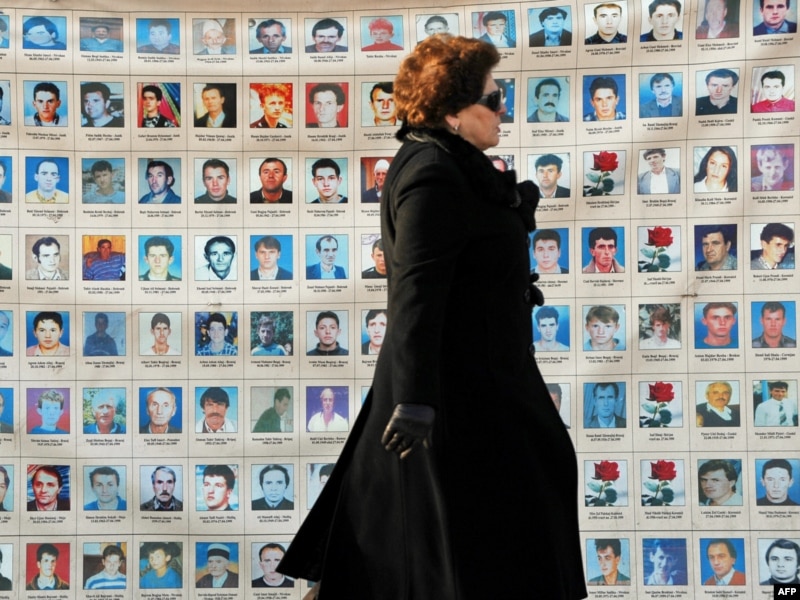
An woman walks past a wall in Pristina on January 25 of photos depicting people missing since the 1998-99 conflict in Kosovo.

An woman walks past a wall in Pristina on January 25 of photos depicting people missing since the 1998-99 conflict in Kosovo.

January 25, 2011
The Parliamentary Assembly of the Council of Europe (PACE) has voted to adopt a resolution calling for international and local investigations into illicit organ trafficking activities implicating Kosovo Prime Minister Hashim Thaci.

The resolution was based on a report unveiled last month following a two-year investigation by Swiss rapporteur Dick Marty.

The report accuses former commanders of the Kosovo Liberation Army -- including Thaci -- of organizing organ trafficking during and after the war between Kosovo guerrillas and Serbian forces in the late 1990s.

The Kosovo government has rejected the report as baseless and "slanderous."

Speaking after the vote in Strasbourg, Council of Europe Secretary-General Thorbjorn Jagland said it was important to uncover the truth about the allegations.

"Nothing can be put under the carpet nowadays, because everything will come to the surface sooner or later and therefore it's so important that these things are investigated by the right authorities," Jagland said.

The parliamentarians said the "appalling crimes committed by Serbian forces" had given rise to the assumption that it was invariably one side which was the perpetrator of crimes and the other side the victim.

"The reality is less clear-cut and more complex," the resolution reads. "There cannot be one justice for the winners and another for the losers."

The resolution calls on the Albanian authorities and Kosovo administration to "co-operate unreservedly" with EULEX, the EU mission in Kosovo, or any other international body mandated to find out the truth about crimes linked to the conflict in Kosovo.

The assembly also called for EULEX to be given a clear mandate, the resources, and political support it needed to carry out its role.

In particular, the resolution emphasized the need for effective witness-protection programs. more see:....http://www.rferl.org/content/pace_endorses_report_kosovo_organ_trafficking_ring/2287194.html

Monday, January 24, 2011


NATO: Alliance's Kosovo force to be halved to 5,000 troops by March 1

BRUSSELS - NATO says its 10,000-strong peacekeeping force in Kosovo will be cut in half by March 1.

Secretary-General Anders Fogh Rasmussen said on Monday that security in the world's newest nation was stable and warranted the drawdown.

NATO took control of Kosovo following a brief aerial war with Serbia, part of an international effort to end the crackdown by then-President Slobodan Milosevic against the ethnic Albanian majority in Serbia's southern province.

The international force, which originally numbered nearly 50,000 troops, has been shrinking ever since.

Kosovo proclaimed its independence from Serbia in February 2008.


Council of Europe to Debate Kosovo Organ Trade Report

The Council of Europe will discuss allegations of organ trafficking in Kosovo on Tuesday, a debate that will be closely watched in the region and beyond.

Altin Raxhimi

The Council of Europe's Parliamentary Assembly, PACE, will have a busy schedule this week. It will appoint a judge for the European Court for Human Rights. It will listen to a European journalism union leader speak on sources and law. There will be the roster of heads of state, a usual practice. The Assembly will hold a session on the CoE’s top priority, the abolition of the death penalty. Business as usual.

But the main debate at next week's session in the modernist Palace of Europe, the Council’s headquarters in the French city of Strasbourg, will be the resolution the Assembly is expected to pass to urge investigations into the fate of hundreds of Serbs and Kosovo Albanians who went missing after the end of the Kosovo war in June 1999.

MPs will debate a resolution based on a report drafted by CoE human rights rapporteur Dick Marty, which alleges that members of the Kosovo Liberation Army organised organ trafficking both during and after the conflict in Kosovo in 1999.

The report, released in December last year, alleged that abductions, disappearances, executions, organ trafficking, and other serious crimes were coordinated by leading members of the Kosovo Liberation Army, including current Prime Minister Hashim Thaci.

While the resolution, which was passed by the CoE's Legal Affairs Committee in December, is not binding, it will carry weight if it is adopted.

PACE resolutions are taken into consideration by the European Union, especially when they concern aspiring EU members, several CoE officials told Balkan Insight.

“A resolution is a political statement,” says a CoE official who refused to be named because of the attention surrounding the debate on Marty's report. “But its effects are beyond that, countries generally need to react.”

Serbian President Boris Tadic and Albanian Prime Minister Sali Berisha will address Council of Europe MPs during the debate on the resolution.

In addition, another resolution will be discussed based on a report drafted by Jean Charles Gardetto, which alleges that witness protection in Kosovo is terribly inadequate, claims that overlap with allegations made in the Marty report.

MPs will also vote on whether to add proposed amendments to the resolution. Marty’s team is expected to clarify that EULEX should be responsible for investigating the organ trafficking claims, a recommendation that also been made by several human rights organisations.


Samaras: "Albania's progress in the EU, will depend on full political and civil rights of Northern Epiriotes and particularly in Himara

Karatzaferis: Greece will be able to defend Northern Epirus".

Responding in parliament, to the speech of the Greek Prime Minister Papandreou, Greek opposition chief Antonis Samaras, Tirana has remember that signing the agreement that the waters between Greece and Albania from the Karamanlis government, was considered as a missing opportunity of Tirana.

Samaras also stated that the last political crises in Albania is is to take in consideration by Athens. He noted that "the progress of Albania for the European Union will depend on full political and civil rights for Northern Epiriotes and particularly in Himara".


While Mr.. Karatzaferis LAOS leader, commented on the recent episodes in Albania, saying that "we are confident that this time unlike in 1997 the Greek government had let our fellow countrymen to their fate, Greece will be able to defend Northern Epirus".

Papandreou speaks in the Greek parliament in relations with Albania

George Papandreou: Greece is following with great attention to developments in Albania


"In Albania, the relations are and will be, in view of our national strategic interests"


Speaking in the Greek parliament on national issues of Greece's foreign policy, Prime Minister George Papandreou, said that "the Athens agenda to include the Balkans, the European Union in 2014, is a priority of Greek foreign policy at the time of Greece to chair the European Union presidency. "


Speaking for the latest developments in Albania, George Papandreou, urged the Albanian political forces, to collaborate under the talks for the Albania's European perspective, the benefit of the people in Albanian.


However, Papandreou in particular, focused on recent developments and the political crisis in Albania. "We are following with great attention the developments of recent political crisis in Albania, and Albania for Athens now, represents a new development strategy for the national interests of Greece, George Papandreou said.

Sunday, January 23, 2011


Opposition leader Edi Rama, calls international community to help Albania

SManalysis


Sali Berisha, "opens war" against democratic institutions, declaring involved with the opposition leader Edi Rama, the Prosecutor General Ina Rama and the Albanian secret service chief Bahri Shaqiri, as responsibilities of the Colp D`etat" against the government..


Opposition leader Edi Rama, has called to NATO, EU and OSCE to help the Albanian people in these difficult days by the military junta of Sali Berisha.
In an interview yesterday, asked by journalists that, is there fear that Edi Rama can be killed, he stated that "there is no fear by anybody today, except Sali Berisha, because the people will decides for this dictator.

Earlier, Prime Minister Sali Berisha, "opened war" against democratic institutions, declaring involved with the opposition leader Edi Rama, the Prosecutor General Ina Rama and the Albanian secret service chief Bahri Shaqiri, as responsibilities of the Colp D`etat" against the government..
Meanwhile, Washington has warned American citizens, to have care in Albanian territory, that could escalate protests throughout the country.

The situation continues to remain polarizing in the extreme, while parliament, only MP of the Government Coalition, was united yesterday at late hours of the night, to call a parliamentary commission, to inquiring the violent demonstrations, seeking to block any process of investigating the murder by Prosecution.

Threats fly, tensions escalate between political rivals in Albania

From Altin Raxhimi, CNN
January 23, 2011 6:57 p.m. EST
On Sunday, Albanian opposition leader Edi Rama gives a speech during a ceremony for a man killed during riots.
STORY HIGHLIGHTS
  • The Socialist Party calls for a protest Friday, a week after 3 died in a similar rally
  • PM says Socialist Party head Rama could get "exemplary punishment" if that happens
  • Rama says he won't back down, accusing PM Berisha of using forces to "annihilate justice"
  • Albania is in the midst of a political stalemate tied to a disputed June 2009 election

Tirana, Albania (CNN) -- The showdown between Albania's ruling government and its political opposition showed no signs of abating Sunday, with Socialist Party leader Edi Rama calling for yet another demonstration despite fresh threats from the nation's prime minister.

Rama, also the mayor of the capital city, Tirana, on Sunday promoted a protest at 2 p.m. Friday to decry alleged corruption and demand the resignation of Prime Minister Sal Berisha. This would be exactly one week after tens of thousands rallied for the same cause in Albania's capital, leading to the deaths of three people after some protesters clashed with government forces.

"My life is not more precious than that of the three Albanians you killed," Rama said, referring to the prime minister who has consistently singled out the Socialist Party leader for blame. "Berisha has committed a coup d'etat by using the government to subdue, violate and annihilate justice."

The opposition has accused police of provoking protesters. But Berisha had said demonstrators instigated the violence in a bid to take over his office as well as parliament and key ministries....more see:

http://www.cnn.com/2011/WORLD/europe/01/23/albania.protests/index.html