Wednesday, March 2, 2016

Divorce Czechoslovakia-Style: Can Kiev and Donbass Call it Quits?

Map of Ukraine

© Flickr/ Prachatai
Europe

The leader of the self-proclaimed Donetsk People’s Republic in eastern Ukraine has suggested an “amicable divorce” a-la Czechoslovakia as a way to end the long-running conflict with Kiev.

Normandy Format Meeting
© REUTERS/ Mykola Lazarenko/Ukrainian Presidential Press Service
If Kiev agrees to a peaceful breakup with Donbass, just like the Czechs and Slovaks once did, it would be the easiest way to end this war,” Alexander Zakharchenko said. The idea was readily echoed by Jaroslav Doubrava, the deputy head of the Czech Senate’s European Affairs committee, and a onetime observer at the local elections in the Donetsk and Luhansk People’s Republics.
“Judging by my personal experience of visiting these two regions, I can say that this is the only viable and sensible way of ending the conflict after all the crimes Kiev committed there… At the height of the war in Donbass I kept saying that after all that nightmare keeping the eastern regions part of Ukraine was now a mission impossible,” Jaroslav Doubrava told Sputnik.
When asked to comment on Alexander Zakharchenko’s alternative option of a confederative treaty which, if implemented in good faith by both sides with due regard for the legitimate interests of the people of Donbass, would effectively end the war, Doubrava said that it had already been turned down by [President Petro] Poroshenko.
“This leaves Donbass no option other than demarcate the border of the de-facto independent Donetsk and Luhansk People’s Republics,” Jaroslav Doubrava stated.
He added that the DPR and LPR would be better off as independent republics than as part of their Ukrainian stepmother, “because people always take better care for what is their own.”
When asked about the prospects of a “peaceful divorce” ever happening, Jaroslav said that the Kiev authorities who came to power as a result of a coup, ought to get back to the negotiatiing table.
“There is no way they can resolved this conflict by force. They need to repent for the crimes they committed in Donetsk and only then discuss a “divorce.”
 “But I fear that Kiev and Donbass will be able to do this the way the Czechs and Slovaks once did after all the blood that has been spilled there,” Jaroslav Doubrava said.

Tuesday, March 1, 2016

Refugee crisis: European leaders demand urgent support for Greece

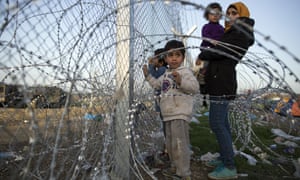
Families gather at the barbed wire fence fence at the Greek-Macedonia border near Idomeni, Greece.
Athens asks EU for €480m in emergency funds as Brussels prepares for two key summits and aid agencies condemn ‘unconscionable’ response to influx

 Families gather at the barbed wire fence fence at the Greek-Macedonia border near Idomeni, Greece. 

Jon Henley in London, Jennifer Rankin in Brussels, Helena Smith in Thessaloniki, and Peter Walker in Calais
Tuesday 1 March 2016
Aid agencies and NGOs have said Europe’s “unconscionable” response to the refugee crisis is courting humanitarian disaster, as Brussels scrambled to prepare emergency summits and desperate scenes unfolded across the continent, from Greece’s border with Macedonia to a makeshift camp outside Calais.

With the EU entering what many see as a make-or-break phase in tackling the crisis, the bloc’s most senior leaders called for urgent action to support Greece as at least 8,500 refugees and migrants remained trapped without permanent shelter on the country’s closed northern border with Macedonia.

Frontex, the EU’s border control agency, said 30 times as many migrants entered Europe in January and February as in the same two months of last year, and the UN’s refugee agency announced that 131,724 people had crossed the Mediterranean – the vast majority of them reaching Greece – so far in 2016, almost as many as made the journey in the first six months of 2015.

The UNHCR said the continent stood “on the cusp of a largely self-induced humanitarian crisis”, with governments “not working together despite agreements … and country after country imposing new border restrictions”.

In a scathing statement, Human Rights Watch condemned the EU’s “utter failure to respond collectively and compassionately to refugee flows”.

Germany’s chancellor, Angela Merkel, said Europe must deal decisively with “the difficult situation” in Greece, while the European council president, Donald Tusk, demanded support for Athens. Readiness to stand by Greece was “a test of our Europeanness”, Tusk said.

“The number of migrants arriving in Greece is on the rise not because they want to make Greece their home, but because they are hoping they will move on from Greece to other European countries,” he said as he embarked on a round of shuttle diplomacy before an emergency meeting with Turkey on Monday and a summit of EU leaders on 18 March.

Facing an average of 2,000-3,000 new refugee arrivals from Turkey each day, Greece said on Tuesday that the influx threatened to overwhelm its already overstretched resources and asked the EU for €480m (£375m) in emergency funds to help it shelter up to 100,000 refugees if needed.

“We cannot bear the strain of all the refugees coming here,” said a government spokeswoman, Olga Gerovassili. “These are temporary measures, there needs to be a permanent solution on where refugees will be relocated.”

 A hut burns as part of the ‘Jungle’ camp in Calais is cleared
Facebook Twitter Pinterest
 A hut burns as part of the ‘Jungle’ camp in Calais is cleared. Photograph: Carl Court/Getty Images
In France, meanwhile, migrants and refugees at the makeshift “Jungle” camp in Calais staged a sit-in protest and set light to shelters on Tuesday in an attempt to disrupt continuing demolition work at the site. Riot police fired more teargas overnight after an operation to dismantle hundreds of temporary shelters led to clashes on Monday.


In a fresh blow to free movement in the EU, Belgium announced it had turned back more than 600 migrants at the French border since the government had reinstated border controls owing to fears about the destruction of parts of the Calais camp, which houses up to 3,500 refugees and migrants eager to reach Britain and mostly unwilling to move into alternative accommodation elsewhere in France.

Greece was now home to at least 24,000 refugees and migrants needing accommodation, the UNHCR spokesman Adrian Edwards said, nearly one-third of them blocked on the border with Macedonia. The Idomeni crossing remained closed on Tuesday after hundreds of migrants tried to force their way through on Monday, prompting police to fire stun grenades and teargas.

Charities ensconced at the border estimated that at least 2,000 more people had arrived in Idomeni on Tuesday. “They are coming by foot and as far as they can by bus and by taxi,” said Caroline Haga, of the International Red Cross Federation. “They are determined to leave. They absolutely do not want to stay in Greece.”

Syrians stranded at the frontier for the past week painted a picture of desperation. Amer Alabboush, 24, a chemical engineer from Homs, who reached Greece via Lesbos with three of his friends last week, said conditions at impromptu tent cities now spread out around the area had deteriorated dramatically.

“For the past week I have been sleeping outdoors because there are no tents available and I can tell you I am not the only one,” he said. “The situation is very bad, very difficult and it is getting worse. Me and my friends have been here for exactly seven days. Every day we have one sandwich. Nothing else. We are hungry.”


NGOs have been offering first aid from three medical tents, and long queues snaked through the camps as men, women and children lined up – often for hours – waiting for water and food. Sanitation amounted to a couple of showers and cabin toilets.


“If this continues, if the numbers get any bigger, it will be unbearable,” Haga said. “The queues are so long that people are passing out. Teams have treated over 100 cases today of refugees collapsing as they stand in line. We’ve just treated a woman who passed out waiting for water and food.”

Edwards said Athens “cannot manage this situation alone”. He said it was essential that EU member states honour pledges made last year to relocate more than 66,000 refugees from Greece over the next two years, noting that only 325 relocations had occurred so far.

The UNHCR said it “urges Greece and the states along the Balkans route to act quickly to avert a disaster and to approach this emergency in a spirit of solidarity and sharing of responsibility”.

In February Austria, Slovenia, Croatia, Serbia and Macedonia decided to impose tight border restrictions including daily caps on the number of asylum seekers and migrants allowed to enter their territory.

Macedonia’s president, Gjorge Ivanov, said in an interview with the German news site Spiegel Online that the entire Balkan refugee route would probably close once Austria reached its limit of 37,500 migrant entries this year. “In times of crisis, every government must find its own solution,” Ivanov said. “We can’t wait until Brussels makes a decision.”

Human Rights Watch said the chaos in northern Greece was a direct result of the caps, noting that Afghans in particular – the second-largest group making the hazardous journey to Greece – were now effectively stuck there while only a relatively small number of Syrian and Iraqi refugees each day were being allowed to pass into Macedonia and onwards into Serbia and Croatia.

“Trapping asylum seekers in Greece is an unconscionable and short-sighted non-solution,” said Eva Cossé, HRW’s Greece specialist. She said it was “ludicrous” that while the EU had agreed a relocation plan, “some countries’ actions risk turning Greece into a giant refugee camp”.

Merkel reiterated after meeting Croatia’s prime minister on Tuesday that the EU had to establish a mechanism to distribute refugees arriving in Greece to other European countries. “There is not a right for a refugee to say: ‘I want to get asylum in a particular country in the European Union,’” the chancellor said. Nearly 1.1 million people registered as asylum seekers in Germany last year.

Tusk, the European council president, set off on a three-day tour of six countries along the western Balkan route. Following a meeting on Wednesday with the Austrian chancellor, Werner Faymann, he will discuss the migration crisis with the leaders of Slovenia, Croatia, Macedonia, Greece and Turkey.

Some of the most crucial meetings will be in Ankara, with Turkey’s prime minister, Ahmet Davutoğlu, and the president Recep Tayyip Erdoğan, before an EU-Turkey summit on Monday.

EU leaders have criticised Turkey, which is hosting 2.5 million refugees, for not doing enough to stem the flow of people heading to Greece, despite a €3bn deal signed last year aimed at preventing migrants from setting sail for Europe. In remarks aimed at Ankara, Tusk said he expected “more intensive engagement from our partners”.

EU leaders will hold a potentially crucial summit in mid-March in an attempt to forge new rules for managing asylum claims following the breakdown of the current system. They will discuss a contentious plan to scrap the Dublin rules, under which asylum seekers must register in the first country they arrive in.

Pentagon OKs $683 Million Smart Bomb Deal for Turkey

 A Turkish F-16 prepares to taxi while another one takes off at 3rd Main Jet Air Base

© AP Photo/ Selcan Hacaoglu
MIDDLE EAST

As the Turkish government escalates tensions across the Middle East, the Pentagon has authorized a multimillion dollar deal to sell smart bombs to Ankara.

Last December, the Turkish government deployed a battalion of 25 tanks and roughly 1560 troops into northern Iraq. Acting without Baghdad’s permission, the move was roundly condemned as a breach of sovereignty. Ankara has also been engaged its own internal war against Kurdish communities in the country’s southeast, with the death toll reaching some 5,000 people.


Russia Backs Baghdad's Demands for Turkish Troops Removal From Iraq's North
Now, with all parties honoring the Syrian ceasefire, Turkey is threatening to plunge its neighbor back into the five-year civil war.

"[The Turkish government] view themselves as victims and losing parties in the Syrian war," Germany’s Telepolis magazine noted. "For this reason they will resort to provocations until the ceasefire is shattered."

Despite Turkey’s destabilizing influence in the region, Washington has chosen to award a $682.9 million contract which will provide Ankara with an undisclosed number of smart bombs.

"The deal came timely as we are deeply engaged in asymmetrical warfare and need smart bombs," one Turkish military official said, according to Defense News.

Turkish soldiers stand on top of tanks next to the Syrian-Trukish border fence (file photo)

Adding Fuel to the Fire? Turkey Will Resort to 'Provocations Until Ceasefire Collapses'
The contract was granted to Ellwood National Forge and General Dynamics Ordnance and Tactical Systems, and includes the sale of of an unnamed number of BLU-109 bunker busters. These bombs contain roughly 550 pounds of a high explosive compound known as tritonal, and thanks to tail fuse delays, the bomb’s detonation is stalled until it reaches its intended underground target.

This is the first such sale to Turkey by US defense contractors, and Ankara expects the transaction to be completed by 2020.

Despite its continuing aggression, Turkey is a key NATO ally, so Washington’s complicity in Ankara’s actions do not come as a surprise.


US Rolling in Profits While 'Aiding and Abetting' Saudi War Crimes in Yemen
The US has also played an active role in Saudi Arabia’s Yemen campaign, providing the bombs used during Riyadh’s air campaigns.

"Saudi Arabia has engaged in war crimes, and the United States is aiding and abetting them by providing the Saudis with military assistance," Marjorie Cohn writes for teleSUR.

"In November 2015, the US sold $1.29 billion worth of arms to Saudi Arabia. It included more than 10,000 bombs, munitions, and weapons parts manufactured by Raytheon and Boeing, as well as bunker busters, and laser-guided and 'general purpose' bombs."

Serbia "can't be punching bag," FM tells UNSC Kosovo meeting

(Tanjug)
Serbia cannot be "a punching bag" for representatives of Kosovo institutions on occasions such as UN Security Council sessions.


This was the message of Serbian Minister of Foreign Affairs Ivica Dacic, who pointed out that Belgrade "is not afraid" and that negotiations with Pristina represent "our strength, not weakness."

"As much as Serbia is trying to extend a hand, we have nobody to extend it towards," Dacic said, reacting strongly to the address during a UN Security Council session on Kosovo by Kosovo's ambassador to the U.S., Vlora Citaku.

Noting that statements such as those made by Citaku "do not contribute to trust but are setting us back," the Serbian foreign minister stressed that he had not heard Citaku say a single sentence on the topic of the meeting, and that is the situation in Kosovo now.

"Serbia is not present in Kosovo since 1999. So what does Serbia have to do with your internal problems? You lecture Serbia, and you know what happened to the witnesses in the case of Haradinaj at the Hague Tribunal. They are no longer alive. So is that cooperation with the Hague Tribunal?," asked Dacic.

He criticized Citaku because she "speaks about crimes, but not about the crimes against Serbs."

"You talk about Serbs practically not living in Kosovo, that they were soldiers and policemen. How can you speak like that? You know very well that Serbs were a majority in Kosovo several centuries ago, these are historical facts," said Dacic addressing Citaku.

He recalled that there is a large number of Serb historical, religious and cultural monuments in Kosovo, which, he added, Citaku is well aware of.

"What are you trying to say - that 200,000 Serbs should not return to Kosovo? You have no right to say that. Kosovo is neither yours nor mine, neither Albanian nor Serb, but of those who live there, ie. citizens of Kosovo, and those are also Serbs," Dacic said.

He then asked Citaku "if, when speaking about national minorities in Serbia, she is trying to say that a Kosovo national minority lives in Serbia."

"There is an Albanian one. It cannot be an Albanian national minority that is both yours, and of those in Tirana. You're talking about a people's right to self-determination - a people who have already used this right and have their own state, Albania," Dacic said.

The Serbian foreign minister then warned members of the UN Security Council that "what happened to Serbia can happened to any of them tomorrow."

He also thanked all the countries that have not recognized the unilaterally proclaimed independence of Kosovo - "not because they respected Serbia, but because they respected the principles of international law."

He asked representatives of the EU, the U.S. and Britain to, when speaking with representatives of Serbia on the eve of such sessions, "bear in mind that Serbia cannot be a punching bag for representatives of Pristina institutions."

"If you think we are afraid of that, you are wrong. And that we are negotiating, it is not our weakness but our strength," concluded the minister.

Citaku replied by saying that "Kosovo is not afraid to tell its story and to be proactive in dealing with its past."

"We had a dreadful war, but no one should try to put an equal sign between the crimes committed under the sponsorship of the state and individual actions," said Citaku.

She said that Pristina will implement all agreements reached, but not those that erode the functioning of "the state of Kosovo."

Speaking earlier during the session dedicated to UN secretary-general's regular report on Kosovo, Dacic said that radicalization of the political scene and deterioration of the security situation represented a threat for the population of Kosovo, and that the most vulnerable were returnees in ethnically mixed communities, Beta agency reported.

Monday, February 29, 2016

Pope Francis Praises Greece for Helping Refugees

73d6323223b2413e5bfa9c6307a76a491

Greek Reporter

By Philip Chrysopoulos -  Feb 29, 2016

Pope Francis called on Sunday for a united response to help refugees while praising Greece for its generosity in handling the massive inflow.

Addressing crowds in Saint Peter’s Square at the Vatican, the Pope said that the “refugee drama” was always in his prayers.

“Greece and other countries on the front line are giving these people generous help, which needs the collaboration of all countries. A response in unison could be effective and distribute the load fairly,” the pontiff said.

“To do this, we need to push decisively and unreservedly in negotiations,” he added.

More than 22,000 refugees are stranded in Greece at the moment, with 2,000-3,000 arriving daily on the islands close to the Turkish coasts. The situation has intensified after Balkan countries shut their borders and Austria restricted entry for the hundreds of thousands aiming for Europe.

The closing of the Former Yugoslav Republic of Macedonia border to the north of Greece – a passageway to central Europe – has created a bottleneck effect at the neutral zone between the two neighbors.

Francis welcomed a cessation of hostilities deal in Syria, where a raging civil war has killed more than 250,000 people and forced 11 million to flee from their homes, swelling the tide of refugees.

Russian Sanctions Hit Turkey Harder Than Anyone Anticipated


One Turkish estimate puts the damage at $15 billion

Kerim Karakaya Subscribe to Kerim Karakaya(Al-Monitor) Subscribe to Al-Monitor

Originally appeared at Al-Monitor

The Russian plane shot down by the Turkish air force Nov. 24 has brought President Recep Tayyip Erdogan and Russian President Vladimir Putin into serious confrontation. The economic warfare that began shortly afterward has been inflicting heavy damage on Turkey ever since.

At the outset, Turkish politicians seemed unconcerned about possible effects of the political crisis on the economy. Back then, while Mehmet Simsek, the deputy prime minister responsible for Turkey's economic policies, stated that Russian economic sanctions would not have any — or at least only limited — effect on the economy. Erdogan was trying to ignore any such economic effects by saying that nothing would happen, even if natural gas were to be cut, because Turkish citizens are used to coping with difficulties.

The sanctions caused major problems and bankruptcy in the tourism, construction, food and textile industries, and a chain reaction in banking sectors on the day the sanctions became effective Jan. 1 — this despite the fact that Putin had not yet played his strongest trump card: energy.

Turkey has reached the point of losing its economic relationship with Russia, which in 2013 was the fourth major importer of Turkish goods and was second in volume of trade volume with Turkey. In the last two years exports decreased by 50%, first because of Russian economic issues due to Western sanctions, and then in part because of Turkish-Russian tensions. Exports decreased to $3.5 billion while the volume of trade decreased by 25%.

The main sectors that have been affected by Russian sanctions are food and agriculture. In the agricultural sector, $700 million of exports are at risk. According to the Assembly of Turkish Exporters, in the period of December 2015-January 2016, exports to Russia regressed 56% compared with the same period a year earlier.

The first large victim of the crisis was Aynes Food Industry and Trade Inc., a dairy company that had been hoping that expansion into the Russian market would help it overcome recent setbacks. Instead, Aynes suffered yet another reversal, and appealed for a delay in its bankruptcy proceedings due to its loss of the Russian market. Chairman Nevzat Serin said, “We lost time to seek alternative markets as a result of the Russia crisis. Our products perished at the [Russian] border gates because of the embargo and we ran out of cash.” The company was not able to make the coupon payments of the bond issues, worth 100 million Turkish lira (about $34 million).

The tourism sector saw a sudden drop in Russian tourists, from 3.5 million in 2014 to 2.8 million in 2015. The numbers are expected to get worse in 2016.

Putin and Foreign Minister Sergey Lavrov have both issued calls to their citizens not to travel to Turkey for security reasons.

Erdogan then asked Turkish citizens to vacation domestically instead of going abroad, and the government released a new economic plan to restructure the debts of the tourism sector.

Murat Ersoy, the owner of ETS Tours, one of the largest tour operators in Turkey, claimed that there is a fall in the number of tourists as a result of the Russian crisis and the war in Syria.

Ersoy said that the government’s encouraging domestic tourism and offering debt restructuring to the sector are sound steps. “We are at the closest point to this hot spot. Tourism ... has not been doing well around the world this year but since we are nearer to the close combat area, we are affected more,” he said.

On the other hand, more pessimistic tourism professionals are concerned that the loss of employment in the sector may reach 500,000 people.

Economist Guldem Atabay Sanli from Egeli & Co. Investments said the problems in the tourism sector are more related to Turkey's internal issues, terrorism and the Russia crisis rather than global economic conditions. She said, “Last year overall tourism income decreased 15% and went down to $26.6 billion. We expect this decline to reach to 30% with the Russian effect this year.”

In recent weeks, news of bankruptcies is also coming from the leather sector, which depends mainly on Russia. Companies shut down one by one in Zeytinburnu, the heart of the leather industry in Istanbul, and in Laleli, the marketplace where Russian individuals and small companies buy heavily, there is almost no action. Serhat Karabaki, owner of ISNOVA, which has been selling leather to Russia for the last 20 years from its 20 store locations, told Al-Monitor, “As a result of the political crisis, 80% of the producers in Zeytinburnu have stopped working. We had 20 stores in Russia. We decreased this number to 11. Our clients won’t even answer our calls anymore.”

The crisis may also lead building contractors to lose their largest market. Putin, in a January speech, hinted at extending sanctions to the approximately 300 Turkish construction companies operating in Russia.

According to data from the Turkish Contractors Association, Turkish contractors completed 1,921 projects worth $61 billion between 1972 and 2015. These figures indicate that Russia is the largest market for Turkish contractors.

The challenges in other sectors has caused a confidence crisis in the banking sector. The banks hesitate to issue new loans and are calling in previous loans depending on their forecasts that the Russia crisis, compounding the slowing domestic market, will cause problems in loan repayments.

A senior officer of a private bank in Turkey told Al-Monitor, “Many companies that face difficulties in loan repayments ask for suspension of bankruptcy and the banks refrain from issuing new loans.” He also said that they do not issue loans for companies strongly dependent on Russia.

Hakan Ates, CEO of Denizbank in Turkey, owned by Russian Sberbank, said that the coming few years will be hard as a result of bad debts in the tourism sector.

So what is the exact amount of the damages inflicted on Turkey, and will these difficulties grow?

In an email, Orhan Okmen, president of JCR Turkey rating bureau, said that unless the political tension ends, the economic challenges for the Turkish companies will increase in 2016 and the cost of the sanctions for food, tourism, construction and retail sectors will be about $15 billion. Okmen also implied a possible fall in the credit ratings of the companies that heavily work with Russia.

Economist Atilla Yesilada of Global Source said Russia sanctions will widen: “The business world and the government presumed that the Russia crisis would be temporary and would ease in time. They thought that the economic relations would be kept away from political relations. However, their predictions were wrong. The sanctions of Russia and its regional allies will last for long years and will leave permanent damage.”

FYROM: Police fire tear gas on migrants storming border

greece-fyrom-border


SOURCE REUTERS


BELGRADE – Macedonian police fired tear gas to disperse hundreds of migrants and refugees who stormed the border from Greece on Monday, tearing down a gate as frustrations boiled over at restrictions imposed on people moving through the Balkans.

greece-fyrom-border

A Reuters witness said Macedonian police fired several rounds of tear gas into crowds who tore down the metal gate and onto a railway line where migrants sat refusing to move, demanding to cross into the country.

There were an estimated 8,000 people gathered at Idomeni, the small frontier community on Greece’s border with Macedonia. Most were Syrians and Iraqis.

Earlier on Monday, a crush had developed along the frontier after rumors spread that Macedonian authorities had opened the border after several hours of it remaining sealed shut.

Crowds who gathered at the razor wire fence proceeded to use a heavy metal pole to bring down a gate by digging beneath the barrier and using force to push it up and out. At least two people collapsed in the crush and ensuing use of tear gas, Reuters television images showed.

At least 22,000 refugees and migrants have been stranded in Greece in the past week since border restrictions began along other countries in the Balkan corridor used by individuals to get to central and northern Europe.

Massive Reservation Cancellations Strike Greece’s Tourism Industry

tourism
By Evgenia Choros -
Feb 27, 2016
Greek Reporter

Greece‘s tourism – one of the country’s most core financial resources – is facing a great threat, as massive cancellations in reservations are occurring in touristic destinations where there are refugee and migrant flows.

According to an interview in Kathemerini, the representative of the Hotel Owners Union in Lesbos, Periclis Antoniou said that “the decrease in the reservations in several markets can reach up to 90%.”

Chios island is also faced with a similar situation, as this year appears to be one of the worst in the last 40 years. Data so far shows a 60% decrease in reservations.

In Kos, reservations have dropped 36%, whereas in Samos reservations have dropped 40%.

Kemi harruar nje deklarate te Albin Kurtit per Himaren dhe Mitrovicen, po e deshifroj.


Stavri Marko

Cfar e bashkon Himaren me Mitrovicen? Nje “Efekt Domino” mund te ndodhe ne rajon, pas deshtimit te planit te Albn Kurtit, per te bllokuar krijimin e Komunave serbe ne Kosove. 

Thuajse ne te gjitha mediat nderkombetare u fokusuan ne zgjedhjen e Presidentit te Kosoves, duke atribuar nje arritje pas negociatash me palen serbe nen ndikimin e BE. 

Europa e mori seriozisht "Zajedicen" Bashkimin e Komunave Serbe, duke iu imponuar Washingtonit se "nuk do te kete qetesi ne se serbet nuk do te kene Autonomi brenda Kosoves".

Lideri autokrat i Vetevendosjes, Albin Kurti, nje politikan apasionant per "Shqiperine e Madhe", fillimisht gjate karieres se tij, i mbeshtetur fuqimisht nga USA, nuk mundi te triumfonte ndaj sabotimeve ne Parlament per zgjedhjen e Thacit President. Mesaduket europa kerkon nje mediator si Thaci dicka me kozmo polit,, se sa nje tjeter ne stilin e nacionalizmit te Kurtit.

Gjate qendreses se Kurtit prej disa muajsh, ai dhe opozita ne Kosove, nuk votonin bashkimin e Komunave serbe nen autonomi territoriale, nje forme organizimi e firmosur prej BE, Kosoves dhe Serbise. Kurti e quajti marveshjen tradheti kombetare shqiptare, ne dem te interesave te Kosoves dhe kombit shqiptar.

Por gjate disa intervistave dhene per televizionet ne Shqiperi, Albin Kurti, ka deklaruar se “Vetevendosja dhe opozita ne Kosove, proteston per te drejtat e shqiptareve per bashkimin e shqiptareve si komb dhe jo per te leshuar territore ndaj serbeve ne Kosove. Kurti madje deklaroi se “si do ti vinte Tiranes, ne se Himara dhe jugu do te shpallte autonomine ose do te bashkohej me Greqine, nepermjet Associacioneve qe po bejne me komunat serbe?”

Himariotet e klasit te diplomacise, e dine mire se cdo te thote nje deklarate e Albin Kurtit, e dhene ne mediat shqiptare ne mes te Tiranes, perfundimi i te ciles, u kurorezua me zgjedhjen e Presidentit te Ri ne Kosove, dhe zbatimin e planit te BE per “Zaidenices”, qe ne gjuhen serbe, do te thote “Bashkim”.
Perse Albin Kurti, barazoi Mitrovicen e Zaidenices” me Himaren ne mes te Tiranes?

Nuk ka asnje dyshim qe per analistet e Rajonit dhe te Gjeopolitikes, ceshjta e te drejtave te njeriut dhe e drejta per vetevendosje, eshte shkak i separatizmit dhe “Efektit Domino” vecanerisht ne Ballkan. Per shume arsyje sa historike por edhe te se drejtes nderkombetare, Himara dhe Mitrovica, kane ngjashmeri. E kam analizuar edhe ne vitin 2000, ne Revisten “Spekter” kete fenome, dhe sot pas 15 vitesh, Albin Kurti jep Alarmin: Himara po na iken nga duart. Po na ndoh si ne Mitrovice..
Mirepo, Albin Kurti deshtoi perpara BE dhe vete Washingtonit, i cili percolli me nota te ashpra deklaratat e Kurtit bile pati edhe replica me ambasadorin amerikan ne Prishtine. Tani radha i vjen Himares, qe sipas Kurtit, ka te njejten skenar si Mitrovica.

Per Albin Kurtin, njohes i mire i ceshtjes shqiptare, ka dhene nje mesazh ne Tirane, bile e ka dhen madje shume kohe edhe pas Ndarjes Territoriale, qe Himaren e krishtere dhe me ndergjegje greke ne mazhorance, e kane bashkuar me komuna shqipfolese nga ana veriore, pa deshiren e saj, me tendence te qarte, asimilimin e saj. Me pas, u gjeten format, nxirren ligje per efekte zjvillimore turistike, per te favorizuar nje levizje popullsise e justifikuar ne funksion te turizmit.

Mos kjo valle do te thote se Tirana e ka parashikuar kete skenar dhe per interesa kombetare, justifikoi edhe ato elektorale per krijimin e Bashkise se Re te Himares me Vranishtin?.

Pak naive te besohet se himariotet nuk gjenerojne forca progresiste, sikunder ka ndodhur ne Mitrovice, e cila detyroi komunitetin nderkombetar, te repsektoheshin parimet e vetevendosjes, me mjete pacifiste. Po ashtu, eshte mediokritet te bashkosh dhe ta mbash me force Himaren jashte deshires se saj, me plane dhe territore qe kercenojne ekzistencen e saj historike, pasi duhet te kuptoni qe Himara, ka mbrojtje me te madhe se Mitrovica ne arenen nderkombetare, perderisa Ndarja territorial, nuk funksionon, eshte fallso, eshte miopi dhe degjeneron konflikte sociale dhe etnike.

Nje kishe u shemb nga shteti ne Dhermi, dhe reagimi me i madh, erdhi nga bota e krishtere, Kryepeshkopi i Rusise dhe Moskes hiresia e tij Kyrill, shprehu indinjate per kete akt barbar. Himariotet e diasporas kane perfaqesuesi e tyre ne Departamentin Amerikan, dhe ndjekin cdo hap ne mardhenjet Tirane – Himare, edhe pse ne shtyp aspak nuk shkruhet me seriozitet.

Por do te thoshin edhe nje fakt ne opinion, shume te rende dhe aspak dinjitoz, me menyren se sillen politikanet e Shqiperise, cfar deklaratash thone.. Vetem prej debatit Rama - Berisha, shteti shqiptar, ka treguar se ka stimuluar popullsi te shperngulet ne bregdet, ne Himare dhe Sarande, duke grabitur toka ne menyren me te pandershme, ne "emer te kombit".

Ka nje seri perpjekjesh oligarkesh me ndihmen juridike te Parlamentit te Shqiperise dhe qeverise, qe kembengulin te kene aksese ne pronat e Himarioteve, duke perdorur me dhjetra mashtrime, fallsifikime dhe keqperdorim te pushtetit. Por ajo qe mendojne ata, ose disa politikane te larte qe parate e pista, duan ti investojne mbi tokat e Himarioteve, mos kujtojne se nuk ka sy qe i veshtron. As joshjet e disa qyyetareve nga Himara qe u shperndahet hipoteke, pa bere regjistrimin themeltar dhe aborgimin e ligjit komunist, nuk do te kalojne, te pakten ka nje garanci nga perfawesuesi i Washingtonit, per te cilen duditerisht Tirana, e ka veshin te shurdhet.

Teoria e shkitjes vec Efektit Domino, do bej te sajen. Mitrovica e dha sinjalin, pas saj nuk I dihet kush e ka radhen, ndodhta shqiptaret ne mal te Zi apo ne Maqedoni. Himara me Tiranen, duhet ta shikojne shume ndryshe njeri tjetrin. Deklaratat e Rames apo ndonje parlamentari tjeter per Himaren sa here qe rriten tone nacionaliste, nuk jane zgjidhje. Ndermjetesit nderkombetare sapo kane filluar te levizin. Kur flet Albin Kurti, duhet ta degjojne te gjitha palet me respekt: “Ne se firmoset Zajedica, atehere pergatituni te leshoni Himaren”

Sunday, February 28, 2016

French National Front Party Founder Endorses Trump for US President

Jean-Marie Le Pen, the founder of France's National Front party, publicly endorsed US 2016 presidential hopeful Donald Trump.

Republican presidential candidate Donald Trump signs autographs for supporters at the conclusion of a Donald Trump rally at Millington Regional Jetport on February 27, 2016 in Millington, Tennessee


'President Trump': From Impossible to Improbable to All But Inevitable?

MOSCOW (Sputnik) — Trump’s most recent victory on Tuesday at the Nevada Republican caucus had him receive 45.9 percent of the votes, far ahead of Sen. Marco Rubio who came in second with 23.9 percent of the votes and Sen. Ted Cruz who finished third with 21.4 percent. The US presidential election is scheduled for November 8, 2016.
"If I was American I'd vote for Donald Trump… May God bless him!" Le Pen said on Twitter on Saturday.

In May 2015, Jean-Marie Le Pen was stripped of his membership in the right-wing party by FN president and his daughter, Marine Le Pen, after his characterization of the Holocaust as "merely a detail in history" drove a wedge within the party.

Saturday, February 27, 2016

First NATO Ships Sail in the Aegean

NATOships

By Evgenia Choros -  Feb 26, 2016

Greek Reporter
The NATO mission commenced its operation in the Aegean in order to stop the migrant flows incited by illegal traders.

More specifically, the Canadian frigate HMCS-Fredericton is close to Lesbos. The German frigate fgs-bonn, which the NATO mission is under command, was supplied in Souda and will sail towards the Central Aegean, whereas the Turkish frigate TCG-Barbaros-(F-244) and the Greek SALAMIS have returned for refilling in order to continue their mission in the next days.

Note that in the handling of the refugee and migrant flows, 11 ships of the Navy are operating, while doing their national mission.

Commander of the mission is the commandant of the Joint Force Command – JFC of NATO, Mark E. Ferguson of the U.S. Navy.

US Deploys 3 B-52 Nuclear Bombers to NATO Exercise in Europe


US Air Force B-52 Stratofortress bombers based at Barksdale Air Force Base in the state of Louisiana have been redeployed to Moron Air Base, Spain.
A US Air Force B-52 bomber

An American B-52 bomber
© AFP 2016/ EPA PHOTO/PA/TIM OCKENDEN

US Air Force Upgrades Aging B-52 Nuclear Bombers for New Smart Weapons
WASHINGTON (Sputnik) — Three US Air Force B-52 Stratofortress bombers based at Barksdale Air Force Base in the state of Louisiana have been redeployed to Moron Air Base, Spain, the US Strategic Command announced in a statement.

“The multi-role heavy bombers will integrate and train with US European Command components and regional allies and partners by participating in the Norwegian exercise Cold Response during this short-term deployment,” the statement said on Friday.
The exercise is part of a build-up of US nuclear and regular forces in Europe that has been announced by the Obama administration.

Earlier this month, Defense Secretary Ashton carter announced that US military spending on Europe would be more than quadrupled from $689 million in fiscal year 2016 to $3.4 billion in fiscal year 2017.
Strategic Command chief Admiral Cecil Haney said the B-52 bombers provided a unique and complementary capability to the intercontinental ballistic missile as well as ballistic missile submarine legs of the US nuclear triad, which underpin America’s capabilities for strategic deterrence.

State Department: Every Country Has the Right to Control its Grounds


department_of_state
By Evgenia Choros -  Feb 27, 2016

Greek Repory

UN Secretary General Ban Ki-moon highlighted on Friday that the borders must remain open because “such border restrictions do not apply with the Convention of 1951 for the Status of refugees and the 1967 Protocol, because the individual definition of the status of the refugee and the evaluation of the personal need for protection are not possible.”

However the State Department does not appear to share the same worries as the secretary-general of the United Nations regarding the refugee and migrant crisis, as it avoided directly asking the rest of the European countries to open their borders.

The deputy representative of State Department, Mark Toner, said that “every nation has the right to control its grounds;” however he asked from the nations to keep on showing generosity.

Toner also expressed his fondness towards Greece for the heavy load that the country is carrying regarding the refugee and migrant flows. “We have said many times that we would like to see the European Union approaching the refugee crisis in a cohesive and complete way, because, as it is noted, different countries take different measures in order to manage the crisis. We would like to see a more united approach.”

- See more at: http://greece.greekreporter.com/2016/02/27/state-department-every-country-has-the-right-to-control-its-grounds/#sthash.ZNNTTkNX.dpuf

Greece Turns Down Request by Austrian Interior Minister to Visit Athens

maxresdefault
Greek Report

By Philip Chrysopoulos -  Feb 26, 2016

maxresdefaultGreece has turned down a request by Austrian Interior Minister Johanna Mikl-Leitner to visit Athens for explanations over the recall of Greece’s ambassador to Vienna.

According to an Athens Macedonia News Agency report citing diplomatic sources, the Greek side turned down the visitation request unless measures against Greece are lifted.

The same sources said that Austria has taken a step back after the tough stance of the Greek foreign ministry, which on Thursday called the Greek ambassador to Vienna Chryssoula Aliferi for consultations in Athens.

Austria has repeatedly accused Greece of failing to protect its borders properly and allowing an excessively high number of migrants to continue their journey towards north Europe through the Former Yugoslav Republic of Macedonia.

“If it is really the case that the Greek external border cannot be protected, can it be still a Schengen external border?” Mikl-Leitner wondered during a meeting of European Union interior ministers on Thursday.

Austria’s initiative to call a meeting of Balkan states to discuss the refugee influx crisis excluding Greece has angered Athens. Greek Deputy Migration Minister Yannis Mouzalas retorted that Mikl-Leitner was “falsifying the truth” and “dragging Austria into increasingly hostile acts towards Greece and the EU.”

Mouzalas said that the European Commission and Frontex have confirmed that Greece is doing its job in protecting Europe’s border in the best possible way. Athens has also expressed its discontent in the belief that Austria has encouraged a series of border restrictions by Balkan states, causing thousands of migrants to be stranded in Greece.

Hashim Thaci Appointed President Of Kosovo, Thanked Serbs For Support

Photo: nadlanu.com

BELGRADE – The Kosovar parliament on Friday voted in former prime minister Hashim Thaci as the president of the self-proclaimed republic, Serbian media reported.

Photo: nadlanu.com
PHOTO: NADLANU.COM

He was elected after three rounds of voting marred by protests in the Kosovar capital of Pristina, the Kossev news website said. Opposition lawmakers released tear gas inside the parliament in an attempt to disrupt the voting.

In the first round, Thaci received 50 votes in the 120-seat parliament. He improved the result by 14 votes in the second round, before emerging victorious with 71 votes.

Among those voting for Taci were the Serb list MPs, and the new president, in his first address in parliament after the vote, voiced a special appreciation for the support.

The 47-year-old will be president of the Serbian breakaway republic for five years. He served as Kosovo’s first-ever prime minister between 2008 and 2014.

In 2008, the Albanian government in Kosovo unilaterally declared independence from Serbia. Belgrade does not recognize Kosovo’s statehood.

The survey of SManalysis: Himariotes are skeptical for a dignity solution from USA.


The Law 7501 for property, as in Burundi, would not accept, and not for Albanian NATO Membership and an UE Candidate Country

"SManalysis" Survey results for Conference Himarioton in Maryland USA, 19-21 February.


Dozens of messages associated voting for cardinal issues that is facing the Himara Region, especially the attitude of the properties, shows a deeply disappointing results.

Some questions related to territorial division, which is done in the most unscrupulous by the Parliament and the government of Albania. As is known, the joined arbitrarily of the Region of Himara voting in the Parliament of Albania in July 2014, with another area, without the desire of its inhabitants, is the violation of the Albanian Constitution, the article 108.

Interesting questions were in relation of the Human Rights and freedoms. How is it possible the question, that Albania's NATO members, so openly violates a series of issues that have to do with the chapter of freedom and human rights, ranging from property, territorial division and ethnic identity?

But questions coming from Himariotes citizens in Albania, had to do with the attitude of Washington, in connection with matters of Himara Region. What prevents USA, bind to the Albanian Government to implement the country's constitution and international obligations for freedoms and human rights, to The Himara Community, they were looted properties and are thus favor the nationalist policies in the country, to assimilate history, culture and heritage of Himara?

Another question has to do with the oligarchs, who are staying on the government and parliament of Albania. Fascist methods that are legal and the government undertakes, to build tourist resorts on the property of the people of Himara, which are supported by the Soros policy in USA, why not apply Albanian Constitution, article 181 and 41 of the properties?

Many questions were directed around the Protocol of Corfu, an international obligation that Albania does not apply, many citizens are skeptical about "double standards", the other for Albanians to demand the rights in the Balkans withful support of USA, and another for the Greeks of Albania, particularly for people of Himara, still not known the old Greek origin, which the CENSUS, 2011 also has given results, with false methods, and not transparent.

Friday, February 26, 2016

NATO Aegean Patrols Expose Deep Divisions Between Athens and Ankara

NATO's ship Bonn en route to the Aegean Sea.
Sputnik
EUROPE
19:05 26.02.2016

In an effort to step up sea patrols to stem the flow of migrants making their way across from Turkey to Greece, pressure has been put on NATO to deploy ships to the Aegean Sea, which has now put it on a collision course with both Athens and Ankara.

Neither Turkey nor Greece have been able to contain their extensive sea borders and pressure was put on NATO to begin patrols. However, NATO Secretary General Jens Stoltenberg has admitted the move puts it at the center of a diplomatically sensitive issue.


There is considerable animosity between Greece and Turkey dating back centuries, but most recently centered on Cyprus, where — in 1974 — Turkey occupied a third of the island in response to an Athens-backed coup aimed at annexing Cyprus to Greece.


Turkey refuses to acknowledge the Republic of Cyprus (an EU member since 2004) as the sole authority on the island, and recognizes the self-declared Turkish Republic of Northern Cyprus since its establishment in 1983.

This has been a major sticking point in the question of the accession of Turkey into the EU as a full member. Another is a dispute over territorial sea limits between the two nations. Erdogan's position on the Kurds — as well as the continuing crises in neighboring Syria and Iraq are exacerbating the situation.

Reconnaissance Only

"Our ships will be providing information to the coastguards and other national authorities of Greece and Turkey. This will help them carry out their duties even more effectively to deal with the illegal trafficking networks," Stoltenberg said in a statement.

"We are also establishing direct links with Frontex, the European Union's border agency. We will conduct our activities in the Aegean Sea. Our commanders will decide the area where they will be operating, in coordination with Greece and Turkey. NATO vessels can deploy in the territorial waters of Greece and Turkey.

"Greek and Turkish forces will not operate in each other's territorial waters and airspace. NATO's task is not to turn back the boats. We will provide critical information. To enable the Greek and Turkish coastguards, as well as Frontex, to do their job even more effectively," Stoltenberg said.

The details of his words are important. Since the NATO operation will not involve turning back migrant boats and Turkish vessels will not cross into Greek sea areas and Greece will not operate in Turkish waters, the situation is stalemate. Migrants know no boundaries.

A Syrian refugee child looks on, moments after arriving on a raft with other Syrian refugees on a beach on the Greek island of Lesbos, January 4, 2016.


Europe Threatens Travel Restrictions Unless Turkey Halts Flow of Refugees

With Greece loudly complaining about a lack of EU assistance in dealing with its growing migrant problem — and the closing off of its northern borders — with little ability to actually patrol the whole Aegean Sea on its own, the situation for Athens is impossible.

Turkey has come under severe criticism for failing to impose border controls under a US$3.35 billion EU program and has seemed unwilling — so far — to strengthen its land or sea military assets, it too looks likely to be unable to stem the maritime migrant flow.

If neither Athens nor Ankara have the capability to deploy assets into the Aegean and NATO declaring it will not turn boats back, it is highly likely the Aegean will continue to be a free-for-all.

'Large number' of Syrian refugees waiting to enter Albania


APP
February 26, 2016, 2:41 pm


TIRANA - A ‘large number’ of Syrian refugees are waiting to cross into Albania, the Balkan nation's integration minister said on Thursday, as migrants begin to seek out new routes into northern Europe following a series of border clampdowns.
Integration minister Klajda Gjosha said the buildup on Albania's frontier appeared to be in response to neighboring Macedonia's decision at the weekend to deny entry to Afghan migrants coming from Greece and impose tougher checks for Syrians and Iraqis.
"I was informed that a large number of Syrians are waiting to enter Albania," said Gjosha, without providing an exact number.
Although both Macedonia and Albania share a border with Greece, the latter has so far not been a main transit country on the migrant trail into northern and western Europe.
More than a million migrants and refugees have arrived in Europe since last year, most entering via Greece. Since July, Albanian police have stopped several hundred migrants from crossing over from the Greek side of the border.
On Thursday, police said they had forced back a dozen Pakistanis who had tried to enter Albania illegally.
According to local media, Albanian authorities have drawn up plans to provide reception centers for 10,000 Syrian migrants in the southern town of Korca and Gjirokastra, near the border with Greece.
Faced with becoming the latest country to be caught up in Europe's biggest migration crisis since World War II, Gjosha stressed the importance of "close collaboration with all our neighboring countries, with Greece and the other members of EU".

After throwing eggs at the Prime Minister, opposition MPs have threatened to boycott parliament in a row over politicians with criminal records.

Fatjona Mejdini
BIRN
Tirana

Prime Minister Edi Rama heading out of the Parliament after opposition's MPs throw eggs to him | Photo: LSA/Malton Dibra
Albania's parliament is again in deadlock over judicial reforms because of an angry dispute between the parties over ridding parliament of people with criminal records.
Opposition MPs tried to stop the parliamentary session on Thursday by throwing eggs towards Prime Minister and Socialist Party leader Edi Rama.
Protests started when Armando Prenga, a government MP, was returned to parliament despite his involvement in a brawl in September 2015 with a 66-year-old fisherman in which he used a handgun.
Prenga was later expelled from Rama's Socialist Party but voted in line with other Socialist MPs during a parliamentary commission on Tuesday after the Supreme Court released him on bail.
His return to parliament angered the centre-right opposition MPs who demanded the prompt amendment of a newly approved law that bans people with convictions from public office.
They want the law to demand "the immediate removal of every individual from politics who was involved in injuring or threatening of another individual".
The leader of the Democratic Party parliamentary group, Edi Paloka, on Thursday said his party would not attend parliament if the majority did not accept the amendment.
"Otherwise, this parlament is not going to function any longer. It will close right here, right now," Paloka said.
However, Taulant Balla, a Socialist MP and the vice-chair of the cross-party parliamentary commission on cleaning up political life, said the opposition request could not be met.
"We cannot amendment the law for a single person... We can work together only on issues that we have already agreed," he said.
Because of the dispute, the opposition is expected formalize its boycott, making it difficult for Albania to conclude EU-mandated judicial reforms and implement the law on cleaning up politics and ridding the administration of people with a criminal past.
Progress on the judicial reforms is essential if Albania wishes to open negotiations on joining the EU.
Consensus between the parties is also required for the establishment of the National Bureau of Investigation, an agency modelled on the FBI that aims to tackle corruption in high places
- See more at: http://www.balkaninsight.com/en/article/al

Albania Opposition to Boycott Parliament Over 'Criminal' MPs


After throwing eggs at the Prime Minister, opposition MPs have threatened to boycott parliament in a row over politicians with criminal records.

Fatjona Mejdini
BIRN
Tirana

Prime Minister Edi Rama heading out of the Parliament after opposition's MPs throw eggs to him | Photo: LSA/Malton Dibra
Albania's parliament is again in deadlock over judicial reforms because of an angry dispute between the parties over ridding parliament of people with criminal records.
Opposition MPs tried to stop the parliamentary session on Thursday by throwing eggs towards Prime Minister and Socialist Party leader Edi Rama.
Protests started when Armando Prenga, a government MP, was returned to parliament despite his involvement in a brawl in September 2015 with a 66-year-old fisherman in which he used a handgun.
Prenga was later expelled from Rama's Socialist Party but voted in line with other Socialist MPs during a parliamentary commission on Tuesday after the Supreme Court released him on bail.
His return to parliament angered the centre-right opposition MPs who demanded the prompt amendment of a newly approved law that bans people with convictions from public office.
They want the law to demand "the immediate removal of every individual from politics who was involved in injuring or threatening of another individual".
The leader of the Democratic Party parliamentary group, Edi Paloka, on Thursday said his party would not attend parliament if the majority did not accept the amendment.
"Otherwise, this parlament is not going to function any longer. It will close right here, right now," Paloka said.
However, Taulant Balla, a Socialist MP and the vice-chair of the cross-party parliamentary commission on cleaning up political life, said the opposition request could not be met.
"We cannot amendment the law for a single person... We can work together only on issues that we have already agreed," he said.
Because of the dispute, the opposition is expected formalize its boycott, making it difficult for Albania to conclude EU-mandated judicial reforms and implement the law on cleaning up politics and ridding the administration of people with a criminal past.
Progress on the judicial reforms is essential if Albania wishes to open negotiations on joining the EU.
Consensus between the parties is also required for the establishment of the National Bureau of Investigation, an agency modelled on the FBI that aims to tackle corruption in high places
- See more at: http://www.balkaninsight.com/en/article/al