Three persons were injured
in a strong explosion that happened in Kirovljeva Street in Belgrade's
Banovo Brdo neighborhood at around 15:30 CET on Wednesday.
Source: B92
(Tanjug)
The incident happened hear the Bellissima pizza parlor
when an SUV exploded. The doctors at the military medical clinic, VMA,
are fighting to save the life of the driver, a 46-year-old man, who
suffered serious injuries.
The MUP announced late on Wednesday that an explosive
device planted under the car exploded, throwing the driver, V.K., out of
the moving vehicle, which then smashed into two parked cars.
Two passers-by have also been injured, the police said.
The MUP statement added that five fire trucks and 19 firefighters
worked to extinguish the flames, and that the investigation of the scene
continues.
18:17, June 10, 2015 Prosecutors in the Albanian capital Tirana have issued arrest
warrants for the Italian entrepreneur Francesco Becchetti – majority
owner of London’s Leyton Orient football club – along with his mother
Liliana Condomitti.
Authorities also put out warrants for Becchetti's right-hand man in
Albania, Mauro De Renzis, and Albanian accountant Erjona Troplini.
Together, they are accused of document forgery and money laundering
linked to a 1997 concession agreement Becchetti made with the Albanian
government to build a hydropower plant that never materialized.
Authorities have frozen Becchetti's assets in the Balkan state,
including bank accounts along with companies called Energji, Cable
System, 400 KV and Fuqi, and Becchetti’s 60 percent shares in AgonSet, a
TV station based in Tirana,
Bank director of Veneto Banca Pranvera Gjika was also arrested on
suspicion of taking part in the Italian businessman’s alleged scheme,
reportedly allowing illegal transfers of “millions of euros” from one
account to another.
According to the Tirana prosecutor’s office, Becchetti contracted
work on the hydroelectric firm to a company called Energji, which is
controlled by his mother Condomitti.
Investigators believe that “through financial maneuvers spanning from
2007 to 2013, [Becchetti and Condomitti] have illegally earned millions
of euros”.
Energji is also accused of having avoided taxes to the tune of six million dollars.
Until last year, Francesco Becchetti was best known in Italy for
being the nephew of Manlio Cerroni, a prominent businessman operating in
the waste management sector all over the world.
Cerroni is the owner of Malagrotta, a Rome landfill known as Europe's
largest, which was closed in October 2013 after falling short of
European Union standards. He is now facing trial for criminal
association linked to waste trafficking, having been arrested in January
2014.
Then, after launching a new TV channel in late 2014 which broadcasts
shows in Italy made in Albania, Becchetti is now credited with a
pioneering foray into “delocalized TV”.
Brits may know Becchetti better as the 90 percent owner of Leyton
Orient FC since he bought it last July from Barry Hearn for about six
million dollars. Within a year, the east London football club was
relegated from League One to League Two, the fourth tier in the English
football league system, causing concern among fans.
A recent investigation called Report, aired by Italy’s public service
broadcaster, probed Becchetti’s source of investment for the TV channel
and football team. They reported that it was Deutsche Bank, which had
been a partner between 2008 and 2010 in the failed hydroelectric plant,
owning 45 percent of the project.
The partnership between Becchetti’s firm BEG and the German finance
giant led to three arbitration procedures in front of various courts
after the bank delayed financing the project, according to the annual
report of the company they established together, HYDRO Srl.
Deutsche Bank then appears to have paid its associate about 33
million dollars in 2012 and nearly 180 million in 2013. The TV show
Report speculated that the cash had been reinvested by Becchetti in his
multiple other business ventures instead of financing the hydroelectric
facility. By Guia Baggi and Marjola Rukaj, Investigative Reporting Project Italy
German Chancellor Angela
Merkel will visit Belgrade and meet with Serbian Prime Minister
Aleksandar Vucic on July 8 and 9, B92 has learned.
Source: B92
(Beta/AP, file)
Merkel will ask Vucic to work on the full implementation
of the Brussels agreement, which is a condition for the opening of first
negotiating chapters in the process of Euro-Atlantic integrations.
Merkel will arrive at the time of departure of German
Ambassador to Serbia Heinz Wilhelm from this post and the question is
who will take his place.
The resumption of dialogue between
Belgrade and Pristina, scheduled for June 23 will be key to the process
of normalization of relations and opening first chapters in the
negotiations between Serbia and EU, European Parliament Rapporteur for
Serbia David McAllister said on Monday in Belgrade.
The
Macedonian government has been summoned by the European Union to
Brussels. The EU Enlargement Commissioner, Johannes Hahn, has ordered
the ruling government and its opposition leaders for talks on ending the
political crisis in the country.
The
crisis continues in Macedonia amid claims of mass illegal surveillance
of more than 20,000 people by Macedonian Prime Minister Nikola Gruevski.
The opposition also accused Gruevski of election fraud and abuse of the
justice system and media. However, Gruevski insists the tapes have been
"created" to destabilize the country.
Opposition Social Democrat leader Zoran Zaev is demanding the
formation of an interim government, in which the electoral roll is
checked and any electoral flaws ironed out. Meanwhile, Gruevski insists
the tapes have been "created" to destabilize the country.
Violent demonstrations broke out and rival protest camps were erected
outside government buildings, which led to calls from Western diplomats
for the Macedonian political parties to meet and resolve the crisis.
Leaders of the ethnic Albanian bloc, Ali Ahmeti from the Democratic
Union for Integration and Menduh Thaci from the Democratic Party
of Albanians are also expected to attend the meeting in Brussels. And
top of the agenda is reaching an agreement on a transitional period
up to the snap elections next April.
But the question of who will be in charge of the interim government
remains unanswered — as does whether Gruevski, who has been in power
since 2006, will actually step down as PM during the transition period.
And now Brussels wants to know.
The
Republic of Macedonia or, as the European Union call it, the Former
Yugoslav Republic of Macedonia has been a candidate for accession to the
EU since 2005. Negotiations haven’t started yet and many obstacles
stand in the way.
One of them is Greece, as it has blocked Macedonian membership
of both NATO and the EU until the "Macedonia name dispute" is resolved.
Meanwhile Greece’s future within the European Union also remains
unresolved. Crisis meetings are to be held with Brussels to unlock the
funding from international lenders to prevent Greece defaulting on its
debt.
Albania delayed by a month to
mid-July the bidding for companies keen to explore for oil and
gas on five onshore blocks and indefinitely for two offshore
blocks, officials said on Monday.A week before offers for the onshore bids was due on June
15, Energy Minister Damian Gjiknuri ordered the bidding date be
postponed for another month to give companies more time.
"What can you do when the second or third biggest oil
company in the world asks you for more time," a senior official
at the Energy Ministry told Reuters when asked about the delay.
The move is also set against friction between Albania and
Greece after Albania's top court repealed a 2009 agreement to
divide their continental shelf.
Part of one of the offshore blocks, the Ionian 5, offered by
Albania three weeks ago overlaps with the area of the Ionian Sea
near Corfu in which Greece also wants to let companies drill.
With both hard-up countries now determined to search for oil
offshore, the sovereign rights on the seabed and subsoil risk
delaying the process until their dispute over rights to the
waters in the Ionian Sea is resolved.
Neither of the big oil players that rushed to Albania soon
after it toppled communism in 1990 have struck it rich, but a
promising initial finds by a venture of Shell and
Petromanas have whipped up interest.
Now bidders have until July 15 to express their interest for
blocks 4, 3, Dumre, C and 4 onshore.
"The deadline for the handover of the applications for the
sea blocks, due to the consolidation of the seismic data, will
be postponed for another deadline," Gjiknuri said.
(Reporting By Benet Koleka, Editing by William Hardy)
Milorad Dodik thinks that
Bosnia-Herzegovina will move either towards returning to the original
Dayton agreement, or toward the independence of the RS.
Source: Beta
The leader of the Serb entity in Bosnia, the Serb
Republic (RS), spoke on Monday in Belgrade, during a lecture at the
Faculty of Political Sciences dedicated to the 20th anniversary of the
peace accord reached in Dayton, Ohio.
"I'm not the one who would go on a political adventure,
but I have the intention of making Serbs aware that they have their
rights," he said, according to Beta.
Dodik added that the
Dayton agreement is now "considerably damaged" and that changes to the
Constitution of Bosnia-Herzegovina would lead toward a centralization of
that country.
According to the RS president, "it is hard to
believe in Bosnia's sustainability today." He described the county as
"an experiment," and noted it had "the highest number of Islamic State
fighters per capita" - 390 in all.
"Today, everything that
Alija Izetbegovic wrote in his Islamic Declaration can be seen in what
is known as the Islamic State," Dodik said.
He added that the
crime committed in Srebrenica was declared to be genocide for political
reasons, and that this appraisal would be made legitimate if he went
there for the upcoming anniversary.
"I cannot accept and give legitimacy to such a point of view," the RS leader said.
Dodik also spoke in favor of setting up an international commission
that would determine what happened in Srebrenica in 1995, so that this
town could become a place of reconciliation for Serbs and Bosniaks
(Muslims).
According to him, the number of those killed in Srebrenica 20 years ago "has been manipulated."
The study, "Neo-Nazism - a dangerous threat to human
rights, democracy and the rule of law" was published to mark the 70th
anniversary of victory over fascism. As part of an analysis of European
countries, it mentions Croatia.
The Croatian newspaper Slobodna Dalmacija writes
that the Russians, among other things, stated that "aggressive
nationalism, ethnic and religious intolerance" in Croatia was directed
primarily against the largest ethnic minority, Serbs, whose numbers have
decreased by two-thirds since 1991.
Referring to the data of
human rights activists, the document states that during the last 19
years, about 30,000 Serbs in Croatia, Orthodox Christians, "converted to
another faith, that is, accepted Catholicism."
"Experts say
that the main reason is the desire of parents to prevent bullying of
their children in schools based on their ethnic or religious
background," the document says.
Russian analysts stress also
that Serbs in Croatia face serious administrative and other obstacles in
finding jobs and reclaiming their property rights.
Individual
cases are listed of xenophobic vandalism targeting Orthodox cemeteries,
as well as removal of signs written in Serbian Cyrillic and the
destruction of a memorial plaque to the victims of the Ustasha death
camp of Jadovno in Pag, as well as the desecration of a 16th century
Jewish cemetery in Split.
This document identifies Slavonia,
northern Dalmatia, and western Srem as areas of Croatia with
particularly strong nationalism.
It also claims that the former
head of state, Ivo Josipovic, warned of an alarming trend of
strengthening neo-fascism and neo-Nazism in Croatia, that should not be
ignored.
Commenting on the report for the daily, President of
the Croatian Parliamentary Committee on Human Rights and Minorities
Furio Radin said that he "never heard about 30,000 Serbs converting to
Roman Catholicism" and concluded these were "unfounded figures."
Radin assures that Croatia cannot be criticized because of neo-Nazism,
adding there was "sporadic flirtation with the Ustashe movement, the
stadium nationalism, but the general assessment of the Russian MFA does
not stand."
Ustashas were in power in the WW2-era Nazi-allied
Independent State of Croatia (NDH), an entity that operated death camps
for Serbs, Jews, and Roma in Jasenovac and elsewhere.
The
article added that some of the cases referred to in the Russian document
can be found in a comprehensive study, "Violence and intolerance
towards Serbs in 2014," written by member of the Serb National Council
(SNV) and journalist Tamara Opacic.
The SNV and the SDSS group
in the Croatian assembly in 2013 started recording and monitoring such
cases, and Opacic said that last year saw "82 examples of ethnically
motivated violence, intolerance and hate speech against Serbs, which is
an increase compared to a year earlier."
"Elections are to
blame for this because the right-wing, led by the HDZ, has been using
nationalist rhetoric that implies an anti-Serb hysteria as their main
political capital for return to power," Opacic said.
The
Russian document singles out singer Marko Perkovic aka Thompson and
estimates that the absence of laws against historical revisionism and
denial of war crimes allows Croatian entertainers to promote the Ustasha
movement, noting Thompson's songs about "Jasenovac and Stara Gradiska
(death camps)" that glorify Ustasha massacres.
Member of the
Executive Board of the Croatian Helsinki Committee Ivo Banac confirms
that "in Croatia, like elsewhere" there had been "incidents related to
neo-fascism" - but asks "who are Russians to call (others) out and what
is their interest in doing that."
He believes that a law that
would prohibit historical revisionism "must not be adopted because it
would limit the freedom of speech."
The Split-based daily also
mentioned that the SNV study contains photos and descriptions of Nazi
graffiti, fascist and Ustasha symbols and messages calling for physical
violence against Serbs, found in almost every Croatian town, such as,
"Hang Serbs on willows,", "Kill the Serb," "Serb, move out," "Slit
Serbs' throats."
The highest concentration of this type of "offensive graffiti" was noticed in Zagreb, the report said.
Greece
and its international lenders must speed up talks to reach a deal
before the end-June deadline to avoid doubts and speculation about
Greece's future in the euro zone, French President Francois Hollande said after a G7 meeting.
Technical
talks must happen in coming hours or days to pave the way for talks at a
political level when EU leaders meet in Brussels next Wednesday for an
EU-Latin America summit, he said, adding he had no doubt there would be
talks on Greece then.
"There is an end-June deadline," Hollande
told a news conference, referring to the end of a bailout program for
Greece and repayment deadlines to the IMF.
"This is the latest
possible deadline but nothing stops us from going faster and I think it
is in Greece's interest to go faster to avoid doubts or speculations. If
we want - and all of us, Greeks and Europeans, have said we do - Greece
to stay in the euro zone, we must go towards a solution in a timeframe
that is not (as late as) the end of the month." Reuters
Exercise Capable Logistician 2015 (8-19
June) will see NATO testing a range of energy-efficient solutions in an
effort to cut cost while enhancing interoperability and military
effectiveness. The exercise takes place at Bakony Combat Training Centre
near Veszprem, Hungary, and, with the support of NATO’s Science for
Peace and Security Programme, will include input from 30 experts from
defence agencies and research institutes.
A total of 1,700 troops are taking part in the exercise
and more than 50 pieces of equipment are being tested. Exercise Capable
Logistician will see NATO analyzing how equipment using different
energy-efficient technologies interacts. Technologies applied include
micro grids to improve a camp’s energy management; renewable energy
sources, such as wind and solar power; insulation against heat and cold;
low-energy technologies for water purification; LED lights; and small
portable fuel cells for NATO soldiers. Featured scenarios will consist
of responding to power cuts, diesel and water contaminations and
generators breaking down.
The long-term goal is to introduce technologies that can reduce the fuel consumption by troops deployed on military operations.
“NATO Smart Energy is about empowering the soldier of the future and
an important missions enabler for the modern military. It reduces cost
and risks of military operations, as well as the environmental footprint
of the military,” explained Ambassador Sorin Ducaru, Assistant
Secretary General of NATO”s Emergency Security Challenges Division.
NATO’s Smart Energy programme began in 2011 and aims to improve the
energy efficiency of Allied armed forces through a wide range of means
such as the increased use of renewable energy and better energy
management.
Greece
should take the deal. The country’s creditors have tabled what has all
the appearances of a final offer. Alexis Tsipras’s government should
accept it. Athens will not achieve better terms and the alternative of
default and likely exit from the euro would be worse for the Greek
people. The signs are not encouraging. The creditors’ proposals were
hammered out at a meeting hosted by Angela Merkel. For all the Greek
brickbats hurled at Berlin, the German chancellor has been more anxious
than many to keep it within the euro. She understands that the
geopolitical consequences of its departure would reach well beyond the
inevitable financial shock. A fair inference would say Ms Merkel has
pushed the International Monetary Fund as far as it will go. Greece’s
immediate response has been that Mr Tsipras would be the one presenting
what officials described as a “last, best offer”. A kind interpretation
would be that the prime minister has to play the politics of managing
anti-euro hardliners in his own party; a harsher one that he has still
to realise it really is one minute to midnight. When politicians
promise the impossible, the odds are that they will be found out. That
is what has happened to the Syriza government. It offered the voters a
shortcut out of the country’s dire economic predicament. They could
throw overboard fiscal retrenchment and tough economic reforms and keep
the euro. Now it is evident Mr Tsipras cannot deliver. More than that:
the pain is unavoidable with or without default, inside or outside the
euro. Another miscalculation (or was it hubris?) was to assume that
other European states should be bound by the choice made by Greek
voters. Mr Tsipras was given a mandate to seek what he said was a better
deal. No one should have expected that the voters of Madrid and Lisbon
or Dublin and Berlin would feel an obligation to agree. Greece’s
democratic choice does not trump those of other eurozone states. The
negotiating strategy of the Athens government has rested on the
hopelessly flimsy assumption that Greece has a better option if its
creditors refuse to bend to his demands. Economists can argue about the
theoretical impact of default followed by a devaluation but, in the
particular case of Greece, the consequences are probably all bad. In
the short term a return to the drachma would see living standards fall
sharply and, with Greece locked out of international capital markets,
the government would be forced to generate the fiscal surpluses it now
balks at. Austerity inside the euro would be replaced by harsher
austerity without. Ah, but what about the long-term gains to
competitiveness from devaluation? In all likelihood they would be
fleeting — lost to the dysfunctionality of the political and economic
systems. Without the modernisation demanded by creditors, including
overhaul of a clientelist and corrupt bureaucracy, a serious effort to
collect taxes, the opening up of closed professions, and reform of
public pensions, salvation outside the euro would be a chimera. There
is plenty of scope for debate about whether the specific fiscal targets
in the latest offer are plausible. I count myself among those who think
the Greek government is probably right when it says that the level of
Greek debt is unsustainable. The focus by the creditors on precise
numbers for fiscal and pension balances, however, reflects the deeper
loss of trust. Targets for the size of the primary surplus a year or
two hence can be changed. What matters are the circumstances. The
missing ingredient since Syriza’s election victory has been any
confidence on the side of creditors that greater fiscal leeway would be
accompanied by a serious commitment to overhaul the country’s
governance. Mr Tsipras promised that, as an outsider, he would sweep
away the corruption and cosy cartels. The impression he has given since
is that one set of clients is being replaced by another. If Athens
wants other leaders to take seriously its view that austerity is
counterproductive, the only way to do it is to embark on the political
and economic reforms needed to underpin a return to growth. Sure, this
is more than a two- or three-year project. But resolve and direction
count. No one would argue with the slippage of a percentage point here
in the size of the country’s primary surplus if the Greek government was
breaking up the oligopolies, cleaning up government and stamping out
endemic tax evasion. Instead, Syriza has talked itself into believing
that the rest of Europe, and above all Germany, is out to “punish”
Greece. Laundry lists of proposed structural reforms have remained,
well, laundry lists. The economy has gone backwards. And, yes, in a way
it does now seem somewhat perverse to prescribe more austerity. There
is no guarantee that even if a deal is struck it will last. As long as
Mr Tsipras and his colleagues feel more comfortable in blaming others
for Greece’s woes, the country’s prospects will remain resolutely grim. The
consequences of Grexit for the rest of the eurozone would be at the
very least dangerous. But here, sadly, Greece’s partners are trapped in
their own paralysis. They know they must turn a monetary into an
economic union, but lack the will to do so. This does not look like a
story with a happy ending. FT.com
SARAJEVO – Pope Francis urged Bosnians to seek lasting ethnic and
religious harmony on Saturday, 20 years after the former Yugoslav
republic emerged from war, saying even the deepest wounds can be healed.
Pope Francis arrives to celebrate a Holy Mass at the Olympic Stadium in Sarajevo on June 6. – Photo: Max Rossi / Reuters
The bells of churches rang out on the pope’s arrival at the airport
of Sarajevo, once a symbol of the ethnic and religious diversity of
socialist Yugoslavia.
Underscoring the security concerns for the pope, three military
helicopters with doors open and sharpshooters at the ready circled low
over the tarmac as his plane landed.
Last month a Muslim gunman attacked a police station in eastern
Bosnia, killing one police officer and wounding two before he was shot
dead.
At the airport, the pope shook hands with each of some 150 children dressed in traditional costumes of all ethnic groups.
The pope told reporters on his plane he was making the trip to pay
tribute to those who had suffered from the 1992-1995 war that killed
100,000 people.
“Now it (Sarajevo) is on a beautiful path of peace. I am making this trip to talk about this,” he said.
The country remains hamstrung by the legacy of the conflict, divided
along ethnic and religious lines and trailing its ex-Yugoslav peers on
the road to Western integration.
Francis, making the third visit by a pope to Bosnia, arrived days
after the entry into force of a landmark EU agreement on closer ties
with Bosnia, part of a new Western initiative to encourage political and
economic change.
A
border patrol vessel belonging to the Ukrainian Security Service has
blown up in the Sea of Azov off the coast of Mariupol; the country's
Border Security Service has reported two injuries and heavy damage to
the vessel.
The
press service of the Ministry of Internal Affairs has reported that the
UMC-1000 patrol boat, with 7 crew on board, exploded at 2:20 pm local
time, four kilometers off the coast of the Donetsk region city
of Mariupol, during a coastal patrol mission.
The Ministry's press service stated that the vessel ran into an explosive device.
At present it is
believed that two boarder guard personnel have been injured by the
blast. Ukrainian authorities have yet to report on the condition of the
other five crewmen. Earlier, local media reported four injuries, three
of moderate severity and one with light injuries.
Two more coast guard
boats were sent to rescue the personnel, stranded at sea as the gunboat
listed heavily. Mariupol-based news portal 0629.com.ua has reported that
the boat is no longer visible from the shore, and may have sunk.
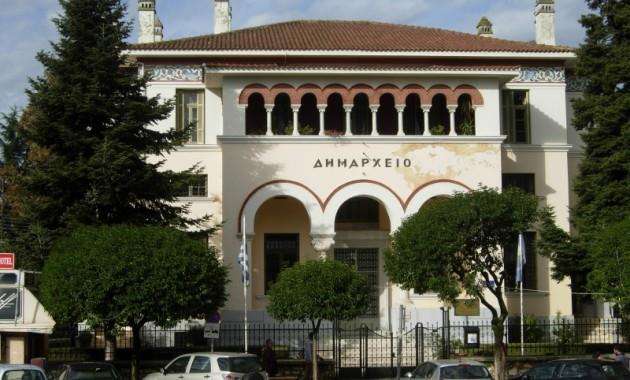
The position of the City Council of Ioannina on the note verbale of the Albanian Government for the marine program and land surveys of our country for hydrocarbons and growing nationalist surges in our neighborhood, was transmitted by the Chairman of the Counsil, George Papadioti,to the State Department, the parties of the parliament and Members of the Government.
The Municipality Council notes that:
"The neighbor country policy recently by the unacceptable and legally invalid sovereign rights dispute and other actions, is clearly hostile and provocative for our country even more dynamites already tense of the Greek-Albanian relations.
At the same timing, the resurgence of ethnic Albanians and Slav conflict in our neighborhood in FYROM, and the extremity of history "expansionism" various circles, threaten to plunge once again the Balkans into chaos.
Faced with escalating tension in the region, governments have an obligation to cultivate and strengthen consistently, friendship, cooperation and good neighborly relations between countries.
Finally, the light is always the above, the Greek authorities should assess calmly and in depth the events and to take all necessary measures to respect the international order and legality. "
Kamenos: "We will be strengthened further reopening outposts, commando units will do
exercises in the region, and helicopters operating in the area to give
residents a sense of security" Security News on The Region
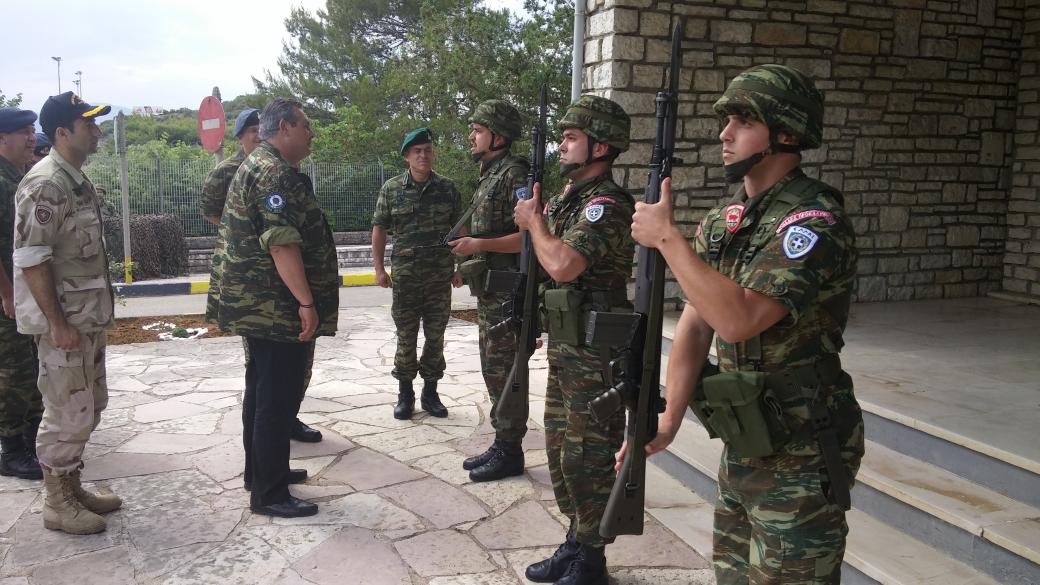
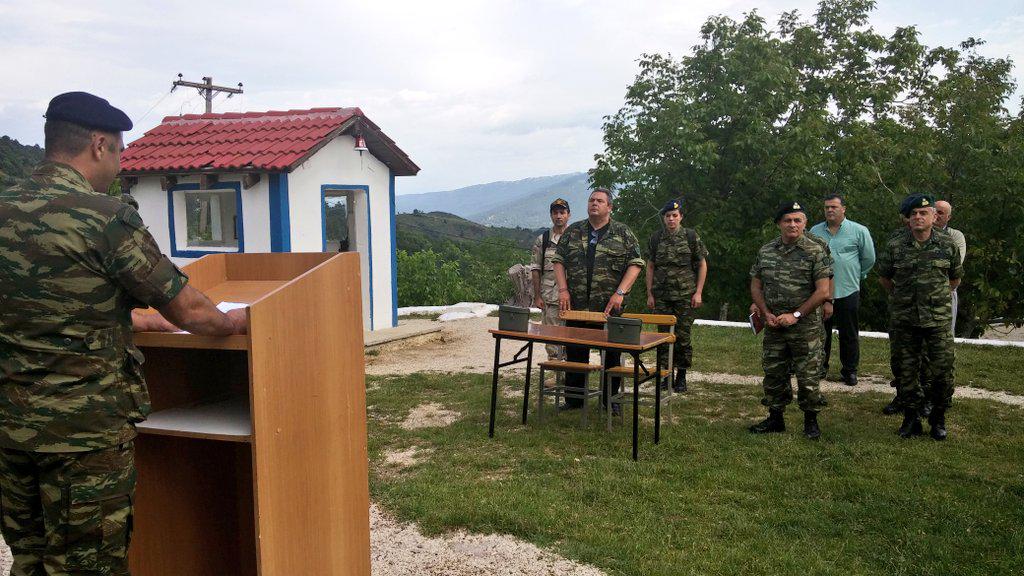
Reopening military outposts and strengthening the army at the Greek - Albanian border, heralded the frontier outpost of Kakavia, Drimades and Pogoni of Ioannina Prefecture, the Defence Minister Panos Kamenos, a development which will satisfy the constant demand of the residents in the villages of the border, seeking to feel secure.
Mr. kamenos, who is touring the fringe military outposts of Epirus, told ANA-MPA response to a question. "Already we redesigned throughout the region. The redesign of the defense structure will be announced in a short time. In summer, as part of the reorganization is done, and according to the commands given by me and by the Chief of the Army, from the front row, the next few days, the presence of conscripts will be strengthened further reopening outposts, commando units will do exercises in the region, and helicopters operating in the area to give residents a sense of security. "
Minister of National Defence, stated that the existing forces, the Army, the Greek police and local authorities make efforts, do a good job, but "we must revive the villages." As stated, the "young guys who left their homeland and are unemployed in Athens, to return again to cultivate our land. We must put forward the motherland to work. "
In Drimades outpost of the Minister of National Defence honored Sophia Demetriou, wife of the border guard, who lives alone in the village Mountain. The minister commended the courage and said it would integrate the National Guard, directly changing the law, as it provides serve only men. "You give courage to all. We feel secure as you are here, "he told her features and added," will be part of the defense of our country. " Indeed he gave honorary board of the Ministry of National Defense.
European
Parliament President Martin Schulz says that the European Union is
willing to meet Greece halfway on the cash-for-reforms deal.
MOSCOW
(Sputnik) — The European Union is willing to meet Greece halfway on the
cash-for-reforms deal, European Parliament President Martin Schulz told
German newspaper Welt Am Sonntag.
"The European Union is ready to meet the Greek
government halfway," Schulz said, adding Athens must also bear
responsibility for the Eurozone.
The unresolved debt stalemate between Greece and its creditors – the
International Monetary Fund, the European Commission and the European
Central Bank – is expected to weight on the G7 summit of world leaders
which kicks off in Germany on Sunday.
Relations
between Athens and Brussels soured over the past months after the
ruling Syriza party, which was elected in January to form the
government, went along with its pre-election promises to end the painful
austerity program and handed the bailout plan back to money lenders.
"The government in Greece must finally admit
that they have a responsibility not only to the voters of their Syriza
party but also to the entire country and, as part of the EU, to the Euro
and Europe," Schulz stressed.
Greek Prime Minister Alexis Tsipras is going to meet with his key
European creditors at an EU summit next week, in particular with the
German and French leaders. He was reportedly due to Brussels for bailout
talks on Friday. Instead, the premier opted to stay in Athens to brief
the Greek parliament on the country’s debt policy and denounce
creditors’ proposals.
Greece now has until the end of June to hammer out a bailout pact
with international financial institutions before the current agreement
runs out.
Russian president tells an Italian newspaper that the West should not fear Russia, and rules out conflict with NATO.
Al Jazeera and agencies
Ukraine's east has seen a fresh flare-up in violence despite a peace deal in place since February [Reuters]Russia
President Vladimir Putin has told an Italian newspaper that his country
was "not a threat to the West", and that he was still committed to a
Ukraine peace deal despite a fresh flare-up in violence.
"I would like to say - there's no need to be afraid of Russia," Putin
told Corriere della Sera in an interview published on Saturday, ruling
out a major conflict between Russia and NATO member countries.
Only a sick person - and even then only in his sleep - can imagine that Russia would suddenly attack NATO.
Vladimir Putin, Russian president
"The world has changed so much that people in their right mind cannot imagine such a large-scale military conflict today."
His comments come as three Baltic countries prepare to ask for a
permanent presence of NATO troops as a deterrent to the Russian
military. Nato says Russia is backing rebels in Ukraine - which Moscow
still denies.
"Only a sick person - and even then only in his sleep - can imagine that Russia would suddenly attack NATO," Putin said.
The Russian president spoke ahead of his visit to Italy next week that will include a meeting with Pope Francis.
Putin's interview was released by the Kremlin just as Group of Seven leaders are gearing up to meet in the German Alpine town of Garmisch-Partenkirchen for a summit this weekend without Russia. Strategic balance
In the interview, Putin stressed that Russia merely sought to defend itself from outside threats.
He pointed out that NATO members have defence expenditures that are
10 times Russia's military spending, adding that the US military budget
was the biggest in the world.
To ensure a strategic balance, Russia will develop "systems to overpower anti-missile defences", Putin said.
Russia's annexation of Crimea from Ukraine last year has jangled
nerves in Europe, with Baltic and Nordic countries reporting an uptick
in Russian military activity over the past year.
Pentagon officials said on Friday that the United States was
considering a range of moves to beef up security, including bolstering
missile defences or even deploying land-based missiles in Europe.
Speaking about the Ukraine crisis, Putin accused Kiev authorities of
being unwilling to implement a European-brokered peace deal agreed in
February and enter into dialogue with pro-Moscow rebels who control
territories in the country's east.
MOSCOW
(Sputnik), Anna Liatsu — Greek Prime Minister Alexis Tsipras rejected
opposition leader Antonis Samaras' proposal to join the government and
adopt a common stance on stalled debt repayment talks, Greek Deputy
Defense Minister told Sputnik on Saturday.
"Mr. Samaras informed Mr. Tsipras through his speech that he would
not accept any type of common front with Mr. Tsipras, unless Nea
Demokratia became part of the government," Costas Isychos said.
Tsipras addressed the Greek parliament on Friday after the latest
failed attempt to reach an agreement on a bailout package with European
lenders.
Samaras, former prime minister who lost this year's election
to Tsipras' left-wing Syriza, lambasted Tsipras for lack of achievements
in negotiations and called on him to "join the national consensus"
offered by New Democracy.
"Mr. Tsipras did not agree on this," the defense official told Sputnik.
Isychos added that European Commission President Jean-Claude
Juncker's plan was largely rejected by "most of the leaders of the
opposition."
"But at the same time [they] were in disagreement with Mr. Tsipras' proposal to the institutions," he told Sputnik.
Greece skipped a scheduled $330-million repayment to the
International Monetary Fund (IMF) on Friday, offering instead to make a
single payment by the end of June.
Under Athens' current bailout deal with IMF, expiring at the end
of the month, Greece is expected to repay a total of $1.8 billion.
Culture Minister Ivan
Tasovac on Thursday in Belgrade opened a festival dubbed "Mirdita, Dobar
Dan," that showcases works of artists from Kosovo.
Source: B92, Tanjug
Expressing his satisfaction because of the opportunity to
declare the festival open, Tasovac in his address recounted attending
"an unusual cultural event recently."
"In a new production of Shakespeare's great play 'Romeo
and Juliet', directed by Miki Manojlovic, actors from Belgrade and
Pristina performed together. Although the dramatic action was not
removed from Verona, in this version of the play about the destructive
force of hatred and the timeless power of love, the Capulets speak in
Serbian, and the Montagues in Albanian, without translation."
The minister went on to say that "at the very end, when the lights are
turned on and the last masks fall, the actors leave the stage and go
among the audience, each saying their name and shaking hands with the
members of the audience."
"Through this gesture - a gesture of
breaking theatrical illusions, but at the same time one quite ordinary,
simple gesture of good will - they reminded us strongly and honestly,
that in any deeply divided society, with fresh, unhealed wounds, it is
quite impossible to imagine reconciliation without dialogue between
different cultures," Tasovac said, and added:
"Culture is there
to help us overcome the misunderstanding, because culture knows no
borders. Culture is the single constant that strengthens individuals and
entire communities, changes them and makes them capable not only of
understanding each other but also of enjoy the complex diversity of the
human creative expression. Through culture we all develop a strong sense
of belonging but also the awareness of the excellence of different
traditions, beliefs, and worldviews."
The festival is held for
the second time in Belgrade on June 4-8, "presenting Kosovo's works of
culture," Tanjug reported earlier.
The festival opened at
Belgrade's Dom sindikata by Isa Cosja's film "Three Windows and a
Hanging", awarded at the Sarajevo Film Festival and the International
Film Festival in Thessaloniki.
The Belgrade audience "will be
acquainted with Kosovo musicians, actors, theatre and film directors and
social activists and analysts," the agency quoted the organizers.
The program will also include a promotion of the book "Billionaire" by
Veton Suroi, published in the Serbian language by Samizdat B92, a
concert by singer and actress Edona Resitaj, as well as a performance of
Fatos Berisa's play "Shopping and Fucking", a statement said.
The festival will also feature a multimedia exhibition titled "I Am" by
six renowned Kosovo women artists, and visitors will also have the
opportunity to hear debates on social and political issues, aimed at
establishing an open dialogue and normalization of relations between
Belgrade and Pristina.
The festival will continue in Pristina in September.
The festival will be held on various locations and, like last year, entrance to all events will be free of charge.
President
Vladimir Putin’s upcoming meeting with Pope Francis could signal the
start of “unprecedented fence-mending” between Russia and the West and
could contribute to the settlement of the conflict in eastern Ukraine,
French media reported on Friday.
Pope
Francis helped ease tensions between Israel and the Palestinians and
restore long-severed ties between the United States and Cuba, Le Figaro
wrote.
The Pontiff’s engaging personality and political activity has won the
Vatican’s diplomacy an internationally respected status it never
enjoyed before, the paper added.
The Ukrainian crisis will take center stage during the Pope’s upcoming meeting in the Vatican with the visiting Russian leader.
The Holy See encouraged the Eastern Catholics to “make peace”
with their Orthodox fellow Christians, denounced the ongoing violence
in Ukraine and remains a good friend of Russia, Le Figaro wrote in a
comment Friday.
During their meeting Wednesday Vladimir Putin and Pope Francis will
also discuss ways to end the protracted crises in Syria and elsewhere
in the Middle East.
“The Vatican diplomacy realizes that without Russia this will hardly be possible,” the paper emphasized.
Scores of ships and aircraft from 17
countries are taking part in Baltic Sea naval drills as part of exercise
BALTOPS which starts on Friday (5 June 2015) and runs until 20 June.
Allied participation demonstrates NATO's resolve to defend the Baltic
region, and will hone the ability of Allies and partners to work
together.
The exercise will feature anti-submarine warfare, air
defence, intercepting suspect vessels and amphibious landings. A total
of 49 ships, 61 aircraft, one submarine, and a combined amphibious
landing force of 700 U.S. Finnish and Swedish troops will participate in
the drills. Fourteen NATO Allies are joined this year by NATO partners
Finland, Georgia and Sweden. Overall, 5,600 troops will be involved.
"This exercise represents an important opportunity for our
forces, as allies and partners, to enhance our ability to work together
and strengthen capabilities required to maintain regional security," said Vice Admiral James Foggo III, the Commander of Naval Striking and Support Forces NATO. He added: "this
exercise will be conducted in a truly joint environment, and I look
forward to working with and learning from so many different nations and
services".
While BALTOPS is a United States-led exercise, Vice Admiral Foggo and
his NATO staff are responsible for executing this year's exercise.
Participants include Belgium, Canada, Denmark, Estonia, Finland, France,
Germany, Georgia, Latvia, Lithuania, the Netherlands, Norway, Poland,
Sweden, Turkey, the United Kingdom, and the United States.
The annual BALTOPS exercise is not held in response to any specific
threat. The exercise has been held since 1971, and is now in its 43rd
year. BALTOPS is one of several major multinational exercises this month
which also includes exercise Noble Jump - the first deployment test for
NATO's new quick reaction force - which will take place in Poland from
9-19 June.




![Ukraine's east has seen a fresh flare-up in violence despite a peace deal in place since February [Reuters]](https://lh3.googleusercontent.com/blogger_img_proxy/AEn0k_vlitoBJ3UodbrPQmCGQVvrn2caQx04A-y9JU4lfWhCoVP_qB8n0V9E5YXh8mKdVRrhLib3i3vhSa9I2pfTjUnhj9aDb16xEmWKLwZE4irB0cFmPJPg8RNzQTk0Pi4Fa2pgJ2zgOC6kd-S3TwxVXACnOu0JaM2Gu3zrp7AU2yOD_U5hJvV2AdyveFo3uBRQJ2IOxD36GudY-g=s0-d "Vladimir Putin says Russia not a threat to the West")


