The battle of Semdinli
Aug 3rd 2012, 17:42 by A.Z. | ANKARA
ALONG Turkey’s southern border, in a far-flung corner of the
country that is wedged between Iraq and Iran, separatist rebels of the
outlawed Kurdistan Workers Party (PKK) have been waging one of the
fiercest battles in recent years against the Turkish army. For nearly
two weeks, PKK rebels entrenched around the township of Semdinli in the
Hakkari province have resisted an onslaught by Turkish helicopters and
fighter jets that have been pounding the mountainous terrain, setting
fire to forests and forcing hundreds of villagers to flee. The battle is
said to have spread to the outskirts of Semdinli, an impoverished town
of 19,500 where sympathy for the PKK runs strong.
Sedat Tore, Semdinli’s mayor from the pro-Kurdish Peace and Democracy Party (BDP) says the din of artillery and bombs "is terrorising our people". Plumes of smoke have enveloped the town. "We are in a circle of fire," implores Mr Tore.
Details of the clashes remains sketchy because the combat zone has remained sealed off by the army ever since the battle started on July 24th. The army moved in following reports that PKK militants had set up checkpoints along a road connecting Semdinli to the northern town of Derecik and blown up several small bridges. The PKK claims to have killed as many as 49 Turkish soldiers and that it is controlling the areas surrounding Semdinli. The army denies the claims saying it has lost only two men and that it has killed at least 37 PKK rebels. "We really don’t know what is happening because the government won’t allow us to go in [to the combat zone]" said Esat Canan, a BDP MP in Semdinli, who expressed concern for villagers caught in the conflict.
The shroud of mystery thickened after Turkey’s foreign minister, Ahmet Davutoğlu, told a group of journalists this week that he knew what was happening in Semdinli but that "I won’t tell you." Turkish officials claim that the army has foiled PKK plans to spark an "Arab Spring" type uprising in the region but have failed to explain why the fighting has gone on for so long. A PKK affiliated website claimed on August 3rd that the rebels had launched a separate attack in the township of Eruh further west killing at least 11 soldiers. Turkish officials acknowledged that two soldiers died in the attack.
The rebels are expected to further escalate the violence before August 15th, which marks the 28th anniversary of their campaign for an independent Kurdish state uniting some 30m Kurds, scattered across Turkey, Iran, Iraq and Syria. They have been emboldened by recent gains by Syrian Kurds, led by a sister group in the Democratic Union Party (known by its Kurdish initials PYD), which has wrested control of a string of Kurdish majority Syrian towns along the Turkish border.
Turkey has responded by beefing up its troops and ordinance along the border and threatening to intervene should the PKK use Syria as a launching pad for its operations. Amid all the chest-pounding there are some hopeful signs that Turkey’s ruling Justice and Development (AK) party has not abandoned reforms in favour of an all out (and long tested) "military solution" to the Kurdish problem. Even as the Turkish jets continued to rain bombs around Semdinli, AK MPs in Ankara gathered with opposition members in the Turkish parliament to thrash out the draft of a new constitution that the prime minister, Recep Tayyip Erdogan, has promised to deliver.
The wording is expected to pave the way for the Kurds’ long-standing demands to educate their children in their long-banned mother tongue and to shelve references to Turkish ethnicity in relation to citizenship. But there is a hitch. According to the drafting committee’s own rules there needs to be unanimity among members for any new article to be approved. The far-right Nationalist Action Party, which denies there is a Kurdish problem, is pushing back. To his credit Mr Erdogan has done more than any of his predecessors to improve the Kurds’ lot. But unless he resumes talks with the rebels that broke down last year, the scenes in Semdinli are likely to be repeated.
Sedat Tore, Semdinli’s mayor from the pro-Kurdish Peace and Democracy Party (BDP) says the din of artillery and bombs "is terrorising our people". Plumes of smoke have enveloped the town. "We are in a circle of fire," implores Mr Tore.
Details of the clashes remains sketchy because the combat zone has remained sealed off by the army ever since the battle started on July 24th. The army moved in following reports that PKK militants had set up checkpoints along a road connecting Semdinli to the northern town of Derecik and blown up several small bridges. The PKK claims to have killed as many as 49 Turkish soldiers and that it is controlling the areas surrounding Semdinli. The army denies the claims saying it has lost only two men and that it has killed at least 37 PKK rebels. "We really don’t know what is happening because the government won’t allow us to go in [to the combat zone]" said Esat Canan, a BDP MP in Semdinli, who expressed concern for villagers caught in the conflict.
The shroud of mystery thickened after Turkey’s foreign minister, Ahmet Davutoğlu, told a group of journalists this week that he knew what was happening in Semdinli but that "I won’t tell you." Turkish officials claim that the army has foiled PKK plans to spark an "Arab Spring" type uprising in the region but have failed to explain why the fighting has gone on for so long. A PKK affiliated website claimed on August 3rd that the rebels had launched a separate attack in the township of Eruh further west killing at least 11 soldiers. Turkish officials acknowledged that two soldiers died in the attack.
The rebels are expected to further escalate the violence before August 15th, which marks the 28th anniversary of their campaign for an independent Kurdish state uniting some 30m Kurds, scattered across Turkey, Iran, Iraq and Syria. They have been emboldened by recent gains by Syrian Kurds, led by a sister group in the Democratic Union Party (known by its Kurdish initials PYD), which has wrested control of a string of Kurdish majority Syrian towns along the Turkish border.
Turkey has responded by beefing up its troops and ordinance along the border and threatening to intervene should the PKK use Syria as a launching pad for its operations. Amid all the chest-pounding there are some hopeful signs that Turkey’s ruling Justice and Development (AK) party has not abandoned reforms in favour of an all out (and long tested) "military solution" to the Kurdish problem. Even as the Turkish jets continued to rain bombs around Semdinli, AK MPs in Ankara gathered with opposition members in the Turkish parliament to thrash out the draft of a new constitution that the prime minister, Recep Tayyip Erdogan, has promised to deliver.
The wording is expected to pave the way for the Kurds’ long-standing demands to educate their children in their long-banned mother tongue and to shelve references to Turkish ethnicity in relation to citizenship. But there is a hitch. According to the drafting committee’s own rules there needs to be unanimity among members for any new article to be approved. The far-right Nationalist Action Party, which denies there is a Kurdish problem, is pushing back. To his credit Mr Erdogan has done more than any of his predecessors to improve the Kurds’ lot. But unless he resumes talks with the rebels that broke down last year, the scenes in Semdinli are likely to be repeated.


 28 July. Hassan Nasrallah has released a video clip recording Hizballah’s 2006 raid which ended in the deaths of eight IDF soldiers and the kidnapping of Ehud Goldwasser and Eldad Regev. Hot military pursuit for their rescue mired Israel in the ill-prepared, misconceived Second Lebanon war, which Hizballah claimed to have won. DEBKAfile: The tape is designed to warn Israel that Nasrallah is still free to launch war with a similar ending any time now, with full Iranian and Syrian backing.
  29 July. President Barack Obama can’t be sure the Netanyahu government won’t spring on him a surprise attack on Iran’s nuclear sites earlier than the date under discussion between them. October is now widely cited. DEBKAfile: To forestall Israel, the CIA has spread a broad undercover network of agents across the country to pick up any clue of the IDF switching to operational mode for a strike. It also leaked to AP a detailed article defaming Israel as its “No.1 counterintelligence threat” in the Middle East.
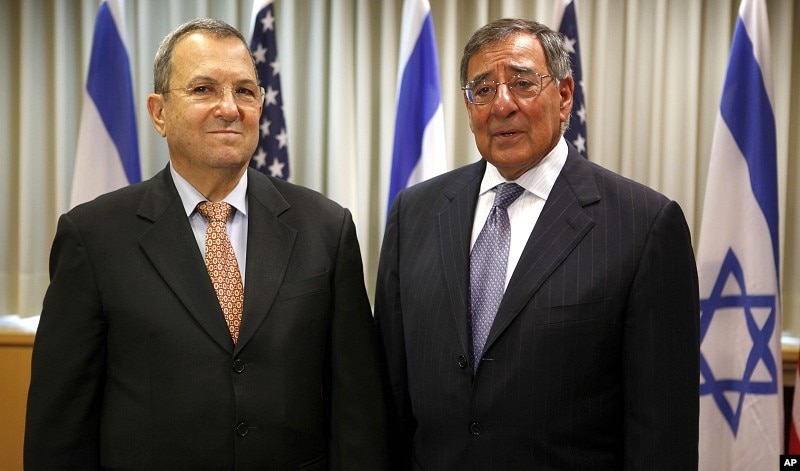
 30 July. US Defense Secretary Leon Panetta commented Monday, July 30 on his way to the Middle East that the assault on Aleppo, “will ultimately be another nail in Assad’s coffin.” He spoke after the Free Syrian Army’s Saudi and Qatari intelligence backers based in Apaydin, Turkey, admitted that the ferocious Syrian government onslaught had derailed for now their safe haven scheme for the Aleppo region, which was to have housed the FSA forward command and a Benghazi-style transitional government.
 31 July. Israeli Prime Minister Binyamin Netanyahu said Tuesday, Aug. 31, that he hasn’t yet reached a decision on attacking Iran, but added: “The ayatollahs have inscribed Israel’s destruction on their banner.” He stressed his personal commitment “not to permit Israel to come under Iranian atomic threat.”
 31 July. Disquiet in Washington, Jerusalem and a row of Middle East capitals is gaining ground the longer the Saudi government stays silent on the reported assassination of the newly-appointed Saudi intelligence chief Prince Bandar bin Sultan, purportedly in a revenge operation by a Syrian intelligence death squad. Saudi rulers are feared too traumatized to respond to the report by the fear of clandestine Iranian penetration of the highest and most closely guarded circles of their government, possibly climaxing in Bandar’s assassination.
 01 Aug. Iran’s supreme leader Ayatollah Ali Khamenei warned a “last war council” of top military chiefs Friday, July 27 that war may be weeks away, possibly by October. Iran is engaged in its biggest fortification program ever to protect its nuclear installations under mountains of rocks, tons of reinforced concrete and steel sheets. Its program of retaliation includes missile and bombing attacks on Israel, Saudi Arabia and US Middle East and Gulf military facilities. Hizballah in Lebanon and Hamas and Jihad Islami in Gaza are to be enlisted to pitch in against Israel from the north and the southwest.




 “We
are true neighbors,” stated Greek ambassador in Sofia, Thrasyvoulos
Stamatopoulos, in regards to the Greek-Bulgarian relationship in an
interview with Bulgarian newspaper Standard.
“We
are true neighbors,” stated Greek ambassador in Sofia, Thrasyvoulos
Stamatopoulos, in regards to the Greek-Bulgarian relationship in an
interview with Bulgarian newspaper Standard.


