Tuesday, March 25, 2014

Economic "unification" of Albania and Kosovo
23/03/2014


Economic unification of Albania and Kosovo
The Albanian Prime Minister, Edi Rama, appealed for economic unification between Kosovo and Albania from the town of Peja, in order to break any barrier that still exists between the two countries.

“We don’t have a National Chamber of Commerce to unify the Albanian businesses in Albania and Kosovo, so that it can be a referring point for both governments, and so that it can be the party that dialogues on behalf of all other chambers. It would be a very useful instrument. UEFA and FIFA stop us from making our national football team, but no one stops us for a national team of business. It is only our fault If we don’t do it in order to have success in Albania and Kosovo”, Rama declared.

The Prime Minister declared that very soon both countries will make a mutual evaluation for the customs procedure, turning limits into possibilities, as he said.

“We took the commitment to remove double taxation. We have also decided to eliminate VAT fir books, newspapers and magazines. We will include in the meeting of the Council of Ministers the discussion for removing VAT from steel tubes. By the end of this month, Kosovo and Albania will make a joint evaluation of Customs procedures and it will be public. Four or five days of delays for goods that go from Durres to Prishtina, Peja or Gjakova means that we are 50 years behind”, the Prime Minister declared.

Rama mentioned cooperation in energy, declaring that no time should be lost.

“We have plenty of chances and we will realize soon in order to have a joint institution for buying energy. As for importing, we will import it in time, cheaper and with fewer problems, because corruption will be more difficult if we are both in”, Rama declared.
Thomas Haidis, the first Northern Epiriot from Himara, who is a candidate for the Council Municipality of Athens


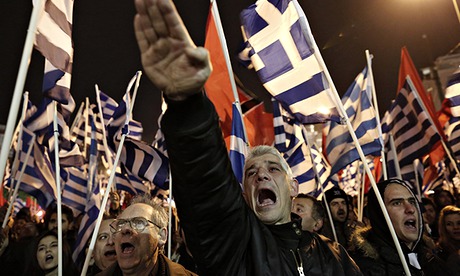
The son of very Known member of the "Hellenic Dawn" Roberto Haidi from Lukovo of Himara, will compete together with the leader of Party, Ilias Kasidiaris

In the list of candidates, for administrative elections to be held in Greece, is made present the name of Thomas Haidis, 21-year-old student, for the Shipping Industry in London, which represents the list headed by Ilias Kasidiaris, candidate for Mayor Athens Municipality.

The "Hellenic Dawn" is the name of the new, ultra-nationalist party of the The Golden Dawn, which will compete in the European Parliamentary elections and Administrative. Its leaders continue to remain in jail pending a special court that accuses them of terrorism.

But according to polling, The "Hellenic Dawn" Party may win some municipalities in Greece, as well as send in the European Parliament, at least two deputies.

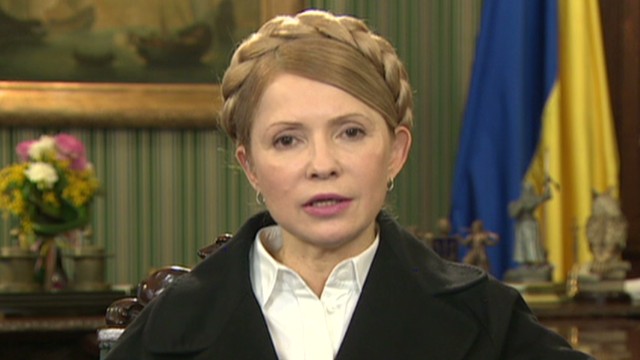
Yulia Tymoshenko wants to nuke 8 million Russians in the Ukraine


As I have mentioned before, Tymoshenko really appears to have suffered a great deal in Yanukovich's dungeon and now she is clearly "gone fishing".  The latest telephone leak (thanks SVR, and keep up the great work!) shows her actually suggesting that the Banderites *nuke* the 8 million Russians living in the Ukraine.  

She also proposes to make Russia a scorched field.  Let me immediately reassure everybody - the Ukraine does not have nuclear weapons, never had them, never will have them.  You can take that to the bank.  To Tymoshenko's partial exculpation, she is clearly venting in a fit of frustrated rage and not actually giving orders to a (non existing) Ukrainian military.  

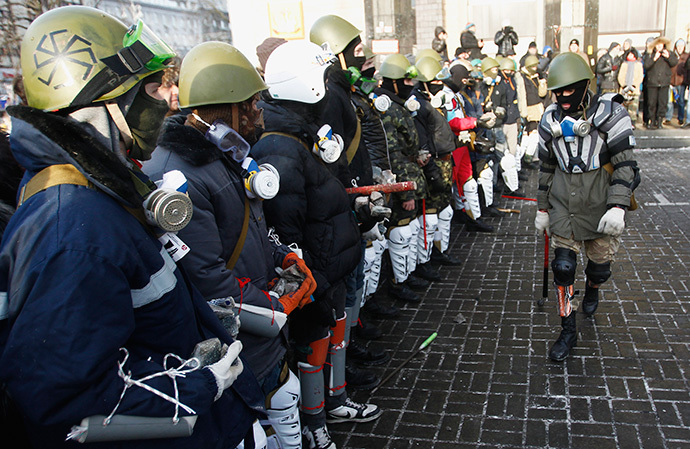
Still, this is a very good illustration of how all these freedom loving, smiling, Ukrainian nationalists really think.  Keep in mind that Tymoshenko's party "Batkivshchyna" (or Fatherland) is by far the most "moderate" (to the extend that any of these Banderites can be considered moderate) and that Klichko's Udar party is worse, that Tiagnibok's Freedom Party (aka "Social Nationalist" party) is even worse, and that they all are comparatively sane and moderate when compared to Iarosh's "Right Sektor" who can only be compared to the Croatian Ustashe or the Hutu Interahamwe.  

And its the Right Sektor which currently has all the guns (only small stuff, thanks God, stuff that is only useful to terrorize civilians, not something you could use against the "Polite Armed Men in Green").
25 Mars 1821.
President Obama Issues Proclamation on 2014 Greek Independence Anniversary

President Barack Obama Issues a declaration on the 2014 Greek Independence Anniversary
by Anastasios Papapostolou - Mar 24, 2014


US President Barack Obama released a proclamation on the occasion of Greek Independence Day, to be observed March 25th, 2014. The US President calls ” upon the people of the United States to observe this day with appropriate ceremonies and activities.” The proclamation, entitled “ Greek Independence Day: A National Day of Celebration of Greek and American Democracy, 2014″  sends a message that the US and Greece have a strong historical bond and recognizes the contributions of Greek-Americans to the US.

Read the full text below:

Presidential Proclamation –

GREEK INDEPENDENCE DAY: A NATIONAL DAY OF
CELEBRATION OF GREEK AND AMERICAN DEMOCRACY, 2014
- – - – - – -

BY THE PRESIDENT OF THE UNITED STATES OF AMERICA

A PROCLAMATION

“Almost two centuries ago, the people of Greece laid claim to their independence and began a long struggle to restore democracy to its birthplace. Greek Americans crossed oceans to fight for the freedom of their ancestral homeland, and through two World Wars and a Cold War, Greece and the United States stood side-by-side. On Greek Independence Day, we honor the deep connections between our two nations and celebrate the democratic ideals at the heart of our shared history.

America’s form of government owes much to the small group of Greek city-states that pioneered democracy thousands of years ago. Just as Hellenic principles guided our Founders, Greek antiquity has inspired generations, from writers and activists to architects and inventors. Greek Americans have contributed as leaders of culture, community, business, and government. Through the generations, they have helped shape our enduring democracy — a Nation that accepts our obligations to one another and understands that we must rise and fall as one.

Greece is a valued NATO ally, and our friendship remains as strong as ever. As Greece takes tough action to rebuild its economy and bring relief to the Greek people, the United States offers our continued support. Today, let us reaffirm a bond that extends beyond government, connects our peoples, and inspires all who strive to choose their own destiny.

NOW, THEREFORE, I, BARACK OBAMA, President of the United States of America, by virtue of the authority vested in me by the Constitution and the laws of the United States, do hereby proclaim March 25, 2014, as Greek Independence Day: A National Day of Celebration of Greek and American Democracy. I call upon the people of the United States to observe this day with appropriate ceremonies and activities.

IN WITNESS WHEREOF, I have hereunto set my hand this twenty-fourth day of March, in the year of our Lord two thousand fourteen, and of the Independence of the United States of America the two hundred and thirty-eighth.”

BARACK OBAMA

(Photo: courtesy of the White House/Pete Souza)

    The Greek Sale at Bonhams
    Turkish Airlines

- See more at: http://usa.greekreporter.com/2014/03/24/president-obama-issues-proclamation-on-2014-greek-independence-anniversary/#sthash.1VIi11gz.dpuf

Monday, March 24, 2014

Text of Russian declaration from G7 leaders meeting in The Hague

G7 leaders say they are suspending their participation in the Group of Eight until Russia “changes course.”
JERRY LAMPEN / POOL / EPA
G7 leaders say they are suspending their participation in the Group of Eight until Russia “changes course.”
THE HAGUE, NETHERLANDS—The complete text of “The Hague Declaration” released Monday by G7 leaders gathered in the Netherlands to discuss Russia’s incursion into Ukraine:
1. We, the leaders of Canada, France, Germany, Italy, Japan, the United Kingdom, the United States, the President of the European Council and the President of the European Commission met in The Hague to reaffirm our support for Ukraine’s sovereignty, territorial integrity and independence.
2. International law prohibits the acquisition of part or all of another state’s territory through coercion or force. To do so violates the principles upon which the international system is built. We condemn the illegal referendum held in Crimea in violation of Ukraine’s constitution. We also strongly condemn Russia’s illegal attempt to annex Crimea in contravention of international law and specific international obligations. We do not recognize either.
3. Today, we reaffirm that Russia’s actions will have significant consequences. This clear violation of international law is a serious challenge to the rule of law around the world and should be a concern for all nations. In response to Russia’s violation of Ukraine’s sovereignty and territorial integrity, and to demonstrate our determination to respond to these illegal actions, individually and collectively we have imposed a variety of sanctions against Russia and those individuals and entities responsible. We remain ready to intensify actions including co-ordinated sectoral sanctions that will have an increasingly significant impact on the Russian economy, if Russia continues to escalate this situation.
4. We remind Russia of its international obligations, and its responsibilities including those for the world economy. Russia has a clear choice to make. Diplomatic avenues to de-escalate the situation remain open, and we encourage the Russian Government to take them. Russia must respect Ukraine’s territorial integrity and sovereignty, begin discussions with the Government of Ukraine, and avail itself of offers of international mediation and monitoring to address any legitimate concerns.
5. The Russian Federation’s support for the Organization for Security and Co-operation in Europe’s Special Monitoring Mission to Ukraine is a step in the right direction. We look forward to the mission’s early deployment, in order to facilitate the dialogue on the ground, reduce tensions and promote normalization of the situation, and we call on all parties to ensure that Special Monitoring Mission members have safe and secure access throughout Ukraine to fulfill their mandate.
6. This Group came together because of shared beliefs and shared responsibilities. Russia’s actions in recent weeks are not consistent with them. Under these circumstances, we will not participate in the planned Sochi Summit. We will suspend our participation in the G-8 until Russia changes course and the environment comes back to where the G-8 is able to have a meaningful discussion and will meet again in G-7 format at the same time as planned, in June 2014, in Brussels, to discuss the broad agenda we have together. We have also advised our Foreign Ministers not to attend the April meeting in Moscow. In addition, we have decided that G-7 Energy Ministers will meet to discuss ways to strengthen our collective energy security.
7. At the same time, we stand firm in our support for the people of Ukraine who seek to restore unity, democracy, political stability, and economic prosperity to their country. We commend the Ukrainian government’s ambitious reform agenda and will support its implementation as Ukraine seeks to start a new chapter in its history, grounded on a broad-based constitutional reform, free and fair presidential elections in May, promotion of human rights and respect of national minorities.
8. The International Monetary Fund has a central role leading the international effort to support Ukrainian reform, lessening Ukraine’s economic vulnerabilities, and better integrating the country as a market economy in the multilateral system. We strongly support the IMF’s work with the Ukrainian authorities and urge them to reach a rapid conclusion. IMF support will be critical in unlocking additional assistance from the World Bank, other international financial institutions, the EU, and bilateral sources. We remain united in our commitment to provide strong financial backing to Ukraine, to co-ordinate our technical assistance, and to provide assistance in other areas, including measures to enhance trade and strengthen energy security.

‘Revival of anarchy’: Ukraine radicals rob Russia-Moldova train passengers

Published time: March 24, 2014 16:20
RIA Novosti/Andrey Stenin
The recent robbing of passengers, traveling from Russia to Moldova via Ukraine’s territory, by a local ultra-nationalist Insurgent Army is a manifestation of “anarchy,” the Russian Foreign Ministry has said.
On March 21, the train, en route from Moscow to the capital of Moldova, Chisinau, made a scheduled stop in the city of Vinnitsa in central Ukraine.
“To the horror of passengers…people dressed in the uniform of the Ukrainian Insurgent Army (UPA) got into carriages and began a ‘document check’. People who showed Russian passports were then made to hand over their money and golden jewelry,” the Russian Ministry said on Monday in a statement published on its website.
The robbery was accompanied with “political sensitization,” diplomats said.
Moscow also said it was “bewildered” by the refusal of the Ukrainian police to take any action when the victims attempted to file a report.
“That is the kind of ‘rule of law’ that is currently being formed in Ukraine,” the ministry said. “It seems that the anarchy of the beginning of the 20th century is reviving.”
A similar incident occurred with passengers traveling from the Ukrainian city of Krivoy Rog to the Russian capital, reported the NTV channel. However, this time it was either Ukrainian border guards or customs service officers who were involved.
According to passengers, during the border control procedure, Ukrainian officers grabbed passports from Russian citizens providing them with no explanation.
Passenger, Angela Piskokha, told NTV that Ukrainian officials then offered her the opportunity to buy back her own passport for 6,000 rubles (US$ 166).
Can Erdogan take cover behind Turkish military?
 
TURKEY PULSE

TÜRKİYE'NİN NABZI

Turkey's Prime Minister Tayyip Erdogan (2nd L) greets his supporters from a helicopter as he arrives at an election rally in Istanbul, March 23, 2014. (photo by REUTERS/Murad Sezer)

The first tweet I saw on March 23 was from @RedHack EN: “Erdogan could not shoot down Twitter bird so he took his revenge from Syrian jet. Say no to dirty wars.” The sarcastic tweet was a response to the latest news that Turkey shot down a Syrian plane near the border. The Turkish government argued that the Syrian plane had crossed into Turkish airspace. In line with the latest rules of engagement, Turkish armed forces (TAF) reported warning the pilots four times, then shooting down the plane that violatedTurkish airspace while the other Syrian aircraft disengaged and left the area.
Summary⎙ Print Prime Minister Recep Tayyip Erdogan may be trying to turn his own political struggle into a war of survival for Turkey.
Author Pinar Tremblay Posted March 24, 2014

Turkish President Abdullah Gul promptly called and congratulated Chief of General Staff Gen. Necdet Ozel. At the same time, Turkish Prime Minister Recep Tayyip Erdogan, who was at another campaign rally, told the crowd, “Another assassin violated our airspace, then what happened? Our air force shot the plane down. If you violate our rules, our slap will be hard.” Erdogan went on to praise the Turkish general staff and Turkey's “brave” pilots and courageous soldiers. He used the term hashashi, "assassin," the word he has been using to refer to the movement of Islamic leader Fethullah Gulen. Oddly, just before his comments on the plane incident, Erdogan denounced “the man in Pennsylvania,” meaning Gulen himself.

In the meantime, the Syrian government condemned Erdogan. The Syrian pilot who survived the crash appeared on TV, saying, “Turkish planes attacked us while we were bombing terrorists inside Syria. We were about seven kilometers away from the Turkish border.” Oddly enough, one of the pro-AKP TV stations managed to broadcast the incident live on the news. It is further peculiar that the reporter on the scene claims to have gotten the news directly and instantaneously from the rebels across the border. For example, the reporter said, “There are several shots being fired now, but these are shots to celebrate the shooting down of [President Bashar al-] Assad's plane.” This coincidence was found suspicious by many, adding to beliefs that a Turkish government besieged by serious corruption charges hopes to hide behind the fog of war.

Social media, especially Twitter, lit up with the hashtag #savasahayir (No to war in Syria). Several tweets questioned the AKP’s timing in getting tough with Syria. Many also asked if this was yet another gimmick for the AKP to delay the upcoming municipal elections by declaring a state of emergency. Turks fear that Erdogan, cornered by one scandal after another, will resort to martial law to delay the elections. This conspiracy first sounded bizarre to many Turks, but increasing social and political pressures indicate that anything is possible in enraged Erdogan’s Turkey. I am not sure whether delaying the elections is a real possibility in the minds of AKP elites. However, they have managed to restage every scene of the 1998 movie “Wag the Dog” about the spin doctors who manage public opinion.

Behind all this speculation, however, lies a more likely scenerio. Several pro-AKP pundits I spoke with justified their actions, claiming it was the TAF that wanted to attack Syria, and that Turkey's armed forces are willing to engage in war to secure the border. On social media, many pro-AKP commenters indicated this shooting was the direct work of TAF, rather than the result of an order from Erdogan. Syria has been such a sore spot for the AKP administration that for the last couple of months, it have been almost mum about the issue. Yet, since the corruption scandal erupted in December, the AKP has been working relentlessly behind the scenes on two missions: first, to find political allies — desperate times make odd bedfellows — and second, to deflect attention from the corruption case.

Therefore, the Syria conflict presents a unique possibility to generate a temporary yet formidable coalition. An alliance with Turkey's armed forces is an opportunity to boost nationalist sentiment and persuade Turkish nationalists. The AKP has been working to steal votes from the Nationalist Action Party's base for a while now. Syria, on the other hand, is a bleeding wound in the hearts of conservative Turks in general, and the AKP’s base, Muslim Brotherhood Turks, in particular. The Turkish government has backed down from its rather ambitious promises to bring democracy and peace to Syria in August 2011. It seems that support from Saudi Arabia and Qatar is drying up as well.

One scholar of theology told Al-Monitor, “Erdogan feels alone and compelled to convince the conservative base it still can stand up for the Muslims of Syria.” Hence, the Syrian civil war has been turned into a domestic matter for Turks through the magic of the AKP media. It started about a week ago with the news about Jaber Castle, an enclave considered Turkish soil in accordance with international treaties. ISIS had captured the area and given the Turkish government three days to abandon the place. In the meantime, “Arabic-speaking” foreigners were presented as Syrian attackers to the public (although they are now claimed to be Albanian and Kosovan). They were seen as terrorists from Syria, more specifically al-Qaeda-affiliated ISIS. Oddly, the AKP has been presenting Assad as in control of ISIS.

If you are confused, mission accomplished. The more confused you are, the less able you will be to pinpoint the AKP’s failures in Syria. The latest AKP adventure in all this has been to make amends with the Turkish armed forces. First, the results of the notorious Ergenekon trials were undone. The release of several defendants — including the former chief of staff, Ilker Basbug — from jail was portrayed as a victory for democracy in Turkey. If one remembers Erdogan's previous interpretation of the Ergenekon trials, this is a head-spinning move.

Now, if the AKP makes amends with the Turkish armed forces and intensifies its efforts to provide grand solutions and resolve the Syrian civil war, could it possibly erase the memory of the corruption scandal? A senior retired officer told Al-Monitor on condition of anonymity, “The TAF do not prefer to enter into the Syrian territory, but aim to secure the border.” Another officer, still on active duty, expressed his concerns about not only about the Syrian-Turkish border but also with Syrian elements within Turkish territory. He asked, “How can the TAF defend the country from within when we have no clue where the threat might come from?” All the security experts and military officers I spoke with referred to the AKP’s “open-border” strategy as “indefensible.”

“Who will pay the price of these ill-judged decisions?” one expert asked.

The AKP has made serious mistakes in Syria. It has failed to explain to the public what Turkey's interests are there. It has failed to understand and adapt to the diverse nature of the Syrian Muslim Brotherhood as well. In the last 11 years of its reign, the AKP’s most important success has been its ability — even if its methods have been dubious — to minimize the influence of the military on politics. With this desperate move to bring the military back into politics, what will the AKP accomplish? Remembering civil wars are contagious, how will Turkey cope with the AKP’s failed Syria policy after Erdogan?

Read more: http://www.al-monitor.com/pulse/originals/2014/03/erdogan-hides-behind-military.html##ixzz2wumnF39Y

Serbia "to protect survival" of Serb entity

BELGRADE -- Aleksandar Vučić said on Saturday that Serbia respected the Dayton Agreement and the integrity of Bosnia-Herzegovina.
(Tanjug)
(Tanjug)
But the deputy prime minister in the outgoing government and leader of the SNS party added that the country "would always protect the survival of the Serb political entity in the country, Republika Srpska (RS)."
"On its way towards membership in the EU, Serbia will protect its stability, but it will also always protect the stability and survival of RS," Vučić told a joint news conference after a meeting with RS President Milorad Dodik in Belgrade.

Vučić also said that a new, special team for the improvement of the relations with the RS would be formed and also that it would not be a threat to anyone.

"The team will include important officials of Serbia and the RS and it will follow the Dayton Agreement in its work, respecting the territorial integrity of all the countries in the region," he explained.

Vučić said that during the meeting Dodik raised the issue of cooperation in the power supply industry and putting to use the potential of the river Drina, which runs between Serbia and RS, including the development of tourism in the area.

Dodik also wanted to discuss building a separate leg of the South Stream gas pipeline that would go through the RS, Vučić stated, adding that the issue would be talked over with the Bosnian government. According to Vučić, Dodik informed him that the government of Bosnia-Herzegovina might take a negative stand regarding the issue.

"In that case, the way would be open to make such an arrangement with the RS," Vučić remarked, adding that Serbia would still try to find a joint solution.

The two officials also discussed forming a joint team to commemorate the 100th anniversary of World War One, which began with Austria-Hungary's invasion of Serbia.

"Strong Serbia"

RS President Milorad Dodik has said that "a strong Serbia was crucial for the existence of the RS within Bosnia-Herzegovina."

Serbia got "a powerful government and institutions" after the snap parliamentary poll, Dodik told a joint news conference after a meeting with Serbia's Deputy Prime Minister Aleksandar Vučić in Belgrade.

He congratulated the Serb Progressive Party (SNS) on their victory in the election, stressing that "it is an important breath of fresh air in political terms."

He stated that as leader of the Party of Independent Social Democrats of the RS, he would be willing to sign a cooperation agreement with the SNS on issues that should be addressed by the authorities of both Serbia and the Serb entity in Bosnia.

He said he had discussed with Vučić ways in which to speed up the procedure of granting Serbian citizenship to RS citizens, but that they had also discussed dual citizenship.

"If the Hungarians and Bosniaks are entitled to dual citizenship, why cannot we have the same right," Dodik wondered.

Commenting on the situation in Bosnia-Herzegovina, he said that nothing was functioning on the federal level and accused the Federation of Bosnia-Herzegovina - the Muslim-Croat entity - obstructing Bosnia-Herzegovina's EU integration, and thereby RS's as well.

Serbs in Bosnia-Herzegovina do not feel comfortable and the country costs the RS more than it should, he stressed. "They (the government in Sarajevo) have no solution. They block everything and strengthen our conviction that we do not belong there," the RS president noted.

"Sarajevo is the key of the problems, political problems," Dodik stated, stressing that "that is why the RS wants a powerful and strong Serbia" that is crucial for RS's existence in Bosnia-Herzegovina.

Another Ukrainian base in Crimea overrun

KIEV -- Russian troops and self-defense units of Crimea have taken control of another Ukrainian marine base in Crimea, this time in Feodosia.
The base in Feodosia seen on Sunday (Beta/AP)
According to reports quoting officials in Kiev, the troops "used stun grenades and APC" as they overrun the installation located in western Crimea.
Crimea last week joined the Russian Federation, "despite the opposition of the international community," said reports.

The base in Feodosia was one of a few military structures that still had Ukrainian flag on them "after the Russian annexation," said Reuters.

A Ukrainian army lieutenant, identified as Anatoly Mozgovoi, was quoted as telling the British agency in a telephone conversation that "the Russians had fired shots and the Ukrainian soldiers were unarmed," and confirming that the base had been taken over.

Sunday, March 23, 2014


Himara Community of USA, Addresses Himarra Property Issues with US State Department / Ambassador

The Honorable John F. Kerry Secretary of State

U.S. Department of State


Dear Mr. Secretary:

 We are writing to inform you of issues affecting United States citizens who have vested interests in the municipality of Himarra, Albania, and to express our concern about their long outstanding and unresolved problems regarding property rights.

Over 1500 US citizens of Himarrioton descent are disenfranchised of their rights to the ownership of their family properties which were confiscated in 1945 by the communist regime.

They have been attempting to claim their family properties since the end of the communist period without success due to the laws and policies of the Albanian government which a) fail to address ownership rights of pre-1945 landowners, b) fail to address the rights of owners who were forced to emigrate to the United States for economic or political reasons, and c) fail to address the rights of those with dual citizenship who have attempted to claim their properties as Albanian citizens.

These US citizens have turned to the United States government, the Albanian government, the Albanian judicial system, and to the European Court of Human Rights without success in resolving their issues.  Further, because these are valuable coastal properties, they have been subject to theft, encroachment and illegal sale to third parties with little protection from the Albanian government.

 We believe that it would be most helpful for the US Embassy in Tirana to conduct an assessment about what actions are being taken to persuade the Albanian government to restitute property in the Himarra municipality which rightfully belongs to individuals who are US citizens. Additionally, we urge the Embassy to investigate and intercede on the behalf of US citizens whose family properties are being seized, sold, and encroached upon illegally.

 Moreover we wish to bring to your attention the deleterious consequences that the current laws and policies of the Albanian government are having on the local populace of Himarra and the aforementioned US citizens.

Albanian Land Law 7501 and its amendments effectively allows for the distribution of only 20% of the land of the Himarra municipality that was confiscated by the communist regime. It does not allow for the restitution of the family properties, Orthodox Church property or communal village property that was confiscated. Ex-communist party members allied with unscrupulous interests are now using the cover of the law to claim ownership of the remaining 80% of Himarra in a land grab of valuable coastal property eyed for touristic development. This has fueled rampant corruption and land conflicts between pre-1945 owners and those claiming their land. The perpetrators of this land grab believe that they can act with impunity as there has been limited international monitoring of developments or independent investigation of events.

 Affected US citizens and the majority of the populace of the Himarra municipality have consistently protested any restitution that does not recognize pre-1945 rights of land ownership and which does not return all the land that was confiscated by the prior communist regime.

 We strongly believe that it is in the best interests of the Republic of Albania as a UN member state, a NATO ally and a candidate for EU membership, to hold itself to the high standards of the Universal Declaration of Human Rights in its respect for the rights of property ownership. We encourage the US Embassy in Tirana to address this issue with the new government of Prime Minister Edi Rama and encourage that government to exemplify bold leadership and take decisive steps to implement true property rights in Himarra based on full restitution of property.

 We look forward to working with your office to discuss this issue further. Thank you for your time and consideration.

- See more at: http://himarriotonsociety.org/content/news/hsa-addresses-himarra-property-issues-us-state-department-ambassador#sthash.uXioqvxo.dpuf

Related:

The land in Himara belongs to the people of Himara! Land and property registration NOW!


The land in Himara belongs to the people of Himara! Land and property registration NOW!


http://www.change.org/petitions/the-european-council-the-land-in-himara-belongs-to-the-people-of-himara-land-and-property-registration-now?fb_action_ids=644336468966338&fb_action_types=change-org%3Arecruit&fb_ref=__vnrTDzhiIx&fb_source=other_multiline&action_object_map=[623599687709131]&action_type_map=[%22change-org%3Arecruit%22]&action_ref_map=[%22__vnrTDzhiIx%22]

HSA Addresses Himarra Property Issues with US State Department / Ambassador

The Honorable John F. Kerry
Secretary of State
U.S. Department of State

Dear Mr. Secretary:

We are writing to inform you of issues affecting United States citizens who have vested interests in the municipality of Himarra, Albania, and to express our concern about their long outstanding and unresolved problems regarding property rights.
Over 1500 US citizens of Himarrioton descent are disenfranchised of their rights to the ownership of their family properties which were confiscated in 1945 by the communist regime.
They have been attempting to claim their family properties since the end of the communist period without success due to the laws and policies of the Albanian government which a) fail to address ownership rights of pre-1945 landowners, b) fail to address the rights of owners who were forced to emigrate to the United States for economic or political reasons, and c) fail to address the rights of those with dual citizenship who have attempted to claim their properties as Albanian citizens.
These US citizens have turned to the United States government, the Albanian government, the Albanian judicial system, and to the European Court of Human Rights without success in resolving their issues.  Further, because these are valuable coastal properties, they have been subject to theft, encroachment and illegal sale to third parties with little protection from the Albanian government.

We believe that it would be most helpful for the US Embassy in Tirana to conduct an assessment about what actions are being taken to persuade the Albanian government to restitute property in the Himarra municipality which rightfully belongs to individuals who are US citizens. Additionally, we urge the Embassy to investigate and intercede on the behalf of US citizens whose family properties are being seized, sold, and encroached upon illegally.

Moreover we wish to bring to your attention the deleterious consequences that the current laws and policies of the Albanian government are having on the local populace of Himarra and the aforementioned US citizens.
Albanian Land Law 7501 and its amendments effectively allows for the distribution of only 20% of the land of the Himarra municipality that was confiscated by the communist regime. It does not allow for the restitution of the family properties, Orthodox Church property or communal village property that was confiscated. Ex-communist party members allied with unscrupulous interests are now using the cover of the law to claim ownership of the remaining 80% of Himarra in a land grab of valuable coastal property eyed for touristic development. This has fueled rampant corruption and land conflicts between pre-1945 owners and those claiming their land. The perpetrators of this land grab believe that they can act with impunity as there has been limited international monitoring of developments or independent investigation of events.

Affected US citizens and the majority of the populace of the Himarra municipality have consistently protested any restitution that does not recognize pre-1945 rights of land ownership and which does not return all the land that was confiscated by the prior communist regime.

We strongly believe that it is in the best interests of the Republic of Albania as a UN member state, a NATO ally and a candidate for EU membership, to hold itself to the high standards of the Universal Declaration of Human Rights in its respect for the rights of property ownership. We encourage the US Embassy in Tirana to address this issue with the new government of Prime Minister Edi Rama and encourage that government to exemplify bold leadership and take decisive steps to implement true property rights in Himarra based on full restitution of property.

We look forward to working with your office to discuss this issue further. Thank you for your time and consideration. 
- See more at: http://himarriotonsociety.org/content/news/hsa-addresses-himarra-property-issues-us-state-department-ambassador#sthash.uXioqvxo.dpuf

Merkel fury after Gerhard Schroeder backs Putin on Ukraine

Former chancellor says Russia's actions have been misunderstood and should be regarded in their historical context

Former chancellor says Russia's actions have been misunderstood and should be regarded in their historical context
Gerhard Schroeder (left) is a personal friend of Vladimir Putin and once described the Russian President as a “flawless democrat” 
Germany’s former chancellor Gerhard Schroeder has embarrassed the government of his successor Angela Merkel by staunchly defending the Kremlin’s actions in the Ukraine and claiming that Russia wanted to stay “big and strong” and an equal to the United States.
Mr Schroeder was Germany’s Social Democrat leader from 1998 until 2005. He is a personal friend of Vladimir Putin and once described the Russian President as a “ flawless democrat”. He joined the board of the Russian energy giant Gazprom after losing Germany’s 2005 election.
With an outspoken defence of Russia’s intervention in the Ukraine, the former German leader has embarrassed Chancellor Angela Merkel’s grand coalition government which includes conservatives and his own Social Democrats.
While Mrs Merkel and her government have denounced the Russian intervention as a breach of international law, Mr Schroeder has leapt to the defence of the Russian president.
Mr Schroeder told a discussion forum hosted by Germany’s Die Zeit newspaper that as someone who was aware of history, Mr Putin had certain justifiable “ fears about being encircled” and that since the end of the Cold War there had been “ unhappy developments” on the fringes of what was once the Soviet Union.
He also claimed that the European Union appeared not to have “ the remotest idea” that the Ukraine was “culturally divided” and had made mistakes from the outset in its attempts to reach an association agreement with the country.
Mr Schroeder accepted that Russia’s intervention was in breach of international law but compared the Kremlin’s action to his own government’s military support for the NATO bombardment of Serbia during the Kosovo crisis in 1999.
“We sent our plans to Serbia and together with the rest of NATO they bombed a sovereign state without any UN security council backing,” Mr Schroeder insisted, adding that he had since become cautious in apportioning blame.
Mrs Merkel has described Mr Schroeder’s claims as “shameful”. She told the German parliament that there was “no way” that the Kosovo crisis could be compared with Russia’s intervention in Crimea.
An attempt by the German Green Party to ban Mr Schroeder from speaking in public about Ukraine was narrowly defeated in the European parliament on Thursday.

Golden Dawn: courage of two women stems the rise of Greece's neo-Nazis

Under armed guard, the judges investigating the far-right party's criminal activities have brought it down: but it is far from out
A middle-aged man raises his hand in a Nazi-style salute to a backdrop of Greek flags
Members of Golden Dawn at a rally in February. Many of the party’s leaders have been arrested.  Photograph: Yannis Kolesidis/AP
For half a year they have sat in their seventh-floor office, probing the murky depths of Europe's most violent political force. It is not a mission that many would envy. But Ioanna Klapa and Maria Dimitropoulou, long-time friends who belong to Greece's first generation of female judges, have gone about the business of dissecting Golden Dawn with the precision of a surgeon.
After trawling though computers confiscated from the far-right party's leaders, examining witnesses and wading through thousands of videos, pictures, speeches, documents and blogs, the court officials have compiled a 15,000-page dossier outlining why they believe Golden Dawn is a criminal organisation.
Under the weight of their inquiry – spurred by the murder of a leftwing musician at the hands of a senior party operative in September last year – the extremist group has begun to crack. Last week one Golden Dawn MP resigned, citing ignorance of the party's activities. Another was expelled after indicating that he, too, was about to leave.
"The justice system is one of the few meritocratic institutions in Greece and both of these women are known to be enormously courageous, fiercely independent and non-partisan," said Aliki Mouriki, a sociologist at the National Centre of Social Research. "For a party that is so macho and militaristic, it is an irony of history that two women should now be in this role."
The loss of its deputies reduces to 16 the number of seats the neo-Nazis control in the 300-member house – although nine MPs already face charges and six have been jailed pending trial. In February Klapa and Dimitropoulou proposed that politicians lift the immunity of another nine MPs who have so far escaped prosecution. A parliamentary vote is expected in the coming weeks.
The far-rightists have responded with a torrent of venom, accusing the judges of working to an agenda masterminded by the "rotten" political establishment. On Friday night the party's imprisoned leader, Nikos Michaloliakos, sent a message to supporters gathered in the port city of Piraeus promising revenge. "They are trying to convince people Golden Dawn is dissolving," he said in a statement read by Eleni Zaroulia, his MP wife. "They haven't understood that Golden Dawn will bring their demise."
For many the crackdown is long overdue. In the two years since the extremists were catapulted into parliament – winning 7% of the vote on the back of widespread fury following the debt-stricken country's financial collapse – almost no one has confronted their violent tactics or thuggish behaviour.
While an alarming rise in attacks on migrants elicited condemnation from international human rights groups, Greek parties and intellectuals remained eerily quiet. With record levels of poverty and unemployment, the neo-Nazis went from strength to strength.
"The failure of anybody to speak out in a country that experienced such brutal Nazi occupation is absolutely inexcusable," said the 92-year-old poet Nanos Valaouritis, one of the few to openly address the issue. "The passivity of Greeks when they have been the victims of such ideology is unusual to say the least," he told the Observer. In the vacuum, the judiciary appears determined to do what the political system has failed to achieve so far by tackling the scourge.
No one knows what Klapa or Dimitropoulou think. As judges for the past 30 years, handling some of Greece's most hardened criminals, neither are allowed to make public statements. Armed police who keep watch over the women around the clock, standing in the neon-lit corridor outside their office with guns at the ready, have added to the cloak of mystery surrounding them. Since the two women were appointed by a gutsy female prosecutor to head the inquiry, guards have ensured neither has been caught on camera. Lawyers who have known them for decades are only prepared to describe the women as fearless, hard-working and "incredibly detailed".
"They speak through their actions," said one. "And it is evident that they believe Golden Dawn is not only a criminal organisation masquerading as a political party, but one based entirely on fear among those who support it and those it is against."
For the two women, time is now of the essence. In a country where it is impossible to ban a party elected by democratic process, judicial authorities have a deadline of 18 months to put the MPs on trial.
But even as it loses support, there are few who believe Golden Dawn is done. Though surveys show the party losing its place as the third most popular political force in Greece, no other attracts as many protest votes among a populace intent on punishing the establishment for the country's economic crash.
Gruelling austerity may have helped Greece to achieve the biggest fiscal adjustment in global history. But it has also thrown the nation into its worst recession since the second world war and created a climate that has made Golden Dawn hard to eradicate.
"I don't think we are close to the end of Golden Dawn. People who support it tend to avoid telling pollsters what they think," said the veteran conservative commentator Giorgos Kyrtsos. "This is a very well organised party and it will pick up at least what it got in June 2012 in the European elections this May. It will be a long time before Greece gets rid of this menace."

Turkey downs Syrian jet near border 'for airspace violation'

Published time: March 23, 2014 12:42
Edited time: March 23, 2014 16:56
Turkish F-16 fighter jet (Reuters / Umit Bektas)
A Syrian military jet has been intercepted near the Syrian-Turkish border after it violated the Turkish airspace, Prime Minister Recep Tayyip Erdogan has said. Conflicting reports said the jet was shot down from the ground and crashed on the Syrian side.
The Syrian Air Force jet was shot down near the Kasab crossing in Latakia province, where fierce fighting between Syrian forces and armed insurgents has been going on for three days, Reuters reported.

Addressing supporters at a Sunday rally, Erdogan confirmed that Turkish armed forces had downed the jet.

“A Syrian plane violated our airspace. Our F-16s took off and hit this plane. Why? Because if you violate my airspace, our slap after this will be hard,” Erdogan said, congratulating the Turkish Air Force on its actions.
The General Staff of the Turkish Armed Forces issued a statement saying the downed jet flew 1.5 kilometers (0.9 miles) into Turkish airspace despite warnings. According to the statement, two Syrian MiG-23 fighter jets approached the Turkish border. When the jets came within 10 nautical miles of the border, Turkish forces sent out “four warning signals.” One of the MiGs left, while the other was intercepted by two Turkish F-16s after breaching the airspace, the General Staff claimed.

The statement noted that the jet went down “1,200 meters to the south of the border on the Syrian territory in Kasab region,” adding that Turkish border guards “observed its fall.”
Earlier reports suggested the jet came down in Syrian territory while bombing targets in Latakia.

“Turkish air defenses targeted a Syrian fighter bomber as it struck areas of the northern province of Latakia. The plane caught fire and crashed in Syrian territory,” the Syrian Observatory for Human Rights was quoted as saying by AFP.
Turkey’s Doğan News Agency claimed that the jet crashed in the buffer zone between the Syrian region and Turkey’s Hatay Province. Hatay, formerly Sanjak of Alexandretta, was annexed by Turkey in 1939. Damascus has not officially relinquished its rights of sovereignty over the territory, although during Syrian-Turkish discussions in 2005, Syrian President Bashar Assad’s government said it did not have such claims.

Recently, the Syrian government has complained to the UN that Turkey was providing cover to rebels crossing the border from Turkish territory. The accusations were prompted by fighting at Kasab, which the insurgents view as a key crossing and a springboard for their latest offensive in Latakia. On Tuesday, Al-Qaeda-affiliated, al-Nusra Front, and Islamist groups, Sham al-Islam and Ansar al-Sham, announced the launch of an attack on Latakia they dubbed “Anfal.”

Syria reacted to the downing of the jet by calling it blatant Turkish aggression.

A Syrian Air Force spokesman was quoted as saying, by the SANA agency, that Turkish forces carried out a “downright aggressive action” by firing at a jet that was “pursuing the gangs of terrorists over the Syrian territory and did not violate the Turkish airspace.”
The pilot of the plane managed to eject on time, the Syrian official added.
The fighting in Latakia province, in which insurgents have been attempting to seize pro-government Alawite villages and Syrian forces have retaliated with air raids, has left at least 80 people dead on both sides of the conflict since March 21, according to the UK-based Observatory.
Albanian Mujahedeens in Syria
21/03/2014


Mujahedeens in Syria
Radical groups involved in the fights in Syria pushed the President to summon the Secret Service Director; the Prosecutor General and the Prosecutor of Serious Crimes.

The President confirmed that the meeting was for having detailed information about the operations conducted for the purpose to hit radical elements who encouraged these activities.

The meeting comes after eight people were arrested for this reason. Two of them were self-proclaimed imams who are accused of recruiting people for terrorist attack; for making public appeals and inciting propaganda for criminal acts with terrorist purposes, and of encouraging hate between ethnic groups, races and religions.

There have been 90 Albanian citizens so far who have gone to Syria, some even with their children. But it is unclear what position has the Secret Service about this, since they have been keeping these groups under surveillance for two years. It is unclear if the Secret Service had informed the President about their activities.

Economic "unification" of Albania and Kosovo
23/03/2014


Economic unification of Albania and Kosovo
The Albanian Prime Minister, Edi Rama, appealed for economic unification between Kosovo and Albania from the town of Peja, in order to break any barrier that still exists between the two countries.

“We don’t have a National Chamber of Commerce to unify the Albanian businesses in Albania and Kosovo, so that it can be a referring point for both governments, and so that it can be the party that dialogues on behalf of all other chambers. It would be a very useful instrument. UEFA and FIFA stop us from making our national football team, but no one stops us for a national team of business. It is only our fault If we don’t do it in order to have success in Albania and Kosovo”, Rama declared.

The Prime Minister declared that very soon both countries will make a mutual evaluation for the customs procedure, turning limits into possibilities, as he said.

“We took the commitment to remove double taxation. We have also decided to eliminate VAT fir books, newspapers and magazines. We will include in the meeting of the Council of Ministers the discussion for removing VAT from steel tubes. By the end of this month, Kosovo and Albania will make a joint evaluation of Customs procedures and it will be public. Four or five days of delays for goods that go from Durres to Prishtina, Peja or Gjakova means that we are 50 years behind”, the Prime Minister declared.

Rama mentioned cooperation in energy, declaring that no time should be lost.

“We have plenty of chances and we will realize soon in order to have a joint institution for buying energy. As for importing, we will import it in time, cheaper and with fewer problems, because corruption will be more difficult if we are both in”, Rama declared.
Perse nuk firmoset Marveshja detare, Tirane - Athine?


A duhen pyetur vorio epiriotet, per te cilet, vendosin keto dy qendra, ndersa nentoka e tyre, mban pasuri dhe trashegimni nga me te medhate ne rajon?


SManalysis

Diplomacia e Athines, i ka kushtuar vemendje dhe prioritet, qeveritareve te rinj socialiste te Tiranes, per te konkretizuar nje marveshje detare, te firmosur nga ish qeveria e Sali Berishes ne 2009. Por Kjo qeveri, kur ishte ne opozite, e kundershtoi me nota nacionaliste kete marvedhje, duke e cuar ne Gjykaten Kushtetuese, por duke e njehsuar Berishen me "tradhetarin qe i fali ujrat Greqise".

Sot, ne pushtet, diplomacia shqiptare, e rindertuar me shkollen turke dhe e njehsuar zyrtarisht ne cdo cep te globit ku ka perfaqesi diplomatike, nuk e ka prioritet kete zgjidhje me palen greke, pasi ajo, vendos ne tavolinen e bisedimeve, Vendimin e Gjykates Kushtetuese, "JO". Por megjithate Venizelos shpreson ti mbushe mendjen Samaras, se do ta fitoje betejen me Tiranen, ne kembim Athina do te zyrtarizoje prioritetin e Shqiperise, brenda 6 mujorit te presidences se saj.

Por gjerat nuk shkojne ekzaktesisht ashtu. Kjo u duk ne viziten e trete te Venizelos ne Tirane dy jave me pare, e cila megjithe pritjen e zakonshme qe i pergjigjet Tirana, u duk sikur jane ne pritje te pazarit kryesor, Marveshjen Detare. Por Ministri Venizelos, kishte shprese edhe nga nje nderhyrje e Minstrit Kosovar Hoxhaj, per te bindur Tiranen, se ne kembim te nje njohje zyrtare te Kosoves nga Athina, Prishtina duhej te influenconte tek Tirana, sa me shpejt se koha po skadon, per te rimbushur premtimin e Rames, se "Duam statusin ne Qershor 2014, ne kembim te Marveshjes Detare".

Prape asgje. Asgje bile befasuese pasi, Ministri Kosovar Hoxhaj, mesohet ti kete thene Venizelos se "Shqiperia eshte shtet i pavarur dhe ne nuk mund te nderhyjme te zgjjidhim mosmarveshjet qe ju keni brenda aleances se NATO".

Ne Athine pak e dine se ky eshte nje deshtim i diplomacise greke, pasi vendin e kane kapur ethet e zggjedhjeve administrative, por njekohesiosht zhgenjimi me i madh, eshte per Presidentin Papoulias, i cili ka garantuar njekohesisht edhe Kryeministrin Samara, se me besimin tek socialistet e rinj shqiptar, Greqia do ti zgjidhe te gjithe mosmarveshjet me Tiranen. Diplomacia helene ka krisje, pasi nuk ariti te binde Kryeministrin Rama, te cilin e ka ndihmuar jashtezakonisht ne zgjedhjet e kaluara, duke i lene fushe te hapur veprimi edhe gjate fushates ne Greqi.

Per te perfunduar me kete argument, Venizelos, i cili eshte ne "lufte" me hierarkine e Ministrise se Jashtme greke, ka deshtuar me nje proces thuajse me pergjegjesi personale, me nje deshtim aq sa diplomatik, vecanerisht pas letres se ambasadoreve ne kariere greke, drejtuar Samaras, per ridimensionim te mardhenjeve me shqiperine dhe hapjes se Ceshtjes se Republikes Autonome te Epirit te Veriut. Jo vetem kaq, por sipas gjykimit te Ambasadoreve, Krimea eshte koha
 e pershtatshme per ritjen e presionit ndaj Shqiperise.

Deri me sot, nuk eshte bere pyetja: Po perse keto vendime, sic eshte Marveshja Detare, meren pa pyetur deshiren e banoreve qe jetojne historikisht ne kete zone, pra Vorio Epiriotet?

Ne rjetet sociale, zeri i vorio epirioteve, eshte shumefishuar duke mos qene dakort per disa vendime te qeverise greke, qe bien ndesh me interesat ekonomike dhe politike te tyre, ndersa per qendrimin e Tiranes, shume prej tyre shprehen se "Shqiperia mban te shtypur gjithmone dhe me tej vendin e tyre" duke dhunuar lirite dhe te drejtat humane vecanerisht prona. Por ne Marveshjen Detare, vecanerisht banoret e zones Himare, Lukove, Sarande, jane thelesisht te shqetesuar, sepse e kaluara e regjimit komunist, ka ndare me mijera familje dhe ka burgosur me qindra vorio epiriote, sepse deshen te aratiseshin nga diktatura, pikerisht sepse ekzistonte kufiri ndares. Si e tille, Marveshjen Detare edhe vorio epiriotet e kundershtojne, pasi ndahet perseri vendi i gjysherve te tyre, si te ishte torte, serish me kufije, kur perballe kane detin e tyre, hapsiren e tyre, vellezerit dhe motrat e tyre..

Por kjo eshte nje pjese delikate mes Shqiperise dhe Greqise, por jo gjithshka. Pala e trete, vorio epiriotet, disa qindra mijera ne numer, jo donosdosherisht greke etnike, por te paperfaqesuar per te vendosur politikat ekonomike te se ardhmes, nuk kane ze, madje te dyja qendrat shteterore, kur duan, i quajne edhe ekstremiste, madje, te dyja shtetet, mund te kene bere marveshje, per te ulur ndjeshmerine e ritjes se nje agravimi me vorio epiriotet

Ky eshte nje fakt interesant, qe pak qarqe dipolmatike e pohojne si faktor rolin e vorio epirioteve ne mardhenjet shqiperi - greqi, per te cilen, te pakten nga shteti shqiptar, jane ritur arsyjet qe te kufizojne lirite dhe te drejtat e njeriut, ne funksion te stabilitetit te vendit, vecanerisht ne aprovimin e paketes se re te Kodit Penal nga Parlamenti, dhe shqetesimin ne rritje te fondamentalizmit Islamik.

Por pyetjet gjithmone dhe behen akoma me interesante: Pse Shqiperi Greqi, kerkojne kontroll me te madh ne hapesiren tokesore dhe detare, kur kufiri Greko Shqiptar, nuk eshte ratifikuar snjehere qe nga koha e themelimit te shtetit shqiptar me 1912?

Saturday, March 22, 2014

Over 5,000 Kalashnikovs, other guns stolen from Ukrainian military bases – report

Published time: March 18, 2014 03:07
Reuters / Eduard Kornienko
Fears of possible armed assaults and provocation in Ukraine and neighboring countries are on the rise after yet another report that rocket grenade launchers, firearms and munitions have been stolen from a military warehouse in western Ukraine.
A source in the Ukrainian Interior Ministry told RIA Novosti that the coup appointed Interior Minister Arsen Avakov has recently been notified that a large cache of guns and ammunition was missing from one of the military warehouses.
“Reports to Avakov indicate that over 5,000 Kalashnikov rifles, 2,741 Makarov handguns, 123 light machineguns and 12 Shmel rocket launchers were stolen from the Interior Troops’ depots in the Lvov Region in late February,” the source said.
“The investigation has also established that 1,500 F-1 hand grenades and a large number of munitions are missing,” it added.
Earlier it was reported that at the end of February 2014 during the assaults on a number Ukrainian military units in the Western Lvov Region, radicals stole some 1,200 firearms, including around 1,000 Makarov handguns, over 170 Kalashnikov rifles as well as machineguns and sniper rifles.
The authorities in Ukraine have so far failed to track down these weapons igniting speculation that these weapons could be used to provoke more unrest in Ukraine which could eventually spill outside the country.
“Given that the northern and eastern borders of Ukraine are heavily guarded, there is a high probability that a significant portion of these weapons will be illegally smuggled through the western regions to the neighboring countries - Romania, Albania, in Transnistria, the Balkans. Of course, later part of the weapons may end up in other EU countries,” says Ruslan Pukhov, director of the Russian Center for Analysis of Strategies and Technologies (CAST).
Some military experts believe that the weapons will soon surface in the hands of the Right Sector or other nationalistic movements, which were the violent driving force of the coup that ousted Victor Yanukovich.

"Right Sector" train in Independence Square in central Kiev (Reuters / David Mdzinarishvili)
For inciting terrorism and participation in hostilities against Russian soldiers in Chechnya, Russia’s Investigative Committee has placed Right Sector leader Dmitry Yarosh on an international wanted list.
The head of the Right Sector previously announced the creation of Revolutionary National Guard, a formation that plans to unite all the ultra-nationalists groups to serve as police and secret services. Last week Yarosh also demanded the self-imposed government in Kiev to arm Right Sector members.
The nationalist movement wants weapons and military hardware in addition to army training centers to be under the control of the Right Sector to provide “quality training for Right Sector fighters” in order to “protect the territorial integrity” of Ukraine, Itar-Tass reported, quoting a source in the Ukrainian Defense Ministry.
The creation of a National Guard on the basis of Ukrainian troops to protect Ukrainians against “external and internal aggression” was announced on Friday.
“The Right Sector carries weapons, and will possess them as long as there is a threat to our state and our people. When the threat is over, we will lay down weapons,” the notorious member of the Sector, Aleksandr Muzychko – or Sashko Bilyi as he was known during his war against Russian soldiers in Chechnya – announced last February.
The question remains, whether Kiev considers Sunday’s referendum in Crimea as such a threat that it should be prevented by any means necessary. Crimean leader certainly thinks so.
On Wednesday the Crimean Prime Minister Sergey Aksenov announced he had information that the Right Sector might be planning an attack on one of the Ukrainian army units in the peninsula under the guise of Russian servicemen as a provocation to disrupt the referendum. Some 10,000 members of the Crimean military, recently formed from self-defense squads, and over 5,000 police officers will ensure that the referendum goes smoothly, Aksenov said.

Opinions

The West’s obligation to Ukraine

By Madeleine Albright and Jim O’Brien, Published: March 21
 
Madeleine Albright was secretary of state from 1997 to 2001. Jim O’Brien was presidential envoy for the Balkans in the Clinton administration. She is chairman and he is vice chairman of the Albright Stonebridge Group.
When President Obama and European allies meet next week, they can begin forming a meaningful response to Vladi­mir Putin’s adventurism. This new strategy should note that Putin’s view of the world is rooted in dangerous fictions.
Churchill said Russia was a riddle wrapped in a mystery inside an enigma. Under Putin, Russia’s rhetoric can be described as a fantasy inside a delusion wrapped in a tissue of lies. He may believe that Ukrainians are fascists intending to attack Russians, but it is not true. Ukraine’s interim government is widely representative, and no outside observer has found evidence of a campaign of violence against Russians.
Gallery
Gallery
Click here to subscribe.
The greatest disaster of the 20th century was not, as Putin has said, the dissolution of the Soviet Union. The greatest disasters of that century were one world war that came about as a result of uncertain leadership and unclear priorities; another world war that began when ethnic jealousies were used as a pretext for domination; and a half a century during which a totalitarian power oppressed its own people and its neighbors. The first was a result of misunderstandings, the second a result of outright lies and the third a result of brute force.
After the Soviet empire collapsed, the hope was to have a Europe whole and free and for Russia to be a part of it. But to Putin, the ultimate revisionist, Russia has spent more than 20 years being insulted, unable to project its power, to persuade others or to stop others from projecting their power. He tells Russians not of their potential to join the world but that they are victims and have enemies. In reality, Russia is more prosperous today than during the Soviet era, and its citizens benefit more from international involvement.
Given that Putin’s aggression has broken international law, it is interesting that he is trying to justify his actions with precedents — which also are not based on facts. Putin says that he is doing what other states did in Kosovo, but that is simply not true. In the 1990s, international interventions in the Balkans were approved, contributed to and governed by large numbers of states in many institutions and informal arrangements, including the U.N. Security Council. Steps were taken over many years, with force used only after diplomacy was exhausted.
Drawing on this package of fictions, Putin has resorted to military power and propaganda — his available tools — and has acted in a place where a majority of the population is Russian and where he thinks manipulating ethnic tensions might work. His lies cannot be allowed to stand. If his doctrine of “helping” minorities that are not in danger were endorsed, the world would become much more dangerous. Only a firm response has a chance of preventing this scenario from being repeated. Putin’s Russia may not listen, but states around the world are looking to see how the United States and its allies answer.
To that end, we have made a good beginning. The European Union has signed an association agreement with Ukraine. The United States and others have supported international observers, reinforced our allies in Central and Eastern Europe, and pledged financial and security support for the interim Ukrainian government. Sanctions are in place against those who have violated international law, and more are coming.
But these steps, and those that follow, must be in service of a wider strategic vision. The best principles to draw from are those that have guided the West since World War II: that each country may decide its own relationships, and that Europe should be democratic, free and undivided.
The strategy should have three parts.
First, the status of the territories Putin claims should remain disputed. No aid should flow to Crimea, and its officials should not have international standing. Europeans, Americans and the International Monetary Fund must help Ukraine with funds, a plan and advisers.
Second, the president and U.S. allies should let Russia’s leaders and its people know that Russia would be welcome if it chooses to be a responsible member of the international order. We welcome those who would measure their country’s greatness by its wealth, engagement with the world and stability of relationships with neighbors, and not only by military power on its borders.
It is not for us to say who governs Russia. But Putin’s authority lies in his role as arbiter among 400 so-called men of power who benefit from state-controlled banks and companies. They and he should be made to feel the price of his actions. Their assets should be subject to scrutiny and interdiction when they cross international boundaries.
Third, and most important, President Obama’s trip to Europe for the Group of Seven and the U.S.-E.U. Summit should produce a strategy for the states bordering Russia. The crux of any strategy must be to create durable economic and social ties for Ukraine and the West.
Here we can draw a lesson from the Balkans. As the Kosovo War ended in 1999, President Bill Clinton concluded that the weak states of the region, torn by ethnic divisions, could not thrive. He immediately pledged at a summit in Sarajevo to bring those states into a Europe whole, democratic and free.
Obama and our allies can make a similar pledge next week and immediately take steps to support the macroeconomic stability of Ukraine and key countries, to integrate their companies into trading relationships and to allow the people of the region opportunities to pursue education and employment, in a manageable fashion. A stronger transatlantic community embodied in the proposed transatlantic trade agreement would provide a magnet for countries looking to reject the Eurasian Union.
We must recognize, however, that Ukrainians have to be able to defend themselves. While we are beginning to provide some non-lethal assistance, the president needs to reverse a previous proposal to cut funding for a program to modernize the Ukrainian military. The Ukrainian government also needs help defending against cyberattacks and help with policing, especially riot control.
As Ukrainians prepare for presidential elections in May, they will be seeking leaders who can deliver and help them live as they want. Since the Orange Revolution, the Ukrainian people have made clear that they want to participate in Europe. Then, they were failed by their leaders but also by the international community, which did not pay enough attention.
It does not happen often that a country is given a second chance. Ukrainians have one, and so do international leaders. World War I was followed by World War II and the Cold War. History will not forgive those responsible if another Cold War occurs.