


No
matter how Greeks vote Sunday, the EU is looking for ways “to keep them
inside” the single currency, though that may require “a completely new”
approach to allow the eurozone to coexist with a bankrupt country,
Donald Tusk told POLITICO.
Striking a notably conciliatory tone,
the European Council president called on Athens and its creditors to
stop the mutual “blame game,” work to “rebuild trust” and promptly
resume negotiations after the July 5 referendum in Greece.
“The main aim for us is to keep the eurozone united,” he said.
In
a rare, 90-minute interview in his Council office Thursday evening,
Tusk covered a range of topics including last week’s EU summit dust-up
over migration, his agenda for the negotiations on Britain’s future in
the EU and his jogging routine in Brussels.
But the Greek crisis weighed most on the man who represents the 28 national governments in Brussels.
Tusk
kept the door wide open to another financial rescue of Athens and
downplayed the stakes in Sunday’s vote. Contradicting both European
Commission President Jean-Claude Juncker and European Parliament
President Martin Schulz, Tusk said that “it’s very clear that the
referendum is not … about being in the eurozone or not. No, in fact,
nobody’s interested — I hope nobody’s interested — in this kind of
choice.”
Greek Prime Minister Alexis Tsipras’ call for a snap
referendum early last Saturday ended months of fruitless negotiations
with creditors and took the EU into uncharted terrain.In the dramatic
days since that decision, Greece has imposed capital controls and closed
its banks, failed to pay an International Monetary Fund loan on time
and allowed its second bailout program to expire.
As Tsipras and
his ministers pointed the finger at Brussels and Berlin, European
leaders early in the week reacted with a mix of pique and frustration —
none more so than Juncker, who accused the Greek premier of “betrayal.”
Tusk
struck a much different note than Juncker in the interview. The former
Polish prime minister repeatedly sought to lower the volume on the
rhetoric around Greece, refusing even to use the word “default” to
describe the country’s status after it failed to make a €1.6 billion
payment Tuesday to the IMF.
He added a prominent voice to calls
this week, including from the U.S., for a return to the negotiating
table. “For sure, it’s not a black and white story,” he said. “Maybe the
biggest mistake, but I’m not talking only about Greece, was this blame
game, the political game between creditors and Greece. Nobody here is an
angel.”
“In time of crisis, and it’s not about Greece only but
all crises, the biggest problem is lack of confidence and trust,” he
added. “The first goal is to rebuild trust in Greece.”
Tusk said
the EU will work with Athens regardless of Sunday’s outcome, though “if
the Greeks vote Yes, I think it’s a chance to open a new chapter in
negotiations, perhaps more promising than before.”
In that case, the EU would have to first see if Tsipras stays on, a new leader takes over or fresh elections are called.
In
case of a No, according to Tusk, “the space for negotiation will be
smaller, obviously. But I would like to warn, for sure we don’t need any
dramatic messages after No voting.” The EU, he said, would have to wait
to hear “the new proposal of the Greek government.”
European
treaties provide no way for a country to leave or get expelled from the
eurozone except in case of its withdrawal from the EU. But Tusk said he
believes that if Greece chooses to exit the single currency, a way could
be found for it stay in the Union. “If we need some legal treaty
changes to save Europe, it’s also possible to discuss,” he said.
But
he suggested the far more immediate priority in the days ahead is to
find a financial and legal fudge to keep Greece in the eurozone.
“Today’s a situation where we have to think about completely new
circumstances,” Tusk said.
“Maybe we will have to get used to
living with a country as a member of the eurozone in bankruptcy.” He
added: “Maybe we have to prepare the whole organization — the eurozone
and EU — to live with countries with such a problem as Greece today.”
Time
is short: Greece’s banks are running out of money and the Athens
government must pay pensions and salaries and a €3.5 billion to the ECB
and national central banks on July 20. If Greece resorts to a scrip
currency or IOUs to pay its bills and keeps capital controls in for a
long time, it would be in effect out of the euro.
A possible
solution is to put Greece in a euro “waiting room,” not formally out of
the single currency but in a limbo until it can negotiate its way back
in one day.
Tusk refused to get drawn out on what this alternative
solution might look like. “If you imagine too much, you get
self-fulfilling prophesies,” he said, adding that it was above all
necessary to “avoid this dramatic scenario: the breakup of the
eurozone.” He added that the stakes in Greece go well beyond the debt or
future of the euro, and are at heart geopolitical: “Greece and the
Balkans are the traditional soft underbelly of Europe,” and the EU needs
to move “very, very cautiously.”
The sudden revival of the euro
debt crisis doesn’t play to Tusk’s political strengths. He comes from a
country outside the eurozone. Though he formally chairs EU summits and
is personally close to German Chancellor Angela Merkel, Tusk isn’t a
natural leader on the issue.Juncker, who as prime minister of Luxembourg
headed the Eurogroup for eight years, has been far more prominent in
the euro crisis talks.
Tusk, meanwhile, has sought to carve out
his own space in the EU’s external relations. His first speech after
taking office as Council president last December focused on the threat
to the European order from the conflict in Ukraine — earning him a
reputation as Brussels’ leading Russia hawk. EU doves hold that against
him, saying his interest in Ukraine verges on obsession and prevents him
from asserting himself on other issues.
“Of course I’ve heard
that I am too focused on Ukraine,” he said with smile. Late last year,
that crisis was “the biggest problem” in Europe, he said Thursday. But
now the EU has equally urgent and, in his telling, more complicated
problems on the docket: migration, Britain and Greece, all of which he
called “his main concerns.”
Tusk is the just the second person to
hold the Council presidency, a post created by the Lisbon Treaty in 2009
whose precise job description is in the eyes of the holder. His
predecessor, former Belgian prime minister Herman Van Rompuy, preferred
to work in the shadows, herding the 28 independent-minded cats of the EU
into various coalitions.
Tusk is more outspoken than van Rompuy,
and says he is aware of another criticism of his term so far: “I too
frequently present my own views.”
Thinking of his role, he said:
“I know my treaty obligations and rights and prerogatives. I have no
illusions. My friends in Poland, they are kidding from time to time that
I am ‘the king of Europe.’ Of course that’s a joke.” But he added that
he’s ready to fight for his “opinions and beliefs” and is “ready to take
risks when it comes to this.”
For example? Tusk cited the other
big blowup (after Greece) in Brussels last week. At their summit, EU
leaders argued behind closed doors for more than five hours over
migration policy. Juncker and Italian Prime Minister Matteo Renzi were
incensed by the group’s unwillingness to support their proposed
mandatory quotas for the relocation of asylum-seekers across the EU.
Commission
and Italian officials blamed Tusk, who supported keeping in place a
voluntary scheme proposed in April. At a press conference held in the
early-morning hours last Friday, Juncker lashed out at Tusk over his
handling of the meeting, saying “I protest against this working method.”
In
the interview, Tusk called the Commission’s proposal “radically
different” from what the EU states had agreed to in April. Though he
said “‘annoyed’ is a bit too much” to describe his feelings toward
Juncker, his co-equal in the EU power structures, Tusk added that “I
think we need more respect among institutions,” referring to the Council
and the Commission.
“For me, it’s absolutely natural that from time to time we will be in conflict,” he said. “It’s nothing personal.”
Tusk
and Juncker have worked together since 2007, when both were prime
ministers. The men are more comfortable speaking German, having grown up
with the language. But they rarely meet one-on-one and for the benefit
of their aides now speak together in English, according to Tusk.
The
Pole’s weak command of English was a knock against him before he took
office last year. He spent four months in between jobs intensively
working on his English in Poland. He won’t say how he did it — “This is
my secret, I have to patent it” — but the improvement is striking to
those who know him. Still from time to time, he searches for his words,
which is visibly frustrating for a politician who back home was known
for his facility with language.
The interview was conducted in
English, except for when he was asked a couple of questions in Polish
about Polish politics. (See: “Tusk sees Poland from Brussels.“)
While
Juncker will naturally be the bigger player on the euro crisis in
Brussels, Tusk is asserting himself on migration. He said he wants to
correct the imbalance in the current EU approach and called for “a new
containment policy, a return policy.” He falls on the harder edge of
views in the EU on the issue. “We have to stop this huge wave of illegal
immigration,” he said. “Europe can’t be the only place, the only
direction for displaced people.” Tusk said he would propose a plan that
tries to stop migrants from coming to Europe in the first place before a
summit of EU and African states in Malta scheduled in the autumn.
The
future of the U.K. in the EU is another tricky issue Tusk has to
manage. British Prime Minister David Cameron had hoped to use last
week’s summit to launch the negotiations on EU reform ahead of his
In/Out referendum on Britain’s membership. The Greece and migration
arguments squeezed that discussion off the agenda, but it will return to
prominence in the coming months. Tusk presented himself as a point
person in Brussels on the so-called Brexit issue.
He has met with
Cameron several times to discuss the proposed reforms, and said that he
expects Cameron to “be very responsible and cautious because for sure he
needs success” in the referendum. But Tusk opposed changing the EU
treaty in any way, saying that it would “provoke a much wider and maybe
radical discussion about treaty change.”
For example, he said, the
migration crisis has “some politicians” questioning the principle of
free movement of people in the EU, which he calls “non-negotiable.”
British Euroskeptics want to stem the inflow of migrants from the EU’s
eastern member countries.
His aversion to any opening of EU
treaties also makes him “skeptical” about the “five-presidents’ report”
released last week on the future of the European monetary union.
As
it happens, Tusk was one of the co-authors. But he rolls his eyes at
the mention of it. The proposals for closer integration in the study,
including the creation of a eurozone finance minister in EU treaties,
lack support among member states, he said. The report called for the EU
to complete the banking union, an idea Tusk endorses. The more ambitious
items on the monetary integration agenda are cited by supporters as
necessary to reassure markets about the long-term viability of the
eurozone. Tusk disagreed, noting that the markets aren’t panicking over
Greece and don’t need reassurances about the euro.
At 58, Donald
Tusk is fit and tan. His handshake feels as if he intended to lift a
visitor off the ground. The crow’s feet around his eyes are the one hint
of his age. He is dressed down in a checkered blue shirt and jeans, and
looks relaxed, somewhat incongruously with the times in EU politics.
He
said he was “physically … quite well prepared” for the marathon
negotiation sessions last week in Brussels. After an injury took him off
the soccer field, he’s back to his regular jogging routine: 10
kilometers, three times a week, usually at the park near his home in
Brussels’ Ixelles neighborhood.
Back in Poland, he commuted most
weekends from Warsaw to his hometown of Sopot, near Gdansk, many
weekends and played on a club there. He said he hasn’t played with any
football team in town.
“I will return to football,” he said,
“although my wife laughs that when you’re 58 years old you don’t think
about a return to that sort of sport.”
Asked for his reading of
Tsipras, the man who in a few weeks has upended the EU’s economic and
political order, Tusk said, “It’s a banal and typical story: As a
leader, he promised something to his voters and now he’s delivering this
program.” To the Pole in Brussels, the Greek suffers from a common
illusion in Europe: “That we can spend more than we have.”
Saturday, July 4, 2015
US Ambassador in Albania, Donald Lu, met with a Delegation of Omonia in Himara.
Beleris met with US Ambassador in Himara
The President of Omonia`s branch for Himara region Fred Beleris, met yesterday, July 3, the US ambassador to Albania, Donald Lu.
Attending the meeting which took place in Himara, was the General President of Omonia, Leonidas Pappas and other members of our Community.
Dr. Lou found in our region following communications, showing active interest in matters that concerning the municipality of Himara and the Greek National Minority.
Of particular interest was the question of property in which, he seemed excellent knowledge and the question of education.
Mr. Lu said under an strong obbsservation about the properties that the US government will stand helper in fighting corruption and democratisation of the Albania's judicial system. For that matter, the delegation of Omonoia, handed the US Ambassador, a Memorandum.
Mr. Beleris briefed the ambassador on the issue of Greek education in Himara and presented the course of procedures for the Greek school function. Mr. Lou linked education with fundamental minority rights, respect for which is a precondition for establishing the rule of law in Albania.
The meeting ratified the communication channel has opened in the US embassy in efforts to promote the issues concerning our community.
Still the Memorandum is not made in public by Omonia of Himara.
Friday, July 3, 2015
NATO welcomes activation of new Air Command and Control System
On Friday (3 July 2015), NATO Assistant
Secretary General for Defence Investment Patrick Auroy welcomed the
activation of NATO’s new Air Command and Control System (ACCS). Italy
recently decided to declare the first ACCS site operational, with other
NATO and national sites to follow in 2015 and subsequent years.

Poggio Renatico in Italy is the first ACCS site in NATO to
achieve operational status. In addition to a static NATO air command
and control centre, the site also hosts a deployable ACCS capability
that SACEUR can use to conduct complex air operations anywhere in NATO
or out of area. It is expected that this capability may also support
NATO’s Readiness Action Plan, if required.
“This is a major step forward,” said the Assistant Secretary General; “I express my great appreciation to the Italian authorities and to NATO’s Air Command and Control community, the NATO Communication and Information Agency and industry who made this possible. I look forward to the speedy activation of the next sites. This system is a good example of integrated national and NATO defence capabilities.”
“This event is an important milestone for the entire NATO Integrated Air and Missile Defence community,” said Major General Bernhard Fürst, Vice Chairman of the NATO Air and Missile Defence Committee.
Once fully deployed, the system will cover 10 million square kilometres (3.8 million square miles) of airspace. It will interconnect more than 20 military aircraft control centres, providing a wide spectrum of new and modern tools to all NATO air operators, and greatly increase the effectiveness of NATO air operations.
“This is a major step forward,” said the Assistant Secretary General; “I express my great appreciation to the Italian authorities and to NATO’s Air Command and Control community, the NATO Communication and Information Agency and industry who made this possible. I look forward to the speedy activation of the next sites. This system is a good example of integrated national and NATO defence capabilities.”
First real-life scramble
On 17 June, the first ever ACCS real-life air policing event was controlled using NATO ACCS. The order to take off was sent from the Combined Air Operation Centre located in Torrejon, Spain, and was executed by two Eurofighter Typhoon aircraft controlled by the ACCS site in Poggio Renatico.“This event is an important milestone for the entire NATO Integrated Air and Missile Defence community,” said Major General Bernhard Fürst, Vice Chairman of the NATO Air and Missile Defence Committee.
Once fully deployed, the system will cover 10 million square kilometres (3.8 million square miles) of airspace. It will interconnect more than 20 military aircraft control centres, providing a wide spectrum of new and modern tools to all NATO air operators, and greatly increase the effectiveness of NATO air operations.
EU Council head Tusk sees Greece inside euro irrespective of poll outcome
First entry: 3 July 2015 - 22:52 Athens, 19:52 GMT
Last update: 22:52 Athens, 19:52 GMTPolitics

Varoufakis: 'a deal with creditors more or less done'
First entry: 3 July 2015 - 12:46 Athens, 09:46 GMT
Last update: 12:46 Athens, 09:46 GMTPolitics

Greece’s
Finance Minister Yanis Varoufakis said a deal on his country’s debt
would be agreed regardless of the outcome of Sunday’s referendum.
Varoufakis said if people vote Yes to the proposed bailout terms the Greek government would sign up to the deal on the table.
However, if they vote No, as his government is urging, a deal would also be done, he said.
“During this week of impasse, we’ve had some very decent proposals coming from official Europe, confidentially, and a deal is more or less done,” he told RTE’s Morning Ireland programme.
“The difference between a Yes and a No vote is that a Yes is going to lead to an unsustainable…a very bad agreement for both Greece and Europe,” Varoufakis said.
He said behind-the-scene negotiations were continuing despite public pronouncements from European leaders that no negotiations would take place until after Sunday’s vote.
Varoufakis denied the vote would determine whether Greece remained in the eurozone, insisting the country would stay in the single currency and that deposits in Greek banks were safe.
“The creditors have chosen this path of playing hardball, of blackmailing our government with bank closures but that’s going to end after the referendum, when we deliver a verdict one way or the other.”
Varoufakis admitted the IMF’s assessment was “music to his ears” as he and his government had been arguing all along that Greece’s debt was unsustainable.
Responding to Taoiseach Enda Kenny’s assertion that Greece should not be given debt relief, he said the Irish people had been “saddled with a preposterous debt” and that they should join forces with the Greeks and possibly the Portuguese to request “a very sensible” debt relief exercise.
Irish Times
Varoufakis said if people vote Yes to the proposed bailout terms the Greek government would sign up to the deal on the table.
However, if they vote No, as his government is urging, a deal would also be done, he said.
“During this week of impasse, we’ve had some very decent proposals coming from official Europe, confidentially, and a deal is more or less done,” he told RTE’s Morning Ireland programme.
“The difference between a Yes and a No vote is that a Yes is going to lead to an unsustainable…a very bad agreement for both Greece and Europe,” Varoufakis said.
He said behind-the-scene negotiations were continuing despite public pronouncements from European leaders that no negotiations would take place until after Sunday’s vote.
Varoufakis denied the vote would determine whether Greece remained in the eurozone, insisting the country would stay in the single currency and that deposits in Greek banks were safe.
“The creditors have chosen this path of playing hardball, of blackmailing our government with bank closures but that’s going to end after the referendum, when we deliver a verdict one way or the other.”
Varoufakis admitted the IMF’s assessment was “music to his ears” as he and his government had been arguing all along that Greece’s debt was unsustainable.
Responding to Taoiseach Enda Kenny’s assertion that Greece should not be given debt relief, he said the Irish people had been “saddled with a preposterous debt” and that they should join forces with the Greeks and possibly the Portuguese to request “a very sensible” debt relief exercise.
Irish Times
TAP gas pipeline project starts in Albania

TAP said Friday it started construction and rehabilitation of some 100 kilometers (62 miles) of access roads and bridges along the pipeline's route in Albania, but gave no figures on the total investment there.
The project, an 870 kilometers (540 miles) long pipeline from the Shah Deniz II field in Azerbaijan across Turkey, Greece and Albania and undersea to Italy, plans to "safely deliver Caspian gas to Europe in early 2020," according to managing director Ian Bradshaw.
Prime Minister Edi Rama called it "one of the biggest investments in Albania's history."
If EU shuns Albania radical Islam beckons
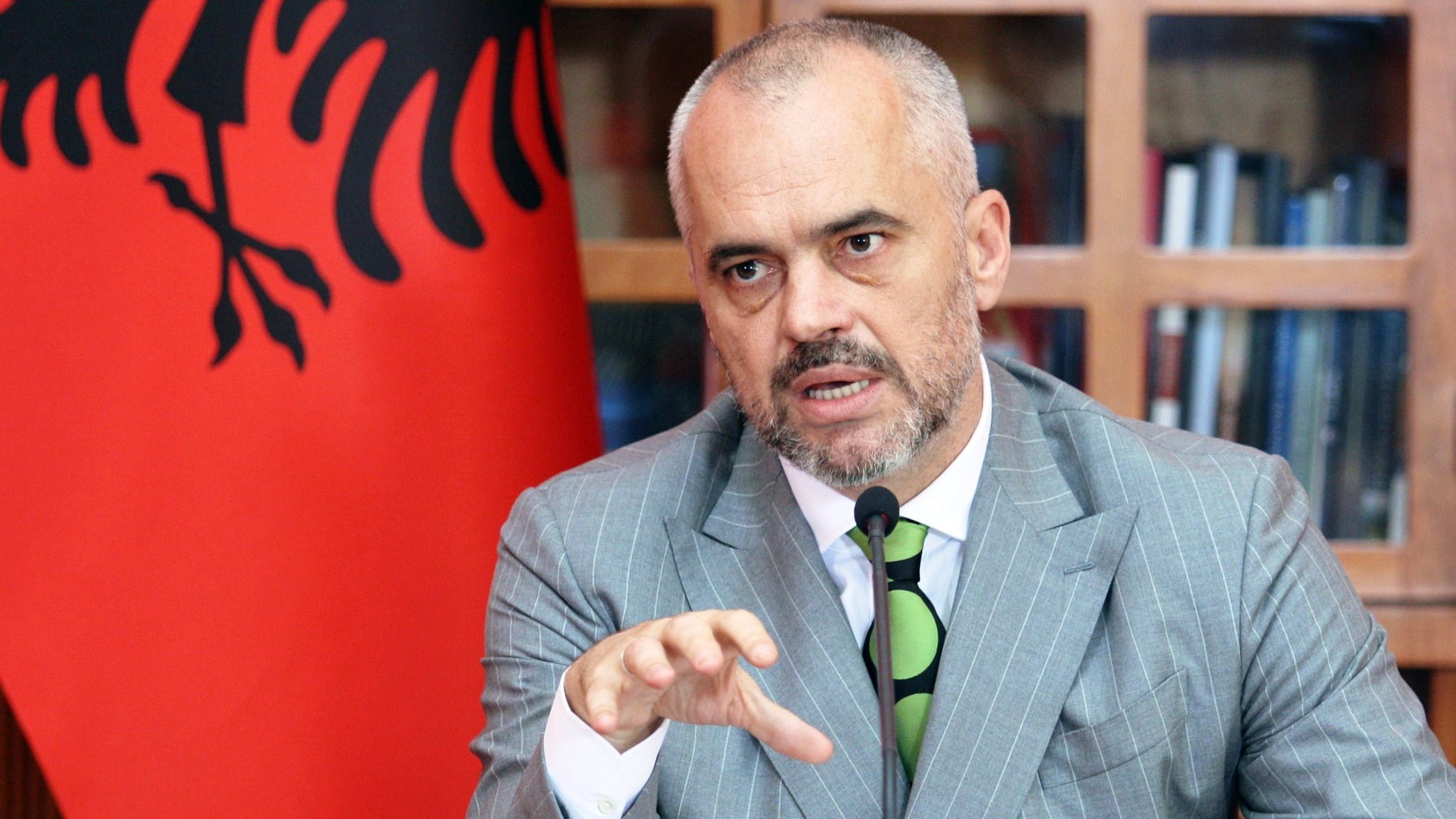
Albanian Prime Minister Edi Rama (Getty)
As he explained over dinner in Tirana on Thursday night, he is also old enough – he turns 51 on Saturday – to have searing memories of the cruel, isolated madhouse that was Albanian communism under Enver Hoxha, the dictator who ruled from the end of the second world war until his death in 1985. This is why Rama passionately wants Albania’s future to be in the EU, and why he foresees danger ahead if his and other Balkan countries are denied this prospect.
“Enlargement fatigue [in western European countries] is a kind of self-indulgence for those who have lost the point of why the EU was built in the first place. I am sure the founding fathers of the EU would be ashamed. My humble view is that Europe needs the Balkans today as much as the Balkans needs Europe. That is because enlargement into the Balkans is, first and foremost, an issue of security for Europe.”
When one dinner guest asked the premier if he felt “alone” because of the EU’s reluctance to embrace Albania with a timetable for membership, he reminded us that Albania under Hoxha was one of the world’s most paranoid, self-isolated regimes. It was a place where atheism was the state religion and private car ownership, beards and long hair were banned.
Small bunkers, built for partisans to shoot at mythical invaders, pitted towns, rural areas and the coast, in fact the whole country, like a form of demented concrete acne. Foreign travel was utterly inconceivable for ordinary Albanians. Contact with foreign ideas spelled trouble with the police, imprisonment or worse. Communism in eastern Europe was bad, but the nightmarish version in Albania was off the radar screen.
“I had the first part of my life so lonely under Enver Hoxha that I couldn’t possibly feel alone now. I’ve stopped telling my son about those times, because he looks at me as if I’m crazy. People in the 1970s were put in prison for having Picasso books,” Rama said.
In a warning about the potential risk of radical Islam spreading into the Balkans, he said: “A young person in Tunis or Tobruk feels he has no future. But in Albania the star in the sky is Europe. If the EU is not able to show up in the way that is expected, there will be a huge space for radical Islam.
“In our Balkan region, there are the most pro-American and pro-European Muslims in the world,” he said, referring to Muslim communities in Albania, Kosovo and Bosnia-Herzegovina. “But it’s changing, it’s not like it was even 10 years ago. Ten years ago, it would have been impossible for there to be foreign fighters from Albania [fighting in Iraq or Syria]. About 98 per cent of people believed in America, then in God, then in Europe. Today that’s not the case.”
Rama also speaks perceptively about the Greek crisis, and its impact on political mindsets in Athens and the wider Balkan region. “Before the crisis, the Greeks were the ‘first Europeans’ in the neighbourhood, the ‘big brother that knows the world’. They were the only Nato and EU member. But the crisis has forced them to abandon the area a bit. Antonis Samaras, the former premier, made a respectable effort to bring back Greece, but now [under the radical leftist-led government of Alexis Tsipras] things have changed again.”
As he knots his wine-red tie under his dark blue suit and prepares to leave the dining room, Rama tells a story about his grandmother, a Catholic like himself. “She said to me, ‘One day you will be a man. And a man can be brutal. A man can lie. A man can make wrong decisions. But what a man can never afford to be is boring.’”
Edi Rama, you sure listened to that advice.
Berlin: Merkel to visit Serbia on July 8
Source: Tanjug

(Beta/AP, file)
Merkel will first visit Albania, after which she will come to Serbia, where she will be welcomed by Prime Minister Aleksandar Vucic with full military honors.
According to announcements, Merkel and Vucic are due to have talks and dinner in the evening of July 8, while in the morning of July 9 Merkel will have breakfast with representatives of Serbia's civil society, after which she will meet with Serbian President Tomislav Nikolic.
Bosnia-Herzegovina is Merkel's third stop, Seibert said.
Thursday, July 2, 2015
EU Migrant Quotas Threaten Stability of Eastern Europe – Political Analyst

Citing
intensifying public protests and government resistance to Brussels'
refugee quotas for Eastern Europe, Russian political expert Vladimir
Bruter argues that the region is not prepared to admit large numbers of
African refugees. Moreover, according to the expert, by forcing the
issue, Brussels is creating a potentially explosive situation.
In
the Czech Republic, intense public debate and protests surrounding the
admission of African refugees are intensifying. Some of the protests are
taking on a nationalistic tone, with a recent protest in the south
eastern city of Brno held under the slogan 'Czechia is for Czechs'. On
Tuesday, several hundred people, including several deputies of the
country's parliament, gathered in Prague to protest a proposal
to voluntarily accept several hundred immigrants.
A recent survey conducted by polling agency Median found that while
the Czech Republic already accepts less immigrants than any of its
neighbors, the country remains the most fearful of the phenomenon.
Vladimir Bruter, an analyst at the Moscow-based International Institute of Humanitarian and Political Studies, argues that to varying degrees, Czechs' fears are in line with those of other Eastern European countries.
Bruter observed that there is a sense that Western Europe seeks to purposely spread the acute social problems it faces to those regions of the EU not yet experiencing them.

Vladimir Bruter, an analyst at the Moscow-based International Institute of Humanitarian and Political Studies, argues that to varying degrees, Czechs' fears are in line with those of other Eastern European countries.
Speaking to Radio Sputnik, Bruter noted that "a
feeling of constant anxiety is present. Everyone expects that something
is on the horizon, for which society will not be prepared. In general,
Eastern Europe is not prepared to accept African refugees. This is the
state of public consciousness in the region. When Europe speaks
about distributing refugees proportionally, it is simply creating a
provocative situation."
The analyst stated that "neither the Czech Republic, nor Poland, nor
Slovakia, nor Romania are ready for these changes. And if a number
of cities in Western European countries have experience
with co-existence with other religions and races, Eastern Europe does
not. This requires several decades [to develop] at a minimum," the
expert noted.Bruter observed that there is a sense that Western Europe seeks to purposely spread the acute social problems it faces to those regions of the EU not yet experiencing them.
"The arrival of thousands of African refugees
will create a difficult domestic situation, a complex system
of relations between communities. This will be a constant social
problem, which will begin to provoke, to create social clashes and lead
to increased crime."
In this respect, according to Bruter, the negative feelings of the
people of Eastern Europe are understandable. Their countries did not
play a role in the creation of the present situation of war and chaos
in the Eastern Mediterranean, but Brussels is attempting to force them
to pay the price in equal measure with the countries of Western Europe.
"In principle, it is necessary to solve the
problems of migrants in their home countries. It is necessary to help
create jobs for them, and conditions for normal existence. But this is
not happening. The West is not interested in doing this, even though it
created the situation which has resulted in mass migration. As a result,
[Europe] faces a situation of deadlock."
Bruter's
commentary matches those of local politicians and commentators. Last
week, veteran Czech politician and analyst Jiri Vyvadil noted that
today's immigrant crisis wouldn't exist were it not for the US, French
and British initiating wars in countries including Iraq, Syria, Libya,
Afghanistan. He argued that it was extremely arrogant of the countries
of Western Europe to demand that Eastern Europe should pay for their
mistakes.
Albania braced for fallout from Greek crisis
 ©AFP
©AFP
Albanian migrants pick olives in the village of Stimaga, south of Athens
Albania is bracing itself for the risk that turmoil in Greece, its southern neighbour, will force tens of thousands of migrant Albanian workers to return home, cutting off remittances to hard-pressed families in one of post-communist eastern Europe’s poorest states.
Government ministers in Tirana express confidence that Albania’s
financial system can ride out the storm, even though three banks in
Albania are Greek owned and control almost 16 per cent of all assets in
the Albanian banking sector.
“Albanian migrant workers have been going to Greece since the early 1990s,” Ditmir Bushati, Albania’s foreign minister, told a visiting group of EU reporters in Tirana on Wednesday. “The contributions of Albanians abroad, in Greece and in Italy, too, have been quite instrumental in supporting the Albanian economy. Economically speaking, we’ve felt the effects of the Greek crisis.”
Remittances from Albanians working abroad fell from €952m in 2007 to €544m last year, but even the lower figure represents about 5 per cent of Albania’s gross domestic product. About 180,000 Albanian migrants have returned home over the past five years as Greece’s crisis intensified but several hundred thousand, mostly thought to be there illegally, are estimated to remain — mainly in the Greater Athens area and the northern port city of Thessaloniki.

These problems are considered potentially more serious for Albania than any risk of financial contagion from Greece. Albanian central bank officials say the three Greek-owned banks in the country have capital adequacy ratios of more than 17 per cent, comfortably above the minimum 14 per cent level set for them.
According to Mr Bushati, however, the Greek crisis may have the unfortunate consequence of setting back recent Albanian-Greek efforts to ease tensions in a relationship dogged by territorial, ethnic minority and other disputes, some of which go back to the second world war.

Nikos Kotzias, Greece’s foreign minister, is due to visit Tirana on July 15, but it remains to be seen if he will arrive with fresh ideas for overcoming a quarrel over how to delineate the continental shelf between the two countries in the Ionian Sea. In 2010, Albania’s constitutional court annulled a territorial agreement signed with Greece a year earlier.
Another point of dispute is that, in Tirana’s view, Albania and Greece, although both Nato members, are still technically at war because the Greek parliament has never repealed a war decree passed when Italian forces based in Albania attacked Greece in 1940. In Albania’s view, this prevents the ethnic Albanian Cham minority, expelled by Greece during the second world war for alleged collaboration with the Nazis, from reclaiming confiscated property
Obama, Renzi discuss Greece
First entry: 2 July 2015 - 11:10 Athens, 08:10 GMT
Last update: 11:10 Athens, 08:10 GMTPolitics

US
President Barack Obama and Italian Prime Minister Matteo Renzi
discussed the latest developments on Greece Wednesday. They agreed
Greece should restart reform so that it can get financing and stay in
the Eurozone.
The readout from the White House's Office of the Press Secretary says:
"The President spoke today with Prime Minster Matteo Renzi of Italy regarding developments in Greece. They agreed on the importance of all sides working to put Greece back on a path of reforms and financing that leads to growth and debt sustainability within the Eurozone. The leaders noted that their teams are in close contact and are monitoring economic developments in Greece as well as broader financial markets. They also discussed the importance of continued close coordination on counterterrorism."
The readout from the White House's Office of the Press Secretary says:
"The President spoke today with Prime Minster Matteo Renzi of Italy regarding developments in Greece. They agreed on the importance of all sides working to put Greece back on a path of reforms and financing that leads to growth and debt sustainability within the Eurozone. The leaders noted that their teams are in close contact and are monitoring economic developments in Greece as well as broader financial markets. They also discussed the importance of continued close coordination on counterterrorism."
Defence minister Kammenos: We are at war!
First entry: 2 July 2015 - 14:22 Athens, 11:22 GMT
Last update: 14:22 Athens, 11:22 GMTPolitics

"We are at war" said Defence Minister Panos Kammenos who added that "whoever cannot contribute should leave the fight".
The leader of Independent Greeks was responding to questions on the status of at least three party MPs who differentiated their stance on Sunday’s referendum.
The leader of Independent Greeks was responding to questions on the status of at least three party MPs who differentiated their stance on Sunday’s referendum.
Alexis Tsipras: We need to respect the democratic procedures
First entry: 2 July 2015 - 17:06 Athens, 14:06 GMT
Last update: 17:06 Athens, 14:06 GMTPolitics

Prime Minister, Alexis Tsipras,
on Thursday reassured that the state will meet its obligations towards
the Armed Forces after his meeting with Defence Minister and Independent
Greeks leader Panos Kammenos.
"We will do everything in our power not to accept cuts that will create new inequalities in the society," the prime minister said and added: "We will decide where and how the cuts will be made."
At the same time, Tsipras reassured that there is no doubt over the country's geopolitical orientation and the government's acts aim to upgrade it.
He stressed the importance of respecting the democratic procedures, without dramatisation, in order to preserve national unity. "The next day we will be all together in the country's efforts to overcome the economic crisis" he said.
On his part, Kammenos thanked the prime minister for the reassurance that whatever proposals by the lenders will not foresee cuts to the Armed Forces.
ANA/MPA
"We will do everything in our power not to accept cuts that will create new inequalities in the society," the prime minister said and added: "We will decide where and how the cuts will be made."
At the same time, Tsipras reassured that there is no doubt over the country's geopolitical orientation and the government's acts aim to upgrade it.
He stressed the importance of respecting the democratic procedures, without dramatisation, in order to preserve national unity. "The next day we will be all together in the country's efforts to overcome the economic crisis" he said.
On his part, Kammenos thanked the prime minister for the reassurance that whatever proposals by the lenders will not foresee cuts to the Armed Forces.
ANA/MPA
Wednesday, July 1, 2015
Tsipras: Referendum not about whether we stay or leave the euro
First entry: 1 July 2015 - 17:54 Athens, 14:54 GMT
Last update: 17:54 Athens, 14:54 GMTPolitics

Sunday's referendum is not about whether Greece will stay or leave the euro, Greece's Prime Minister Alexis Tsipras said in a televised address to Greeks on Wednesday.
He stressed that the government still aims for an agreement with Greece's partners and remains at the negotiating table.
He called on Greek people to vote “no” saying it representing the people's clear choice on how they want to live on the day after, and a return to values in Europe, as well as strong pressure for a sustainable and fairer agreement.
The premier also said the government’s intention is to achieve an agreement with the country’s lenders, adding that after the announcement of a referendum for Sunday, better proposals were tabled from the ones the country had initially been offered and that if the Eurogroup has a “positive conclusion, we will respond immediately.”
ANA-MPA
He stressed that the government still aims for an agreement with Greece's partners and remains at the negotiating table.
He called on Greek people to vote “no” saying it representing the people's clear choice on how they want to live on the day after, and a return to values in Europe, as well as strong pressure for a sustainable and fairer agreement.
The premier also said the government’s intention is to achieve an agreement with the country’s lenders, adding that after the announcement of a referendum for Sunday, better proposals were tabled from the ones the country had initially been offered and that if the Eurogroup has a “positive conclusion, we will respond immediately.”
ANA-MPA
New Democracy accuses government of leaving Greeks without money
First entry: 1 July 2015 - 19:44 Athens, 16:44 GMT
Last update: 19:44 Athens, 16:44 GMTPolitics

Main opposition New Democracy accused the government on Wednesday of leaving Greeks without money both inside the country and abroad.
"The scenes today with the deliberate torturing of pensioners resemble countries of sub-Saharan Africa,” party spokesman Costas Karagounis said. “We’ve reached the point where private individuals help them return home,” he added, while accusing “Tsipras’ state” of organizing new hirings.
Karagounis also said hospitals are “emitting a cry of distress”, while the country is being blasted abroad for its lack of credibility.
"They tell us they’re convening. I plead with them then: Stop convening because every time you do it, something bad happens. People are worried that a new announcement will be issued, maybe for a further cut of the minimum paid by the banks, maybe another monstrous thing,” he noted.
ANA-MPA
"The scenes today with the deliberate torturing of pensioners resemble countries of sub-Saharan Africa,” party spokesman Costas Karagounis said. “We’ve reached the point where private individuals help them return home,” he added, while accusing “Tsipras’ state” of organizing new hirings.
Karagounis also said hospitals are “emitting a cry of distress”, while the country is being blasted abroad for its lack of credibility.
"They tell us they’re convening. I plead with them then: Stop convening because every time you do it, something bad happens. People are worried that a new announcement will be issued, maybe for a further cut of the minimum paid by the banks, maybe another monstrous thing,” he noted.
ANA-MPA
General Fragoulis the "Friend of Himariotes", calls for unity of all Greeks, during referendum for the next Sunday
ΕΚΤΑΚΤΗ ΠΑΡΕΜΒΑΣΗ ΤΟΥ ΣΤΡΑΤΗΓΟΥ ΦΡΑΓΚΟΥ ΦΡΑΓΚΟΥΛΗ... ΓΙΑ ΟΜΟΨΥΧΙΑ, ΛΑΘΡΟΜΕΤΑΝΑΣΤΕΥΣΗ, ΑΛΗΣΜΟΝΗΤΕΣ ΠΑΤΡΙΔΕΣ...!!!

ΜΕΣΤΗ ΕΝΩΤΙΚΗ ΚΑΙ ΞΕΚΑΘΑΡΗ Η ΔΗΛΩΣΗ - ΠΑΡΕΜΒΑΣΗ ΤΟΥ ΣΤΡΑΤΗΓΟΥ ΦΡΑΓΚΟΥ ΦΡΑΓΚΟΥΛΗ ΗΡΘΕ ΠΡΙΝ ΛΙΓΗ ΜΟΛΙΣ ΩΡΑ... ΔΙΑΒΑΣΤΕ ΤΗΝ ΠΡΟΣΕΚΤΙΚΑ ΚΑΙ ΘΑ ΒΓΑΛΕΤΕ ΤΑ ΣΥΜΠΕΡΑΣΜΑΤΑ ΠΟΥ ΠΡΕΠΕΙ...
«Αυτή την περίοδο πρέπει να είμαστε ψύχραιμοι και πάντα ενωμένοι. Αν γίνει το δημοψήφισμα πρέπει να σεβαστούμε την απόφαση. Εγώ εύχομαι μέχρι το βράδυ να λήξει το θέμα και να ανοίξει η κάνουλα και από ότι ακούω ο πρωθυπουργός είναι έτοιμος να ξεκινήσει για συζητήσεις. Πάνω από όλα πρέπει να ξέρουμε πως χρειάζεται ομοψυχία. Το πρώτο θέμα που πρέπει να αντιμετωπίσουμε είναι αυτό της λαθρομετανάστευσης και πρέπει να προστατέψουμε και τον άνεργο Έλληνα. 1.500.000 άνεργοι Έλληνες είναι πάρα πολύ μεγάλος αριθμός. Είναι επιεικώς απαράδεκτο να έχουμε κλειστές τράπεζες. Εμένα ως στρατηγός με ενδιέφερε να είναι ο άλλος καλός χαρακτήρας ανεξάρτητα από τι πιστεύει. Πρέπει να είμαστε όλοι ενωμένοι και με ομοψυχία».
Για το τι σκέφτεται ο κόσμος:
«Ο κόσμος σκέφτεται ότι θέλει να διασφαλίσει το μέλλον των παιδιών του, την διασφάλιση του και πως δεν θα χάσει αυτά που έχει ήδη αποκτήσει. Είμαι αισιόδοξος και πιστεύω πως ακόμα και την ύστατη στιγμή, ακόμα και να γίνει το δημοψήφισμα, θα επικρατήσει η λογική και θα μας δείξουν και την ανθρωπιά που αξίζει. Δεν υπάρχουν νικητές και ηττημένοι και δεν πρέπει να «γδαρθεί» ο Έλληνας. Σίγουρα θα πρέπει να γίνουν κάποιες μεταρρυθμίσεις και να αξιολογηθούν κάποιοι ώστε να μείνουν οι ικανοί».
Για το αν σκέφτεται να πάει στη πολιτική:
«Γιατί να κατέβω στη πολιτική και που να πάω; Σε μια καινούρια κατάσταση με άφθαρτους ανθρώπους που θα δράνε για το καλό της χώρας θα το συζητήσω. Πρώτα η πατρίδα και μετά το προσωπικό συμφέρον. Ενωμένοι σαν γροθιά και δεν πρέπει να έχουμε διχαστικά μηνύματα. Έχουμε γύρω μας χώρες που τους ανοίγει η όρεξη και δεν πρέπει να έχουμε άλλες Aλησμόνητες Πατρίδες». arenafm.gr
Tuesday, June 30, 2015
Italy issues terror-related travel warning on W. Balkans
Source: Vijesti

An interactive map, originally published by the Corriere website, shows the Balkans marked as "yellow."
The map has the following categories: "travel with caution" (yellow), "don't travel unless necessary" (orange), "not recommended" (red), and "no special risk" (green).
Besides this , the Italian Interior Ministry said Montenegro was a potential point of entry for terrorists wanting to reach Italy.
Since September, 200, Italy has added about 13,000 locations to its list of potential terrorist targets, said the paper.
Italian ports of Ancona and Bari have been listed as potential targets of "terrorist attacks" and "entry of terrorists from Albania, Kosovo, and Montenegro - that is, the hub of the route used by newly recruited terrorists headed for war zones in Syria and Iraq."
The article also quotes a Libyan government adviser who recently told the BBC that "Islamic State extremists are reaching Europe in boats used to smuggle migrants via the Mediterranean, since European police do not know who is a member of the IS, and who a refugee."
NATO chief Jens Stoltenberg has also warned that Islamic extremists "might reach Europe under the guise of migrants," the daily said.
Kosovo talks: No agreement after 17 hours of negotiations
Source: B92, Tanjug

(Beta)
Vucic said that the delegations were very close to reaching an agreement on the future Community Serb municipalities (ZSO).
"The Pristina delegation did not want to accept even those powers for the ZSO that municipalities have, which are powers in the field of urban planning, health and economic development", said he.
Vucic added that progress has been made in connection with telecommunications, but no agreement was finalized.
"We have managed to preserve the assets of Telekom (Srbija) and we agreed that calling codes toward central Serbia will not be billed as international," said Vucic.
There has been practically no progress on the remaining two topics - energy and Peace Park on the bridge in Kosovska Mitrovica - the prime minister noted.
"I fear that the Pristina side came here not to sign the agreement," he stressed, adding that the Belgrade delegation had negotiated "in good faith and was ready to reach agreements."
Vucic said he did not know when the next round of the EU-facilitated dialogue would take place.
Asked whether the failure to reach agreements on Monday would have repercussions on Serbia's EU integration, Vucic said he "could not answer" but was willing to "personally assume all the responsibility and all the consequences."
Kosovo Prime Minister Isa Mustafa told reporters that progress has been made in connection with the SZO and telecommunications, but that his delegation could not accept the demands of the Belgrade side.
"They were asking for executive powers for the ZSO, and it is against our law and constitution," explained Mustafa.
He confirmed that there had been progress on telecommunications and that agreement was reached on the international calling code for Kosovo, but that it was not signed because "the international community wants all four topics to be signed as one package."
Mustafa also said that the date for the next round of the dialogue depends on EU foreign policy chief Federica Mogherini.
For Eastern Europe, Moscow is an existential threat
If the US and NATO pursue a policy of defence and deterrence, Russia's aggression will remained checked.

![Soldiers stand next to their Marder light tanks during NATO military exercises [Getty]](https://lh3.googleusercontent.com/blogger_img_proxy/AEn0k_sfUl439yMHPfVrcB8D3sG3MgQ9U5sNC6GH17H6ZVIcQ-A_GVTyoA_P-H3KRaWdGrQiwR1DHqk8OFaD1RCuPiXNnO4AKKo23mdsNdyEvFIADHA2Pyln2uo352HRASuyVusvUUhjKF-TWtql2MVMkamuNBITOldYWd42iqXmCc9HuXekPTXR-m1rZXVX4ac56nnBnMlNWsCqggoI=s0-d "For Eastern Europe, Moscow is an existential threat")

About the Author
Luke Coffey
Luke Coffey is a research fellow specialising in transatlantic and Eurasian security at a Washington DC based think tank. He previously served as a special adviser to the British defence secretary and was a commissioned officer in the United States army.Predictably, the Kremlin is complaining. A Russian defence ministry official said stationing tanks in NATO states on Russia's border would be "the most aggressive US act since the Cold War".
This is nonsense for the obvious reason that NATO is a defensive alliance. As long as Russia does not plan to attack a NATO member, then Moscow should have nothing to fear from the alliance.
|
|
A defensive alliance
A mere 250 tanks and dozens of armoured vehicles and self-propelled artillery will be spread out across seven NATO countries: Poland, Bulgaria, Romania, Latvia, Lithuania, and Estonia.
It is important to note that the 5,000 or so soldiers that normally make up a brigade will not be based in Eastern Europe - only the equipment. How this can be considered a threat to Russia, one of the strongest military powers in the world, remains to be seen.
To understand why these seven countries in Eastern Europe have concerns about Russia today, one only has to look at their recent history. During the Cold War, all of these countries spent almost a half century under Soviet domination, either through outright occupation, in the case of the Baltic States, or under the thumb of the Warsaw Pact.
|
Many in central and Eastern Europe still factor Russia into their
military planning and foreign policy formulation and consider Moscow to
represent an existential threat. |
There is a strong argument for permanent bases. For example, due to their small geographical size, the only way to guarantee the security of the Baltic states from a conventional Russian military threat is by having robust troops and military capabilities on the ground. The Baltic states are too small to rely on a strategy of defensive depth that could buy NATO enough time to mobilise a sizable force.
Russia's myths
There is a common misconception that the 1997 NATO-Russia Founding Act prohibits the permanent basing of NATO soldiers in central and eastern European countries. Russia regularly perpetuates this myth. This is not true.
In regards to the question of permanent bases the Act states:
NATO reiterates that in the current and foreseeable security environment, the Alliance will carry out its collective defence and other missions by ensuring the necessary interoperability, integration, and capability for reinforcement rather than by additional permanent stationing of substantial combat forces.Since this agreement was signed in 1997, Russia has failed to remove troops from Moldova as promised and increased troops in Ukraine, Armenia, and Belarus - all of which border NATO.
During this same period, Russia has also conducted cyberattacks against NATO allies, invaded Georgia (and is still occupying 20 percent of that country), used energy resources as a weapon against its neighbours, and most recently, annexed Crimea and invaded eastern Ukraine.
Consequently, the "current and foreseeable security environment" has changed since 1997. Therefore, NATO is able to rightfully create permanent bases in its Eastern European member states.
In a way that is simply unimaginable in many Western European countries and North America, many in Central and Eastern Europe still factor Russia into their military planning and foreign policy formulation and consider Moscow to represent an existential threat.
Unchecked aggression
It makes no sense from a military and diplomatic point of view not to have robust capability in central and Eastern Europe.
One thing is for certain, it will be far easier deterring threats from Russia and defending Eastern Europe than it will be to liberate the region. If the US and NATO pursue a policy of defence and deterrence, Russia's aggression will remained checked. This is why establishing permanent bases - with both equipment and troops - in the region might have to be a reality if NATO is to take Russia's threats seriously.
US actions in Eastern Europe have implications for its relations elsewhere - especially in the Arab Gulf region. If the US is not willing to live up to its commitments to defend its European partners from Russian aggression then what does this say to US security agreements in the Gulf vis-a-vis Iranian aggression?
The pre-positioning of US hardware in the region is a step in the right direction but more must be done.
The US' friends around the world are watching.
Luke Coffey is a research fellow specialising in transatlantic and Eurasian security at a Washington DC based think-tank. He previously served as a special adviser to the British defence secretary and was a commissioned officer in the United States army.
The views expressed in this article are the author's own and do not necessarily reflect Al Jazeera's editorial policy.
Tsipras telephoned Renzi, Italy government source
First entry: 30 June 2015

Greek Prime Minister Alexis Tsipras
telephoned Italian premier Matteo Renzi on Tuesday, an Italian
government source said, as EU authorities made a last-minute offer to
salvage a bailout deal with Athens.
Eurozone finance ministers are due to speak later on Tuesday as the clock ticks toward a midnight deadline for the expiration of billions of euros in locked-up bailout funds.
Reuters
Eurozone finance ministers are due to speak later on Tuesday as the clock ticks toward a midnight deadline for the expiration of billions of euros in locked-up bailout funds.
Reuters
Subscribe to:
Posts (Atom)