"NOBLE DINA 2013"
Large anti-submarine exercise in the Mediterranean, Greece - USA - Israel
Just now officially announced by the Navy General Staff that Greece will hold a large anti-submarine exercise over the area of the potential EEZ in cooperation with the navies of the U.S. and Israel.
The exercise begins Thursday, March 7, 2013 and has received the code "Noble Dina". This is an annual exercise in the Aegean and Mediterranean area which conducted earlier this year than other years.
The exercise will last 15 days and is scheduled to be completed Thursday, March 21, 2013.
This exercise will take place in Crete and the Eastern Mediterranean, typically in order to evaluate the level of operational cooperation between the three countries Navy in search and rescue, rapid response to an emergency, evacuation and fire fighting on ships.
Still not been announced in terms of HN forces are going to take part in the exercise, the "Noble Dina 2012" however, had participated a frigate, a submarine and 4 fighter jets F-16 block 52 from 115PM Crete.
The important point of the exercise as above is the area in which evolves namely that of SE Covering the whole Mediterranean sea area lying between Crete and Rhodes Great in a "hot" ie triangle where Turkey raised claims against the Greek continental shelf.
The joint exercise "Noble Dina" is part of the Navy's cooperation with other navies, which aims to promote partnerships.
Thursday, March 7, 2013
Albanian police on maximum alert
According to some analysis, related situations in the region in which they consider as dangerous, a step closer to violence, especially in Macedonia Kosovo, but also for the parliamentary elections in Albania.
During a conversation in Facebook on line, U.S. Ambassador in Albania Alexander Arvizu, when asked about the importance of Security and political stability in Albania, violating even the values of democracy, replied that perhaps both had to deal simultaneously in Consideration.
In the wake of political elections, Albania resembles as problematic states, where the presence of special forces, has passed every limit
Controls in nationwide raids in public facilities, but also vehicular jam, because they have black windows, despite the fact that this state is endowed with legal documentation.
Almost in all Albanian Territory, national and local road axis, the Albanian State Police is conducting violent controls, in the context of an anti blow criminal, without a care in violation of human rights and freedoms of citizens.
With hundreds of cars, blocked for no reason, because black windows, pose a threat to safety, while on the other hand, the police did not provide an explanation for violent actions, even though the vehicles are certified by relevant state institutions, abusive behavior, opposite taxpaying citizens of this country.
According to some analysis, related situations in the region in which they consider as dangerous, a step closer to violence, especially in Macedonia Kosovo, but also for the parliamentary elections in Albania.
During a conversation in Facebook on line, U.S. Ambassador in Albania Alexander Arvizu, when asked about the importance of political security and stability in Albania, violating even the values of democracy, replied that perhaps both had to deal simultaneously in Consideration.
Meanwhile de facto, freedoms and human rights in Albania, nor taken seriously, or are nonexistent
.
.
Questions: SManalysis. asks the US Ambassador for issues of the Himara Region on Facebook
Mr.Ambassador Arvizu.Citizens of Himara, with American citizenship, have asked the U.S. Department of State, to care for their properties in The Himara Region .., Based on a memorandum between the Albanian government and the former U.S. Ambassador Josef Like. The process of registration of property of the OSCE, is achieved without transparency to the community, under corrupted interference metodes and laws (7501) of the Albanian State. Community properties and Orthodox Churches have long robbed and Albanian state takes no responsibility for the situation. Do you think that the stability of the country, Albania, in this case, is more important than freedom and human rights? Although Albania does not respect the historic rights of "Autonomous Himara", while seeking autonomy for Albanians in Serbia and Montenegro? Do we have to do with both democratic standards? Thank you. SManalysis
http://www.facebook.com/Albanians.ACTNow
still No answer .....
Wednesday, March 6, 2013
smanalysis
Serbia honors Chavez with state decoration
SOURCE: B92, TANJUG
BELGRADE -- Serbian President Tomislav Nikolić offered his condolences on Wednesday to the family of President Hugo Chavez, the leadership and people of Venezuela.
Tomislav Nikolić (Beta, file)
The president's message was sent on behalf of the Serbian citizens and in his own name.
Hugo Chavez, 58, died on Tuesdayafter a two-year battle with cancer.
"The Bolivarian Republic of Venezuela has been left without its president, the Republic of Serbia without a sincere friend," Nikolić wrote, and added:
"The world political scene has been left without a great statesman, whose tolerance, understanding of the historical moment, endurance with which he fought for a better future of his people, contribution to peace in the region and the world, became the characteristics after which the name of Hugo Chavez will in the future be uttered with deep respect."
The president's cabinet also announced on Wednesday that Hugo Chavez has been posthumously honored with the Order of the Republic of Serbia on a sash, for his contribution to the development and strengthening of peaceful cooperation and friendly relations between the two countries.
It has also been announced that Oliver Antić will attend the funeral in Caracas in his role as Nikolić's special envoy.
Serbian Prime Minister Ivica Dačić also sent his condolences over the passing of the Venezuelan leader, and addressed them to the country's Vice-President Nicolas Maduro.
"On behalf of the government of the Republic of Serbia and on my personal behalf I wish to express my deep condolences on the occasion of the death of President of Venezuela Hugo Chavez, who was a great friend of Serbia, an advocate of improved relations between our countries, and known for his principled position in favor of a solution of the Kosovo and Metohija problem in line with international law."
smanalysis
Greek Vehicle Industry "ELVO" signed a contract in IDEX with a Arab countryMarch 5 2013 at 6:24 PMNo score for this post | Crete Revenge (Logincretegeorge) Hellenic Hoplites (Greece) | |
The Greek Vehicle Industry SA (ELVO) participated in the IDEX (International Defense Exhibition and Conference), one of the world's largest defense content, which was held in Abu Dhabi in the United Arab Emirates from 17 to 22 February 2013. At the opening of the exhibition visited the booth ELVO the Minister of Defence, Mr. Panagiotopoulos accompanied by the Chief of Defence Mr. M. Kostarakis. ELVO promote their products and expertise, discuss participation in the programs of vehicles in Arab countries, and secured the assignment to it of building military trucks for a country of the Arabian peninsula. Its participation in the IDEX ELVO became part of measures for further development of the company to turn to foreign markets, and effective promotion of the size and capabilities of the company. http://www.elvo.gr/el/news/show/&tid=29 | ||
Santorini: 4 Albanians arrested, robbed 2 Japaneses
Four young Albanians were the thugs who beat and robbed two Japanese tourists a week ago in Fira Santorini
Investigations made by the police department of Thyra led to the investigation of the robbery that had taken place on February 27. Then, the two 23-year Japanese were attacked by four Albanian strangers who beat them and grabbed the backpack in which they had their clothes, personal items and money they had.
The police came to the identity of the perpetrators and against them, the arrest warrants were issued. Three of Albanians aged 21, 19 and 19 years were arrested Tuesday evening and were referred to the public prosecutor in Naxos, indicted for robbery together with their national, an 18 year old of them involved in the robbery.
defencenet.gr
Agreement Washington-Brussels required for continuation of dialog between Belgrade and Pristina
Tamara Spaić/Amela Bajrović | 06. 03. 2013.
‘The least that Kosovo Serbs should get is the
union of Serbian municipalities with executive and legislative power.
Anything less than that would have no sense. Otherwise, we could have
accepted Ahtisaari’s plan long time ago’, Goran Bogdanovic, former
minister for Kosovo/Metohija says for Blic. Prime Minister Ivica Dacic
claims that the negotiators shall not go over the ‘red line’.
Ivica Dacic, Catherine Ashton and Hashim Thaci in Brussels
‘For fourteen years we have been successful in preserving authority of Serbia in the north and it would be crazy to allow that everything ends now with acceptance of Ahtisaari’s plan. Without executive and legislative power, the union of Serbian municipalities would be just like a non-government organization as Hashim Thaci has said’, Bogdanovic adds.
Dacic revealed on Brussels on Monday that in the dialog at the initial meetings, it had been accepted that union of Serbian municipalities should have an assembly and executive bodies, but he did not explained how it happened that Pristina started refusing that. He also said that ‘for non-standard solution for Kosovo/Metohija agreement between three sides, and perhaps more sides, is necessary’.
Ognjen Pribicevic, former Serbia ambassador to Germany says for Blic that Serbia’s negotiating position is weak because it does not have any strong ally.
‘Nevertheless, there is certain maneuvering space. Serbia has to get something more than envisaged by Ahtisaari’s plan. The minimum is that Kosovo Serbs are given the same rights as those being enjoyed by the Germans in Belgium or Austrians in Italy’, Pribicevic says.
Michael Kirby
He told Blic that ‘a long-term and acceptable solution is being searched for’ and that ‘the USA is studying Serbia’s proposal for establishment of the union of Serbian municipalities in Kosovo’.
‘However, that proposal is still not concrete and completely clear. We want a solution to be reached over differences that exist between Kosovo and Serbia. We also want that Serbia continues dealing with new jobs, economic development and its future in general. We shall do all we can that both sides are encouraged to reach an agreement that shall be acceptable for both sides but also for Kosovo north’, the USA Ambassador said.
| Albanian wahabis via Facebook organizing another protest for Friday |
According to police sources, these are the same Albanians who organized the protest for the Smilkovsko lake massacre. Few of the organizers are friends of the individuals who are currently undergoing a trial for the murder of five teens who were killed executionary style. The sole purpose of their killing was because they being wahabi muslims needed to take the lives of christians during Easter. There are multiple wahabi sects in Skopje and few in Struga who are easily manipulated by local politicians. Police has not attempted to detain neither the local politicians nor any of the wahabis. Lingering problem is the financial support from Saudi Arabia that goes to these wahabis (hence the Saudi flags at each protest). Our calls to MoI spokesman to explain why these organizers who clearly incite violence are not behind bars were not returned. There has been two protests in the past week. The first was organized by the SDSM (to start it all), the second by default was organized by the DPA, both parties are in the opposition and are clearly using this as some sort of 'failure' of the ruling Government. Things will quiet down the day Crvenkovski and Menduh Thaci end up behind bars. http://macedoniaonline.eu/content/view/22840/45/ |
| Russia conducts largest nuclear drill in 20 years |
|
|
|
| Tuesday, 05 March 2013 | |
|
Russian nuclear forces conducted a major exercise last month that tested the transport of both strategic and tactical nuclear weapons near Europe, according to United States officials. The exercise raised concerns inside the Pentagon and with the U.S. European Command because it was the largest exercise of its kind in 20 years and involved heightened alert status of Russian nuclear forces. The nuclear drills were part of other military maneuvers in Russia carried out between Feb. 17 and Feb. 21. The exercises followed a recent surge in Russian strategic bomber flights that include a recent circling of the U.S. Pacific island of Guam by two Tu-95 Bear bomber and simulated bombing runs by Tu-95s against Alaska and California in June and July. Pentagon spokesman Lt. Col. Wesley P. Miller sought to play down the nuclear exercise but declined to comment on the movement of nuclear weapons and whether nuclear forces went on a heightened state of alert. “We don’t comment on intelligence matters,” he said. Miller said the nuclear forces maneuvers were “nothing to be concerned about because the Russians, like us, have routine exercises and inspections.” However, a U.S. official said the exercise was a concern within the U.S. national security community because of the scale of the exercise and the number of weapons being moved. “Certainly it’s a concern when you have this kind of exercise going on,” this official said. The official said another worry is that Russia appears to be increasing the readiness of its nuclear forces at a time when the U.S. nuclear complex is in urgent need of upgrading and the military is facing sharp automatic defense cuts that could affect U.S. nuclear forces readiness in the future. |
Tuesday, March 5, 2013
Senate Committee Approves Brennan for C.I.A. Director
By SCOTT SHANE
Published: New York Times March 5, 2013
From left to right, Frances Fragos Townsend, former Assistant to the President for Counterterrorism and Homeland Security, John Brennan, Assistant to the President for Homeland Security and Counterterrorism, and George Tenet, former Dir. of the CIA, are seen on the tarmac before boarding their plane at Andrews Air Force Base, June 19, 2012.
WASHINGTON — The Senate Intelligence Committee voted 12 to 3 to confirm
John O. Brennan as director of the Central Intelligence Agency on
Tuesday, hours after the White House agreed to provide more information
on the legal basis for targeted killings of Americans believed to pose a
terrorist threat.
The vote, in a closed committee meeting, clears the way for Mr. Brennan,
a 25-year C.I.A. veteran who has been President Obama’s top
counterterrorism adviser, to be confirmed by the full Senate later this
week.
In his White House job, Mr. Brennan, 57, has overseen the expansion of
targeted killing in Pakistan, Yemen and Somalia. While he is widely
expected to win confirmation, senators of both parties have used his
nomination to try to pressure the White House into disclosing
information it has previously declined to give to Congress.
They have had some success. On Tuesday morning, the committee’s
Democratic chairwoman, Senator Dianne Feinstein of California, said the
White House had agreed to give the committee access to all Justice
Department legal opinions on the targeted killing of Americans. Two such
opinions were briefly shared with senators at the time of Mr. Brennan’s
confirmation hearing last month; it is unclear how many more memos will
now be shared.
Republicans have pressed for more details on the administration’s
response to the terrorist attack in Benghazi, Libya, in September, which
killed the American ambassador, J. Christopher Stevens, and three other
Americans. The committee has been given additional Benghazi material as
well, though not enough to satisfy some Republicans.
In addition, a staff member for each senator on the Inteligence
Committee will now be permitted for the first time to see the Justice
Department memos, which govern the use of drones and other weapons to
kill American citizens overseas who have been identified as dangerous
terrorists. Previously, only senators themselves were permitted to read
the memos, a restriction that Ms. Feinstein had strongly protested,
staff members said.
“I have reached an agreement with the White House to provide the
committee access to all O.L.C. opinions related to the targeted killing
of Americans in a way that allows members to fulfill their oversight
responsibilities,” Ms. Feinstein said, referring to the Justice
Department’s Office of Legal Counsel. “I am pleased the administration
has made this information available. It is important for the committee
to do its work and will pave the way for the confirmation of John
Brennan to be C.I.A. director.”
Congressional officials said the administration had also agreed to
provide public, unclassified information about its position on when
people suspected of terrorism can be killed legally on American soil.
Several members of Congress, including Senator Rand Paul, Republican of
Kentucky, have raised the question, but neither Mr. Brennan nor Mr.
Obama has given a clear answer in public.
Three senators who had demanded all of the memos on killing Americans —
Ron Wyden of Oregon and Mark Udall of Colorado, both Democrats, and
Susan Collins of Maine, a Republican — said they were pleased with the
agreement and would support Mr. Brennan’s confirmation.
“We believe that this sets an important precedent for applying our
American system of checks and balances to the challenges of 21st-century
warfare,” the three senators said in a statement.
They said the next step should be “to bring the American people into
this debate and for Congress to consider ways to ensure that the
president’s sweeping authorities are subject to appropriate limitations,
oversight and safeguards.”
Only one American, the radical cleric Anwar al-Awlaki, who had joined
the Qaeda affiliate in Yemen, has been deliberately killed in a strike,
in September 2011. At least three other Americans killed in strikes in
Yemen were not the intended targets, officials have said.
While Ms. Feinstein has sought legal opinions governing strikes
targeting non-Americans, they are still being withheld by the
administration, which views them as confidential legal advice to the
president. As a result, the detailed legal rules for a vast majority of
drone strikes, including so-called signature strikes aimed at suspected
militants whose identities are unknown, remain secret.
On Monday, Senator Harry Reid, the majority leader, said he hoped the
Senate would vote on Mr. Brennan’s nomination this week, but he
complained that Republicans were insisting on a 60-vote majority to
confirm him.
“At a time when America faces so many threats abroad, it is crucial that
we have a talented and dedicated individual like John Brennan leading
our nation’s most prominent intelligence agency,” Mr. Reid said. “Yet,
Republicans again and again interject politics into the confirmation
process.”
Christopher E. Anders, the senior legislative counsel at the American
Civil Liberties Union, called the promised disclosures “an important
first baby step towards restoring the checks and balances between
Congress and the president,” but he said it was not enough.
“Amazingly, the Obama administration continues to hide at least some of
its legal opinions, even from the intelligence committees,” Mr. Anders
said. He said that all members of Congress should have access to the
memos on targeted killings, and that redacted copies should be made
public.
New incident in northern Kosovska Mitrovica
Source: Tanjug
KOSOVSKA MITROVICA -- A new explosion occurred in
northern part of Kosovska Mitrovica early on Tuesday, which left no one
injured, but caused material damage.
A scene from Kosovska Mitrovica (Beta, file)
The strong blast smashed the windows of the motel and a nearby apartment building, Tanjug's correspondent reported.
Members of the Kosovo police marked the place of detonation with yellow tape, and its specialized teams will investigate the scene during the day.
KFOR soldiers and EULEX police officers were also present on the scene.
The motive for another bomb attack remains unknown. There were around 30 similar incidents in Kosovska Mitrovica in the past three months.
The most serious one took place in Bošnjacka Mahala, a neighborhood in northern part of Kosovska Mitrovica in early February, when an explosion left two Serb children injured.
Durrës, arrives the French frigate "Jean de Vienne"
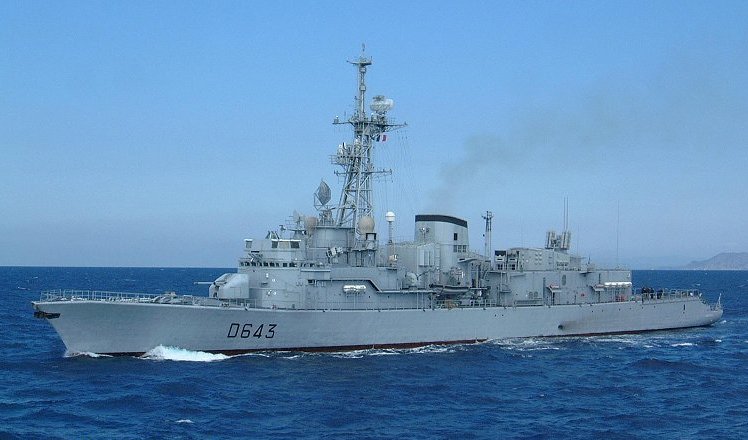
It has arrived at the port of Durres, the French frigate "Jean de Vienne". French military ship D643 will stay for a 4-day port visit to the largest port in the country, announced official sources Naval Forces Command.
During her stay in Durres are anticipated meetings in order to cooperation of our naval forces, visiting French soldiers in Durres and other cities of the country, joint activities etc, added to our Command marine resources. The ship will be visiting senior local and central.
This morning shuttle managers will develop the city bashinë visits and the management of Durres Port Authority. Meanwhile, Effective training will hold joint exercises with the TO Albanian patrol vessel "Illyria", added the sources.
According to the same sources, military vessel with a length of 139 meters is docked at the quay port 4.
The "Jean de Vienne" is a F70 type anti-submarine frigate of the French Marine Nationale. She is the third French vessel named after the 14th century admiral Jean de Vienne. Her complement is 20% female. On 4 January 2009 Jean de Vienne helped to defend the Croatian tanker Donat, owned by the Tankerska plovidba from Zadar, and a cargo ship from Panama called Vulturnus, off Somalia.
Note: The French navy doesn't use the term "destroyer" for its ships; hence some large ships, referred to as "frigates", are registered as destroyers.
Monday, March 4, 2013
Albania; Privatization of four HPPs
The sale of four public hydropower plants to the Kurum Company spurred
harsh debates between the opposition and the majority in Parliament.
“Today in this Parliament we are experiencing a funeral of the public property”, declared the Socialist MP, Arben Ahmetaj.
“This is the last week when Albanian assets will be sold so cheap”, declared the Socialist MP, Erjon Brace.
The opposition says that the entire privatization procedure is a corruption affair that starts with the obligatory strategic criteria for the buyer.
Erjon Brace: Money has turned our Prime Minister from the head of an institutional country to a banal seller. He changed the strategic conditions mid game to open the way to the chosen buyer.
The Minister of Economy, Edmond Haxhinasto: This is absurd. We removed this, we changed some terms, and the interest was much higher than before.
Erjon Braçe: Isn’t this corruption and illegal favouring of the winner? The four hydropower plants that produce 400 million KWh were sold to Kurum for 109 million EUR.
Sali Berisha: The average international privatization is 1.1MW and they are privatized with 1.4 MW.
Gramoz Ruçi: The opposition wants you to answer. You sold it for 100 million, and the profit by the end of the year is 20 million. All obligations paid for four years.
Sali Berisha: You gave away all the hydropower plants that you sold, with a price of 200.000 per MW.
Arben Ahmetaj: You are causing a 30 million annual damage to the budget.
Erjon Brace declared that the hydropower plants should remain public.
Erjon Braçe: Berisha’s private fatherland is replacing the public fatherland of all Albanians.
Sali Berisha: Privatization is an unchanged philosophy of this political force.
Gramoz Ruçi: Why did you fail with the first strategic privatization, such as distribution? Why did you fail with the next privatization of ARMO? Why did you fail with the third strategic privatization, Albpetrol? This is your privatization success.
Sali Berisha: The market economy has not a history of only successes. The constant successes that all are then multiplied with zero happen only in socialism.
The opposition says that they will cancel the corruptive privatization of the four hydropower plants.
“Today in this Parliament we are experiencing a funeral of the public property”, declared the Socialist MP, Arben Ahmetaj.
“This is the last week when Albanian assets will be sold so cheap”, declared the Socialist MP, Erjon Brace.
The opposition says that the entire privatization procedure is a corruption affair that starts with the obligatory strategic criteria for the buyer.
Erjon Brace: Money has turned our Prime Minister from the head of an institutional country to a banal seller. He changed the strategic conditions mid game to open the way to the chosen buyer.
The Minister of Economy, Edmond Haxhinasto: This is absurd. We removed this, we changed some terms, and the interest was much higher than before.
Erjon Braçe: Isn’t this corruption and illegal favouring of the winner? The four hydropower plants that produce 400 million KWh were sold to Kurum for 109 million EUR.
Sali Berisha: The average international privatization is 1.1MW and they are privatized with 1.4 MW.
Gramoz Ruçi: The opposition wants you to answer. You sold it for 100 million, and the profit by the end of the year is 20 million. All obligations paid for four years.
Sali Berisha: You gave away all the hydropower plants that you sold, with a price of 200.000 per MW.
Arben Ahmetaj: You are causing a 30 million annual damage to the budget.
Erjon Brace declared that the hydropower plants should remain public.
Erjon Braçe: Berisha’s private fatherland is replacing the public fatherland of all Albanians.
Sali Berisha: Privatization is an unchanged philosophy of this political force.
Gramoz Ruçi: Why did you fail with the first strategic privatization, such as distribution? Why did you fail with the next privatization of ARMO? Why did you fail with the third strategic privatization, Albpetrol? This is your privatization success.
Sali Berisha: The market economy has not a history of only successes. The constant successes that all are then multiplied with zero happen only in socialism.
The opposition says that they will cancel the corruptive privatization of the four hydropower plants.
Greece, in trouble elsewhere, boosts cooperation with Turkey
By Ayla Jean Yackley | Reuters- View PhotoReuters/Reuters - Greece's Prime Minister Antonis Samaras (L) shakes hands with his Turkish counterpart Recep Tayyip Erdogan before meeting in Istanbul March 4, 2013 in this photo provided by Turkish Prime …more
Related Content
View PhotoGreece's Prime Minister Antonis …
ISTANBUL (Reuters) -
Beset by economic crisis at home, Greece took a symbolic step towards
improving relations with long-time arch rival Turkey on Monday by pledging to double annual trade with its eastern neighbor over the next three years.
Greek Prime Minister Antonis Samaras, on his first visit to Turkey since winning power in June, met his Turkish counterpart Tayyip Erdogan in Istanbul and signed deals on issues from agriculture to disaster relief.
They set a target of $10 billion in annual trade by 2015.
The Aegean nations
have long been embroiled in disputes over territory, energy exploration
and the divided island of Cyprus, but Greece's main priority now is boosting an economy which has shrunk about 20 percent since 2008.
"Today is a good day for Greek-Turkish relations,
and it's in our hands to have more of these good days," Samaras told a
news conference in Turkey's largest city Istanbul, saying the two sides
were carefully building trust.
"There are still issues we do not agree on and our
disagreements may be significant, but ... we are trying to create
relations of mutual respect," he said after a meeting that included more
than 20 cabinet members from both sides.
The two NATO
members were nearly drawn into a military clash as recently as 1996 over
an uninhabited Aegean islet, and fears of conflict have driven high
levels of Greek spending on defense that Athens can no longer afford.
Ties between the two neighbors improved after 1999,
when earthquakes in both countries led to spontaneous deliveries of aid
and prompted their leaders to begin dialogue. Trade has grown strongly
and amounted to $5 billion last year.Greece is the fifth-biggest foreign investor in Turkey, with its direct investments totaling $6.5 billion between 2002 and 2011, Erdogan said. Around 1 million Turks and Greeks visit each other's country each year.
CYPRUS PROBLEM PERSISTS
Erdogan reinforced the sense of a thaw in relations.
"We believe the constructive atmosphere between our countries, the mutual understanding and good neighborliness will strengthen our ties further," he told the news conference.
Erdogan also emphasized that better relations between the neighbors boosts stability in the east Mediterranean.
While Athens backs Ankara's European Union bid, the failure to reunite the divided island of Cyprus has stood in the way.
Turkey
invaded Cyprus in 1974 in response to a Greek Cypriot coup aimed at
uniting the east Mediterranean island with Greece. Turkey keeps some
30,000 troops in a Turkish Cypriot enclave that only it recognizes.
"We want to bury the Cyprus problem in history,"
Erdogan said. The Greek Cypriot Republic of Cyprus joined the EU in
2004.A dispute over Aegean energy exploration is also flaring up, with Samaras suggesting Greece wants to demarcate the areas beneath the sea in which it hopes to find oil and gas. Turkey warns against any unilateral moves.
Other problems include Ankara's objection to the Greek state's involvement in the appointment of religious officials, including Islamic clerics, and stalled plans for a state mosque in Athens where an ethnic Turkish Muslim minority lives.
Turkey's refusal to reopen the Halki Greek Orthodox seminary on an island near Istanbul is another bone of contention.
Critics also accuse Turkey of interfering in the affairs of the Greek Orthodox church in Istanbul, although church officials have praised government moves to improve some rights.
"Enabling minorities in the two countries to live a prosperous and happy life will undoubtedly strengthen our friendship," Erdogan said.
At the meeting, ministers signed 25 deals on areas including agriculture, health, transport, media, immigration, disaster relief and more. A Turkish diplomatic source said they were largely pledges of goodwill to deepen cooperation.
"Historically Greek-Turkish relations have been difficult, we were like cats and dogs," he said.
"This meeting is the expression of the political will on both sides to see this relationship fulfill its potential. We have differences but there is a desire for a positive agenda."
(Additional reporting by Renee Maltezou in Athens; Writing by Daren Butler; Editing by Nick Tattersall/Mark Heinrich)
6th round of Belgrade-Priština talks ends
Source: Tanjug
BRUSSELS -- The dialogue between Belgrade and
Priština continued in Brussels on Monday for two hours at the office of
European Union foreign policy chief Catherine Ashton.
(Beta, file)
According to announcements earlier in the day, the main topic of the sixth round of the EU-sponsored negotiations were the forming of a community of Serb municipalities in Kosovo.
For this community, Belgrade seeks executive powers, which Priština resolutely refuses.
Serbian leadership said on the eve of today's talks that the country remained committed to reaching a compromise, and that the EU was expected "to remain impartial and influence Priština so that it also makes concessions".
Prime Minister Ivica Dačić last night upon his arrival in Brussels met with U.S. Deputy Assistant Secretary of State Philip Reeker, who, according to reports quoting the Serbian delegation, "gave his full support to Serbia's EU integration and the dialogue between Belgrade and Priština".
During the meeting Dačić pointed out that it was in the interest of Serbia for all outstanding issues to be resolved, "but that a compromise takes the willingness and desire of both sides".
The prime minister also said that Serbia had shown its dedication and commitment to dialogue, which should lead to the resolution of all outstanding issues.
Negative mood
"The mood is bad before today's resumption of the dialogue," wrote Vienna daily Standard ahead of today's round of talks.The newspaper quoted Serbian Prime Minister Ivica Dačić who said that Serbia had done what it could, and that the other side rejected all of its proposals, while their positions remain "far apart like never before".
This daily says the abolition of "parallel Serbian institutions in northern Kosovo" is at the core of this round of the dialogue. These institutions do not recognize the government in Priština and are financed by Serbia, the article stresses, adding that this is by far "the biggest bite for Belgrade so far".
On the one side is the dismantling of "parallel Serbian institutions" as a precondition for starting of accession talks with the EU, and on the other, the Serbian government is exposed to domestic pressure "not to commit treason" and leave the Serbs in Kosovo in the lurch, assesses the Austrian newspaper.
It further notes that Dačić suggested a compromise solution which would see the dissolution of old Serbian structures in northern Kosovo and establishment of an alliances of nine Serb municipalities.
Kosovo Prime Minister Hashim Thaci has not opposed the establishment of the alliance, but excludes the possibility of executive and legislative powers for it, pointed out the daily.
Serbian politicians expressed their hope that the West would "put pressure on Priština" and also their concern that Serbia could grow more distant from the EU this year unless the association talks began.
The newspaper added that in Belgrade's proposal, western diplomats see the danger of creating a separate entity modeled after the RS in Bosnia.
The British Marines, are preparing to instal in Himara RegionSugar beach, (Kakomea) Sarande, Albania , October 1944
Raiding Support Regiment with their guns. Photo courtesy
|
Date: 30/11/2011
Owner: Peter Rogers
Size:
Full size: 1100x741 |
Assyrian Paratroopers in Albania and Greece
The Assyrian RAF Levies Association
Lectures were given to the regular Levies on the needs to establish a parachute company and volunteers were asked for without enticement, no increase of pay or privileges were offered, this was to ensure that only the “right type” would volunteer. 1000 volunteered for the task and were put through a rigorous selection process, after two weeks of gruelling exercises only the fittest were selected, the 1,000 volunteers were filtered down to 150 Assyrians and 50 Kurds, and these were to form the initial company personnel commanded by Major Barnes. By December 1942, parachute training had commenced from Vickers Valencia’s, the only Aircraft available. The Valencia was so outdated and slow that it was nicknamed the “flying Pig” by the RAF, but it did serve useful as a parachute training aircraft, the fuselage was large enough to accommodate 20 men with equipment..................................... continues....................
J. Bettany and John Japp of No.2 Cdo , Frank Gilles of the RSR, and partisan Martho Rapo
This photo is part of a group taken during Operation Healing 2 , the
raid on Spilje, Albania July 1944. The No.2 Commandos shown are L/Cpl.
John Japp, Pte. J. Bettany, and they are with Cpl. Frank Gillies -
Raiding Support Regt. The Albanian Partisan with the sten gun is Martho
Rapo. ( Update by Pete Rogers)
Update 16/10/11 by Pete R. Des Rochford of No.2 Cdo provides a copy of this photo to Paul Bell confirming details and adding the fact of Cpl. Gillies being in the RSR. |
Date: 02/12/2007
Owner: Geoff Murray
|
http://www.assyriatimes.com/engine/modules/news/article.php?storyid=3318
http://gallery.commandoveterans.org/cdoGallery/v/units/2/Albania/11+11+09+Lett+DR+No+3A.jpg.html
The Second Battle of Marathon
Follow
The Second Battle of Marathon
Follow
Greece , Italy , Franklin Roosevelt , Nazi Germany , Allies , Wwii , World News
SHARE THIS STORY
Germany and Italy started the war against other European countries in 1939 and 1940. Germany dealt with the countries of Western Europe and Italy started with Greece, which it attacked on October 28, 1940. The Greeks soundly defeated the invading Italians in the northern Greek province of Epirus and Albania. The Greek victory became the "first victory" of the Allies in WWII.
This historical fact was so important in the evolution of WWII, indeed, largely determining the course of the war between Germany and Russia, and, therefore, the outcome of WWII, that it deserved its own history.
It found its student in George Blytas, a Greek from Egypt who had an engineering career in America. Blytas' father was born in a village in Epirus, Sitaria, where fierce battles took place between Greeks and Italians. Blytas visited Sitaria in 1951. Eventually, he became a self-taught historian to record the events of the fateful 1940-1941 war between a large European country, Italy, successor to Rome and partner of Nazi Germany, and small Greece, successor of ancient Greece.
Blytas spent 18 years in composing his story - a detailed narrative of war between Greeks and Italians and Germans in 16 chapters, and a record of the dreadful consequences of the occupation of Greece by Germans, Italians and Bulgarians in 8 chapters. The 24 chapters of the book represent the 24 letters of the Greek alphabet.
Blytas starts his account by quoting Hitler talking about WWII. Hitler acknowledged the Italian war against Greece was a bad idea. "The shameful defeats that the Italians suffered in their pointless campaign in Greece," Hitler said, "compelled us, contrary to our plans, to intervene in the Balkans [primarily Greece, April 6, 1941], and that in turn led to a catastrophic delay in the launching of our attack on Russia."
Blytas says Greece played a "crucial" and "defining" role in WWII. His book, "The First Victory" (Cosmos Publishing, 2009), backs him up. The Greek victory over the Italians was no small skirmish. Italy poured more than 500,000 soldiers supported by hundreds of tanks and warplanes. Then, starting on April 6, 1941, the Germans added even more troops, tanks and warplanes. All together, the Axis powers, Italy, Germany, Albania and Bulgaria, marshaled about 750,000 soldiers against Greece. The Greeks decimated the elite German paratroopers in Crete.
WWII lasted for 72 months. The Allies failed in Europe where German troops captured Poland, France, Belgium, the Netherlands, Norway and Denmark in less than 3 months. In the midst of this failure, Greece resisted the Axis powers for 7 months. This was, according to Blytas, an "astonishing achievement" hardly less important than the battle of Marathon.
In 490 BCE, Athenians and Plataeans defeated a vastly larger invading Persian army, thus keeping Greece and Europe free from Persian occupation and slavery. The war and resistance of Greece to Italians and Germans in WWII also saved Europe from Nazi German occupation and slavery. "The battle of Greece," Says Blytas, "was the twentieth-century version of the battle of Marathon."
The world watched Greek heroism against the armies of Mussolini with admiration. Blytas quotes President Roosevelt praising Greece. Speaking on October 28, 1943, the third anniversary of the Italian invasion of Greece, Roosevelt said Greece "set an example that every one of us must follow until the despoilers of freedom everywhere are brought to their just doom."
The end of WWII brought partial doom to the despoilers of freedom. But the historians did not hear Roosevelt. They rushed defending the strong powers and ignored Greece. Indeed, they neglected the strategic role Greek resistance to Italy and Germany had in the delayed German attack on Russia, which led to the defeat of Germany. They also distorted the first victory of Greece, suggesting British troops made that possible. Not a single British soldier, Blytas says, was in continental Greece in the winter of 1940.
For these reasons read "The First Victory." It is the first scholarly treatment of what Greece did and suffered in WWII. The story Blytas tells is gripping, thorough, thoughtful and backed by reliable evidence.
The Axis powers dismembered Greece and killed 10 percent of her population and wiped out her infrastructure. When the occupiers left Greece, the country looked like a nuclear bomb had hit it. This is important because truth is important.
As Euripides said, "Blessed is the man who has learned history."
The Second World War was the most destructive and bloody conflict of all times. Large and small countries fought bitterly to the end, killing millions of humans and causing immense devastation of both nature and societies. To some degree, WWII was also a holocaust of civilization.
Germany and Italy started the war against other European countries in 1939 and 1940. Germany dealt with the countries of Western Europe and Italy started with Greece, which it attacked on October 28, 1940. The Greeks soundly defeated the invading Italians in the northern Greek province of Epirus and Albania. The Greek victory became the "first victory" of the Allies in WWII.
This historical fact was so important in the evolution of WWII, indeed, largely determining the course of the war between Germany and Russia, and, therefore, the outcome of WWII, that it deserved its own history.
It found its student in George Blytas, a Greek from Egypt who had an engineering career in America. Blytas' father was born in a village in Epirus, Sitaria, where fierce battles took place between Greeks and Italians. Blytas visited Sitaria in 1951. Eventually, he became a self-taught historian to record the events of the fateful 1940-1941 war between a large European country, Italy, successor to Rome and partner of Nazi Germany, and small Greece, successor of ancient Greece.
Blytas spent 18 years in composing his story - a detailed narrative of war between Greeks and Italians and Germans in 16 chapters, and a record of the dreadful consequences of the occupation of Greece by Germans, Italians and Bulgarians in 8 chapters. The 24 chapters of the book represent the 24 letters of the Greek alphabet.
Blytas starts his account by quoting Hitler talking about WWII. Hitler acknowledged the Italian war against Greece was a bad idea. "The shameful defeats that the Italians suffered in their pointless campaign in Greece," Hitler said, "compelled us, contrary to our plans, to intervene in the Balkans [primarily Greece, April 6, 1941], and that in turn led to a catastrophic delay in the launching of our attack on Russia."
Blytas says Greece played a "crucial" and "defining" role in WWII. His book, "The First Victory" (Cosmos Publishing, 2009), backs him up. The Greek victory over the Italians was no small skirmish. Italy poured more than 500,000 soldiers supported by hundreds of tanks and warplanes. Then, starting on April 6, 1941, the Germans added even more troops, tanks and warplanes. All together, the Axis powers, Italy, Germany, Albania and Bulgaria, marshaled about 750,000 soldiers against Greece. The Greeks decimated the elite German paratroopers in Crete.
WWII lasted for 72 months. The Allies failed in Europe where German troops captured Poland, France, Belgium, the Netherlands, Norway and Denmark in less than 3 months. In the midst of this failure, Greece resisted the Axis powers for 7 months. This was, according to Blytas, an "astonishing achievement" hardly less important than the battle of Marathon.
In 490 BCE, Athenians and Plataeans defeated a vastly larger invading Persian army, thus keeping Greece and Europe free from Persian occupation and slavery. The war and resistance of Greece to Italians and Germans in WWII also saved Europe from Nazi German occupation and slavery. "The battle of Greece," Says Blytas, "was the twentieth-century version of the battle of Marathon."
The world watched Greek heroism against the armies of Mussolini with admiration. Blytas quotes President Roosevelt praising Greece. Speaking on October 28, 1943, the third anniversary of the Italian invasion of Greece, Roosevelt said Greece "set an example that every one of us must follow until the despoilers of freedom everywhere are brought to their just doom."
The end of WWII brought partial doom to the despoilers of freedom. But the historians did not hear Roosevelt. They rushed defending the strong powers and ignored Greece. Indeed, they neglected the strategic role Greek resistance to Italy and Germany had in the delayed German attack on Russia, which led to the defeat of Germany. They also distorted the first victory of Greece, suggesting British troops made that possible. Not a single British soldier, Blytas says, was in continental Greece in the winter of 1940.
For these reasons read "The First Victory." It is the first scholarly treatment of what Greece did and suffered in WWII. The story Blytas tells is gripping, thorough, thoughtful and backed by reliable evidence.
The Axis powers dismembered Greece and killed 10 percent of her population and wiped out her infrastructure. When the occupiers left Greece, the country looked like a nuclear bomb had hit it. This is important because truth is important.
As Euripides said, "Blessed is the man who has learned history."
FOLLOW WORLD
Like
75k
GET ALERTS
Subscribe to:
Posts (Atom)